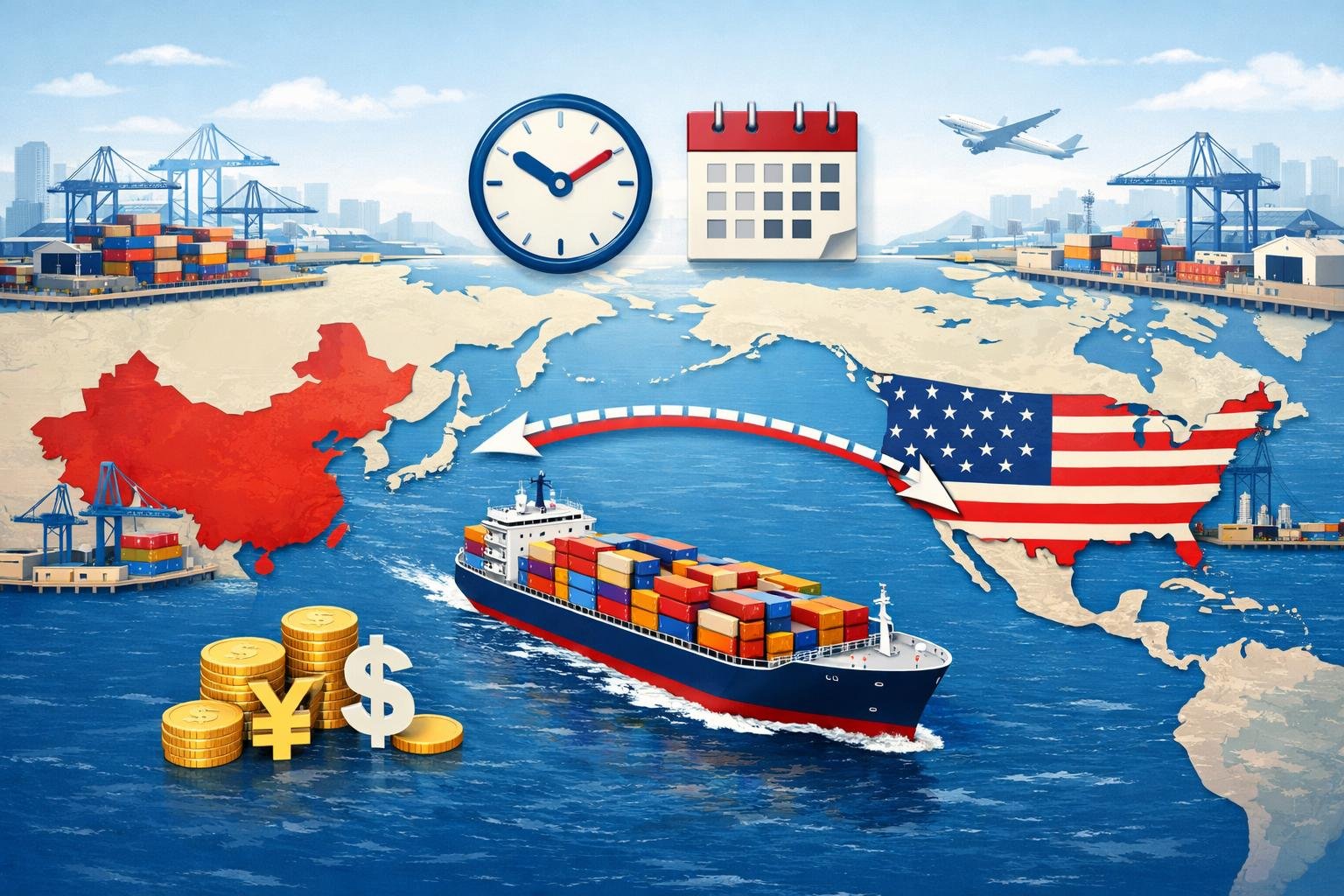
China to USA Shipping Cost and Time: Complete Guide for 2026
📅 March 07, 2026
If you’re shipping goods from China to the United States, two things are probably on your mind: cost and delivery time. China to USA shipping cost and time can vary a lot—expect to pay anywhere from $2 to $8 per kilogram by air, or $2,000 to $8,000 per container by sea in 2026.
Delivery times? Express shipping usually takes 3 to 7 days, while ocean freight stretches out to 25 to 40 days. Your final bill depends on shipment size, delivery method, and whether you need extra services like customs clearance.
Understanding shipping costs from China to USA is crucial if you want to keep your profit margins healthy and avoid nasty surprises. Plenty of importers get lured by low initial quotes, only to see their final invoice double thanks to hidden fees or paperwork issues.
Honestly, picking the right shipping method for your cargo can mean the difference between a smooth delivery and a budget-busting headache. This guide lays out what you need to know about China to USA shipping cost and time for 2026.
You’ll get a breakdown of sea freight, air freight, and express options, plus tips on what drives your expenses and how to pick the best shipping method for your needs.
Key Takeaways
- Sea freight is usually cheapest for big shipments, while air freight balances speed and cost for urgent goods.
- Total shipping cost covers way more than just the base rate—think origin fees, main freight, destination charges, surcharges, and insurance.
- Express and DDP shipping are fastest and offer all-in pricing, including duties and door-to-door service.
Overview of China to USA Shipping Cost and Time
Shipping costs from China to the USA range from $2 to $8 per kilogram for air freight and $2,000 to $8,000 per container for sea freight. Transit times vary from 3 days to 45 days depending on your method and how fast you need your goods.
Your shipment’s size, urgency, and destination all play a part in the final cost.
Typical Shipping Methods
When shipping from China to the USA, you’ve got three main choices. Sea freight is best for large shipments and comes in two flavors: FCL (Full Container Load) for 20ft or 40ft containers, and LCL (Less than Container Load) if you don’t fill a whole container.
Air freight works well for time-sensitive or high-value goods. You can book standard air cargo with freight forwarders or use express services like DHL, UPS, and FedEx if you’re in a hurry.
Express shipping gives you door-to-door service and handles customs clearance. You’ll pay more, but you skip the paperwork headaches. DDP (Delivered Duty Paid) shipping is another option, bundling duties and taxes into one upfront price.
Average Costs by Method
Sea Freight Costs:
- 20ft container: $2,000 – $5,000
- 40ft container: $3,000 – $8,000
- LCL: $80 – $150 per cubic meter
Air Freight Costs:
- Standard air: $4.50 – $8.00 per kg (100kg+)
- Express courier: $6.50 – $10.00 per kg
- DDP air: $7.00 – $11.00 per kg
Your shipping cost from China to the USA covers more than just freight. You’ll pay origin fees like pickup and export paperwork, destination charges for customs, plus surcharges for fuel or peak season. Insurance is extra but worth it for valuable stuff.
Standard Transit Times
Sea freight usually takes 25 to 40 days port to port. LCL shipments need another 5 to 10 days for consolidation and deconsolidation, so door-to-door can reach 30 to 45 days with inland transport and customs.
Air freight typically arrives in 3 to 10 days for standard service. Express shipping gets your goods there in 3 to 7 days, including customs clearance. DDP air shipments often show up within 5 to 9 days at your door.
Picking the right port makes a big difference. West Coast ports like Los Angeles and Long Beach are faster for western states, while New York and Savannah work better for the East Coast.
Key Factors Affecting Shipping Costs and Delivery Times
Lots of things shape your China to US shipping cost and time. Your cargo’s size, the routes, timing, and even market forces can all swing your final bill and delivery date.
Shipment Size and Weight
The size and weight of your cargo directly impact what you’ll pay. Freight rates use either actual weight or dimensional weight, whichever’s higher.
For shipments under 150 kg, express freight usually costs about $5 per kilogram. Standard air freight gets cheaper—around $3 per kilogram—if you’re shipping between 150 kg and 500 kg.
Once you go over 500 kg, ocean freight is your best bet. With LCL, you split a container with others. FCL makes sense around 15 cubic meters and is faster and safer than LCL.
Container type matters. Standard options are 20-foot and 40-foot, and you pay a flat rate no matter how full they are.
Route Selection and Shipping Lanes
The ports you pick for origin and destination affect both cost and timing. Popular lanes include Shanghai to Los Angeles, Shanghai to New York, and Shenzhen to Los Angeles.
West Coast ports usually mean quicker, cheaper ocean freight. The distance from your starting point in China to your US destination also changes your rate.
Port congestion is a headache that can stall your shipment. When big ports get backed up, your cargo might sit for days waiting to unload. Ocean freight suffers more from this than air freight.
Some logistics companies offer alternate routes with different costs and transit times. Using less-busy ports can help you dodge delays, though you might pay more for inland transport afterward.
Seasonal Variations and Peak Periods
Shipping costs bounce around during the year. Peak season runs August through October as importers gear up for the holidays.
Rates spike during these months, and finding a container can get tough. You might even wait for space after booking.
Chinese New Year throws another wrench in the works. Factories shut down, so shipments surge before the holiday and slow to a crawl afterward. It’s smart to plan ahead for this window.
Weather can also mess with timing—typhoon season in Asia and winter storms both delay ships and planes. Ports sometimes close temporarily during bad weather.
Market and Regulatory Changes
Trade policy shifts and tariffs can really shake up shipping costs and demand. Recent tariff hikes on Chinese imports have made budgeting trickier for a lot of importers.
Fuel prices have a direct effect on freight rates. When oil goes up, carriers tack on fuel surcharges and your shipping cost climbs.
Customs rule changes or new paperwork requirements can slow down shipments and add surprise fees. New security checks may also mean your goods spend more time in customs.
Carrier capacity and market supply matter too. When demand outpaces available space, rates shoot up. If there’s extra capacity, you might snag a better deal.
Sea Freight: Cost, Timing, and When to Use
Sea freight from China to the USA usually runs $1,500 to $4,000 per container for FCL, with transit times from 20 to 40 days depending on ports. LCL is charged per cubic meter and often takes 1-2 weeks longer because of consolidation.
Full Container Load (FCL)
FCL means your goods fill a whole container—20-foot or 40-foot—and you pay a flat rate no matter how much space you use.
FCL becomes cost-effective at around 15 cubic meters. It is faster because it skips the extra steps of combining and splitting shipments.
Your goods get handled less, so there’s less risk of damage. The paperwork is simpler too since you’re the only shipper. Door-to-door, you’re usually looking at 20-30 days.
Key FCL benefits:
- Faster transit (no consolidation delays)
- Lower per-unit cost for bigger shipments
- Less chance of damage
- Simpler tracking and docs
Less Than Container Load (LCL)
LCL is for when you don’t have enough to fill a container. You share space and only pay for what you use.
LCL adds 1-2 weeks to shipping time since forwarders need to put shipments together at the start and break them up at the end. This extra handling can mean more delays and a slightly higher risk of damage.
Cost per cubic meter is higher than FCL, but for small loads, your total bill is lower. Most recommend LCL for under 15 cubic meters. You’ll need detailed paperwork since you’re sharing the container with others.
Major Shipping Routes and Ports
The main routes link Shanghai to Los Angeles (14-16 days), Shanghai to New York (24-28 days), and Shenzhen to Los Angeles (14-18 days). These popular lanes have frequent departures and competitive rates.
Major Chinese departure ports:
- Shanghai
- Shenzhen
- Ningbo
- Qingdao
Primary US arrival ports:
- Los Angeles
- Long Beach
- New York/New Jersey
- Savannah
West Coast ports get your goods in faster, but you might need extra trucking if your warehouse is on the East Coast. When you’re figuring out your total cost, don’t forget to add in inland transport from port to warehouse. East Coast ports take longer by sea, but could save time and money if your destination is in the east.
Air Freight: Expedited Shipping from China to the USA
When you’re looking at China to USA Shipping Cost and Time, air freight sits right in the middle for most businesses. It balances speed and cost, especially for shipments weighing between 100 and 500 kilograms.
Rates currently run from $3 to $9 per kilogram. Delivery usually takes 3 to 10 days, but your specific route and service level matter a lot.
Air Freight Cost Structures
Air freight costs from China to USA as of March 2026 still hover between $3 and $9 per kilogram. The final price? That depends on things like fuel surcharges (which just jumped 7%) and how much cargo space is actually available.
Airlines calculate your chargeable weight by comparing actual weight and volumetric weight. They use the formula: Length (cm) × Width (cm) × Height (cm) ÷ 6000, and you pay whichever is higher.
Additional costs you’ll want to keep in mind:
- Customs clearance fees at the airport when your goods arrive
- Terminal handling charges for loading and unloading
- Documentation fees for things like the airway bill
- Fuel surcharges that change with the market
Door-to-airport service costs less than door-to-door. If you choose door-to-airport, you’ll handle customs and the last leg of delivery yourself after your cargo lands.
Transit Times and Delivery Speed
Air shipping from China usually takes 3 to 10 days. The exact timeline depends on where your shipment starts in China and where it’s headed in the USA.
Airport-to-airport service is the fastest, often just 3 to 5 days. Door-to-door air freight adds time for pickup and final delivery, so plan for 5 to 10 days total.
Winter weather delays can slow things down. Flight availability also plays a role—major routes from Shanghai, Shenzhen, and Guangzhou run more often than smaller cities.
Your airway bill comes with a tracking number. Most freight forwarders let you track online, so you can watch your cargo move from China to the USA in real time.
Choosing Air vs. Express or Sea
Air freight is best for shipments weighing 100 to 500 kilograms. If you’re under 100 kilograms, express shipping like DHL or FedEx is often cheaper, even if the per-kilo rate is higher.
Shipping Method Transit Time Best For Cost Level Express 2-5 days Under 100 kg, urgent items Highest Air Freight 3-10 days 100-500 kg, moderate urgency Medium Ocean Freight 15-45 days Over 500 kg, no time pressure Lowest Shipments over 500 kilograms with no rush? Ocean freight is much cheaper, but you’ll wait 15 to 45 days. The shipping cost from China to USA by sea is lower, but it’s not for anyone in a hurry.
Air freight is the sweet spot when you need it faster than ocean but don’t want to pay the express premium. It’s great for restocking, seasonal items, or anything with a moderate time crunch.
Express and DDP Shipping: Fastest Delivery and Turnkey Service
Sometimes you just need speed, or you want to skip logistics headaches entirely. Express couriers and DDP shipping give you the fastest transit and full-service coverage. Courier express gets small parcels from China to the USA in just days, while DDP shipping from China handles everything from pickup to delivery under one contract.
Express Courier Services
Big names like DHL, FedEx, and UPS deliver from China to the USA in 2-5 days. Express shines for packages under 100 kg, where speed matters more than price.
You’ll pay about $12-$18 per kg for express. A 50 kg shipment costs $700-$1,200, all-in, including customs clearance and delivery to your door.
Express carriers handle customs paperwork and clearance as part of the deal. You get real-time tracking and guaranteed delivery windows. It’s perfect for urgent samples, replacement parts, or high-value e-commerce inventory that just can’t wait.
The catch? The cost. Express rates are 3-5 times higher than air freight and way more than ocean shipping.
DDP Shipping Explained
DDP (Delivered Duty Paid) means your supplier or freight forwarder takes care of the whole shipping process. They become the importer of record and handle export clearance, transport, duties, customs, and final delivery to your warehouse or Amazon FBA center.
You get a single, all-inclusive price that covers every step. No surprise fees at customs or delivery. This setup suits e-commerce sellers who want predictable costs and minimal logistics drama.
DDP shipping can use sea, air, or express. Sea DDP costs $150-$200 per cubic meter and takes 30-40 days. DDP air runs $8-$15 per kg with 8-12 day delivery. Your forwarder handles documentation, pays duties upfront, and coordinates delivery to your address.
The seller or forwarder takes all the risk and responsibility until your goods reach you.
Comparing Express, DDP Air, and DDP Sea
Each one has its own mix of speed, cost, and service. Here’s how they stack up:
**Method** **Transit Time** **Typical Cost** **Best For** Express Courier 2-5 days $12-$18/kg Urgent small parcels under 100 kg DDP Air 8-12 days $8-$15/kg Time-sensitive medium volumes DDP Sea 30-40 days $150-$200/CBM Cost-effective bulk shipments Express is the fastest, but you’ll pay the most per kilogram. You get full door-to-door service, customs clearance, and tracking baked in.
DDP air is a solid middle ground. It’s not as fast as express, but it’s cheaper per kg. Great for 100-500 kg shipments when you need goods within two weeks.
DDP sea is the budget option for big shipments and flexible timelines. A full container lands for $3,800-$5,500 all-in, so it’s perfect for regular inventory restocks when you’re not in a rush.
Breakdown of Shipping Cost Components and Documentation
China to USA shipping cost isn’t just about the freight rate. There are a bunch of extra charges, and the right paperwork can mean the difference between smooth customs clearance and a costly delay. You’ll want to know what each fee covers and what documents you’ll need to avoid any border surprises.
Origin and Destination Fees
Origin fees cover everything before your cargo leaves China—pickup from your supplier, export customs clearance, port handling, and paperwork. You’ll usually pay $200 to $500, depending on shipment size and location.
Destination fees kick in when your goods reach the USA. Port charges, container unloading, and inland transport to your warehouse add another $300 to $700 for sea freight. Shipping to Amazon FBA or a home address? Expect final mile delivery costs of $500 to $1,500, depending on distance and cargo type.
US customs clearance adds another fee layer. Customs brokers usually charge $150 to $300 per shipment to handle entry paperwork and talk to authorities. They’ll submit your documentation and make sure you’re following the rules.
Customs Clearance and Duties
Import duties can be a big chunk of your total landed cost. The US calculates duties based on your product’s HS code, which sets the tax rate on your declared value. Rates range from 0% to 37.5%, depending on product and current trade policies.
An Importer Security Filing (ISF) must be filed at least 24 hours before your ocean freight loads at the Chinese port. Miss that deadline and you’ll face penalties starting at $5,000. Your forwarder or customs broker usually handles ISF filing for $25 to $50.
Merchandise Processing Fees apply to all commercial shipments. You’ll pay 0.3464% of your shipment value, with a minimum of $27.75 and a max of $538.40 per entry. Harbor Maintenance Fees tack on 0.125% of cargo value for ocean shipments.
Insurance and Surcharges
Cargo insurance covers your shipment against loss or damage. It usually costs 0.3% to 1% of your cargo’s declared value. For high-value electronics, machinery, or fragile stuff, insurance is a must.
Fuel surcharges change with global oil prices and add 10% to 25% to your base freight rate. Peak season surcharges show up during high-demand months—think Chinese New Year or the pre-holiday rush from August to October. These can bump costs by $500 to $2,000 per container.
Security fees, currency adjustments, and port congestion charges might also appear on your invoice. Always ask for an itemized quote so you know what you’re paying for.
Required Documentation
A commercial invoice lists your products, quantities, values, and HS codes. This is the foundation for customs, and it has to match your packing list exactly. Any errors or mismatches can trigger inspections and slow things down.
The bill of lading acts as your cargo receipt and your contract with the carrier. Ocean shipments use both master and house bills of lading when forwarders consolidate cargo. Air shipments use an airway bill instead.
Your packing list details every carton’s contents, size, and weight. Customs officers check this to make sure your shipment matches your declaration. Include SKU numbers, carton marks, and net weights for each package.
Certificates of origin prove where your products were made and determine duty rates under trade agreements. Depending on what you’re shipping, you might also need permits like FDA registration for food or FCC certification for electronics.
Frequently Asked Questions
China to USA shipping costs can range from just a few dollars per kilogram for sea freight to much higher rates for air. Transit times vary—a couple weeks if you’re lucky, or over a month, depending on your shipping method and where you’re sending it.
What are the average shipping costs from China to the USA by sea?
When it comes to China to USA Shipping Cost and Time, sea freight costs really depend on whether you book a full container or share space with others. For Full Container Load (FCL), you pay per container, not per individual item.
Most people go for a 40-foot High Cube container when shipping from China to the USA. This container gives you around 68 to 76 cubic meters of space, which works out best for lighter goods.
If you choose Less than Container Load (LCL), costs are calculated by how much space your cargo takes up or how much it weighs. You only pay for the portion of the container you use.
Shipping to the West Coast—think Los Angeles or Long Beach—usually costs less than shipping to the East Coast, like New York or Savannah. It’s not a huge surprise, considering the distance and demand.
How long does air freight take when shipping from China to the USA?
Air freight from China to the USA usually takes 5 to 10 days, airport to airport. That’s just the basic transit and cargo handling.
But it’s not the whole story. Customs clearance and ground delivery can stretch the total time to anywhere from 7 to 14 days, depending on your final destination.
If you’re in a hurry, express couriers like FedEx, DHL, or UPS can deliver in just 3 to 7 days to most big US cities. It’s fast, but you’ll pay for the speed.
What’s the typical duration for sea freight to reach the USA from China?
Transit times from China to US ports really depend on which coast you’re shipping to. The West Coast gets shipments much faster than the East Coast.
If you’re shipping from Shenzhen or Shanghai to Los Angeles, expect 14 to 20 days port to port. That’s about as quick as ocean freight gets between China and the US.
East Coast ports like New York or New Jersey take longer—usually around 28 to 35 days. The journey’s just that much farther.
Don’t forget to tack on another 5 to 10 days for door-to-door service. That covers customs, unloading, and final trucking to your warehouse or distribution center.
How can one calculate the shipping cost from China to the USA for different weights?
Shipping companies look at two things: actual weight and volumetric weight. They’ll charge you based on whichever number is higher.
Volumetric weight is all about the size of your package, not just how heavy it is. The formula multiplies length, width, and height, then divides by a dimensional factor.
For air freight, that factor is usually 5000 or 6000. Sea freight LCL charges by cubic meter (CBM), with minimums you can’t really avoid.
If you want a quick estimate, try online shipping calculators for China to USA routes. Just punch in your cargo’s size, weight, and where it’s going.
What factors influence the cost of shipping goods from China to the USA?
Fuel prices play a big role in China to USA Shipping Cost and Time, thanks to Bunker Adjustment Factor (BAF) surcharges. These fees change every week with oil prices.
Peak seasons drive rates up, especially before major holidays when everyone’s trying to ship more. It’s a classic case of supply and demand.
Port congestion can add both delays and extra charges. If a terminal’s busy, you might pay more for storage or handling.
Your incoterm matters too. If you go with FOB, you’ll handle and pay for the ocean freight; DDP covers everything to your door.
Oh, and don’t forget about Section 301 tariffs on Chinese goods. Some products get hit with an extra 25% duty, so double-check if your items are on that list.
How much would it cost to ship a 20-foot container from China to the USA?
When it comes to China to USA Shipping Cost and Time, a 20-foot container usually costs less than the bigger options. It holds about 28 to 33 cubic meters, so it’s decent for heavy stuff like machinery or metals.
Honestly, rates jump around a lot depending on the market and your route. Shipping to West Coast ports is usually 30% to 40% cheaper than sending the same container to the East Coast.
But that’s just the start. You’ll run into extra charges beyond the basic ocean freight—think terminal handling, documentation fees, and customs bond costs when your container lands.
Don’t forget, the total landed cost means you’ll also pay duties, taxes, and inland trucking. It’s smart to get a full door-to-door quote upfront, so you don’t get hit with surprise fees later.
Ready to Ship from China to USA?
Get a free quote from our logistics experts today.
Get a Free Quote →