CNC Machine Shipping China to USA: Key Steps, Methods & Compliance
📅 April 08, 2026
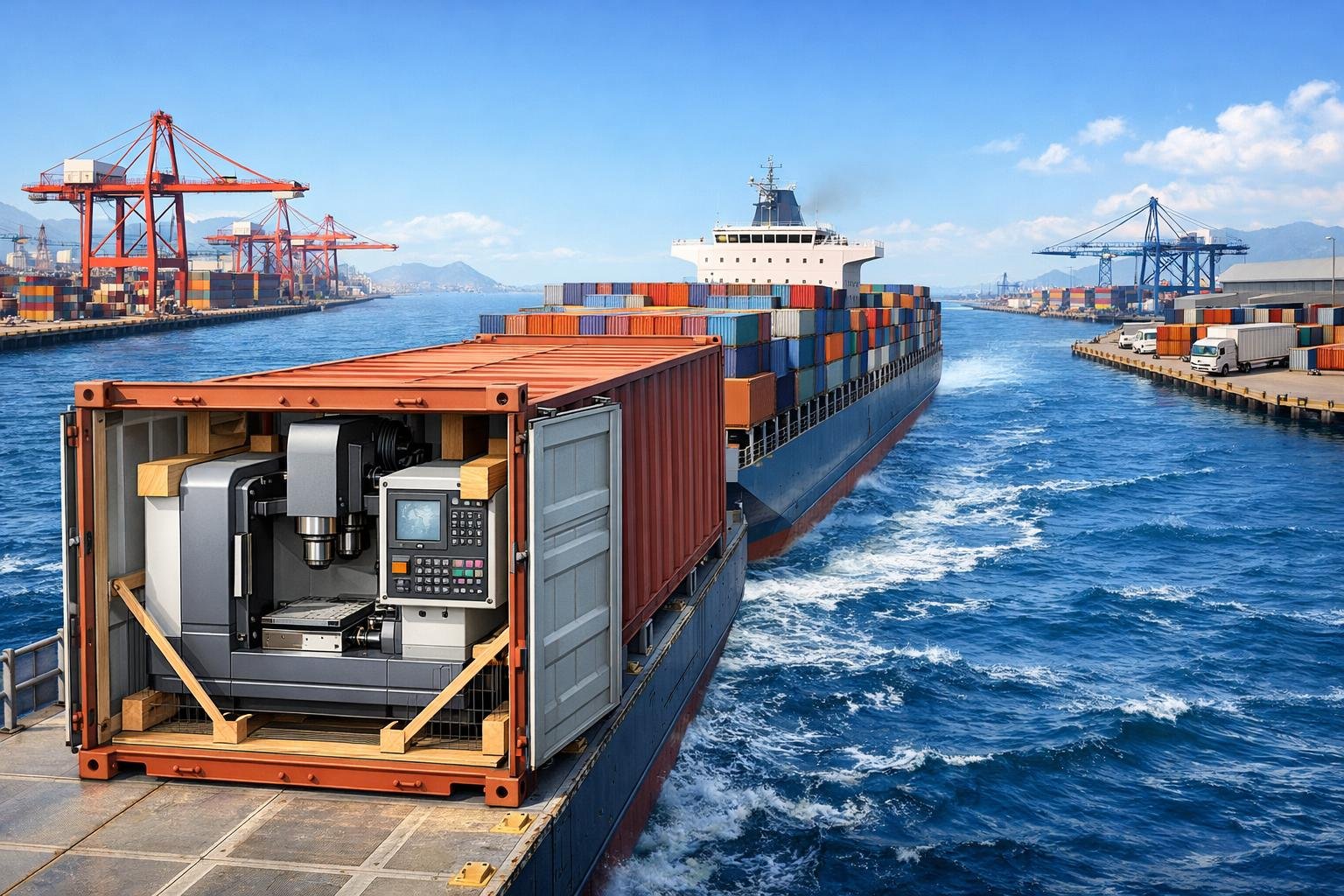
CNC Machine Shipping China to USA can seem overwhelming at first. It’s not just about booking cargo space—these heavy, expensive machines need very careful handling from the start.
These machines are precise and sensitive. You need the right packaging and shipping methods, and those depend a lot on the size and weight of your machine.
If your CNC machine is under 35 metric tons and less than 4 meters tall, you’ll probably use flat rack containers. Bigger machines usually require breakbulk or roll-on/roll-off shipping.
Understanding CNC machine shipping logistics will help you dodge expensive mistakes, like picking the wrong container or skipping anti-corrosion steps during the 20-30 day ocean trip.
There’s a lot to consider with U.S. customs requirements too. You’ll need the right HTS code (8457.10) and ISF filing at least 48 hours before loading.
Missing these customs deadlines can cost you over $5,000 in penalties and cause major delays. This guide covers each step of shipping machinery from China to the USA, from picking a freight method to clearing customs and arranging final delivery.
Key Takeaways
- Use flat rack containers for machines under 35 tons and 4 meters tall; go for breakbulk or RO-RO shipping if it’s bigger.
- Protect your machine with VCI anti-corrosion packaging and secure it based on the center of gravity.
- File your ISF 48 hours before loading and get your HTS code right to avoid customs trouble.
Overview of CNC Machine Shipping from China to the USA
CNC Machine Shipping China to USA involves a lot more than just moving a box. You’ve got to plan for several transport stages, special handling, and keeping your machine safe along the way.
Transit times usually run between 15 and 35 days, depending on your route and shipping method. Costs vary based on your machine’s size, weight, and how you pack it.
Key Considerations for International Transport
When you ship CNC machines internationally, you need to think about how fragile these machines are. They don’t handle shock, vibration, or moisture well at all.
These machines have delicate electronics and finely tuned parts. Even a small bump or a little water can throw off their accuracy.
Your shipping plan should start with solid packaging—export-grade wooden crates with steel bases. Add bracing inside to keep the machine from moving around during ocean transport.
Vacuum seal and use anti-rust treatments to keep metal parts from corroding on the 15-20 day trip to U.S. ports like Los Angeles or Long Beach.
Machine weight and size decide your shipping method. Standard machines fit in FCL (Full Container Load) shipping, but oversized ones need Flat Rack or Open Top containers, which cost more.
Shipping machinery from China works best with experienced freight forwarders who know the paperwork and lifting procedures.
Common Types of CNC Machines Shipped
Most CNC Machine Shipping China to USA involves machining centers, lathes, milling machines, and drilling machines. Vertical machining centers are common—they’re versatile and usually fit in regular shipping containers.
CNC lathes and turning centers also ship often, usually weighing 2,000 to 15,000 pounds. They’re used for making round parts.
Multi-axis machining centers are more complex and need extra care during shipping. Router machines and plasma cutters ship less often, but the packing rules are about the same.
Route and Transit Time Factors
Your CNC machine usually leaves from big Chinese ports like Shanghai, Ningbo, Shenzhen, or Qingdao. Transit time to U.S. West Coast ports is 15-20 days, but East Coast shipments can take 28-35 days.
After the ocean trip, a truck hauls your CNC machine from the port to your site. That last leg can take 2 to 7 days, depending on distance.
If ports like Los Angeles or Long Beach are busy, expect another 3-10 days of waiting during peak season.
Customs clearance usually takes 1-3 days if your paperwork is right. CNC machines fall under HS Code Chapters 84 and 85.
Have your commercial invoice, packing list, and bill of lading ready for inspection.
Selecting Shipping Methods for CNC Machines
For CNC Machine Shipping China to USA, ocean freight is usually the most cost-effective choice for heavy machines. Air freight is faster but costs a lot more.
Your decision comes down to machine size, budget, and how quickly you need it delivered.
Ocean Freight: FCL, LCL, Flat Rack, and Breakbulk
FCL (Full Container Load) works if your CNC machine fills a 20ft or 40ft container. You get the whole container, so there’s less risk of damage and faster port clearance.
This is the safest bet for most standard machines.
LCL (Less than Container Load) makes sense for smaller equipment. You share space with other shipments and pay only for what you use.
It’s cheaper but takes longer since your cargo gets consolidated and deconsolidated along the way.
Flat rack containers are for oversized CNC machines that won’t fit in regular containers. They’re open on the sides and top, so you can load wide or tall equipment.
You’ll pay more, but sometimes there’s just no other way to ship big machines.
Breakbulk shipping is for extra-large machines that can’t fit in any container. The equipment gets strapped straight onto the ship’s deck.
This method needs special loading gear and costs more than containers, but sometimes it’s your only option.
Air Freight Solutions for Urgent or High-Value Equipment
Air freight gets your CNC machine to the USA in 5-10 days, compared to 25-35 days by sea. But you’ll pay $4-8 per kilogram, so it’s not cheap.
Airlines have strict weight and size limits. Most flights can handle up to 3,000 pounds, but bigger equipment needs a charter flight, which costs even more.
High-value or prototype machines sometimes fly because air shipping means less handling and less risk of damage. Temperature-controlled cargo holds also help protect sensitive parts.
Multimodal and Express Options
Multimodal shipping mixes ocean and ground transport. Your CNC machine travels by sea to the West Coast, then by truck to your site.
This method saves 30-40% over air freight and shaves 10-15 days off the all-ocean route.
Express services from specialized carriers offer door-to-door delivery and handle customs, trucking, and final setup. You’ll pay a premium, but it’s less hassle.
Some folks try rail from China through Europe to the U.S. It takes 18-22 days and involves less handling than ocean freight, but isn’t as common for CNC machines.
Preparing CNC Machines for Shipping
CNC Machine Shipping China to USA takes some prep work. If you skip this step, you risk corrosion, shock damage, and moisture problems.
Drain all fluids, lock moving parts, coat metal with rust protection, and pick the right transport gear before your machine leaves the factory.
Packaging and Crating Requirements
Your CNC machine needs proper packing for the long journey. Wrap spindles, ballscrews, and linear guides with VCI (Vapor Corrosion Inhibitor) paper to keep rust away.
For ocean freight, seal the whole machine in VCI film, then add a 4-layer aluminum barrier to block moisture during the 30-60 day trip.
Use ISPM-15 certified wooden crates with heat treatment stamps. The crate should fit your machine exactly and bolt down to the base with lag bolts.
Add cross-bracing inside so nothing shifts. Toss in desiccants to keep humidity below 40% RH, and use EPE foam blocks at contact points.
Stick impact, tilt, and humidity indicators on the outside of the crate so you can spot problems fast.
Disassembly, Securing, and Loading Options
Drain all fluids before shipping—coolant, hydraulic oil, way oil, and the chip conveyor. Coat exposed metal with rust preventive oil.
Lock all axes (X, Y, Z, and rotary) using the built-in locks. Secure the spindle, park the turret or tool changer at home, and lower the table on vertical machining centers to keep the center of gravity low.
Pack loose parts separately and label them:
- Tool holders, collets, and cutting tools
- Chucks, steady rests, and fixtures
- CNC controller pendant
- Manuals and spare parts kits
Disconnect and label all electrical cables and pneumatic lines. Take photos before unplugging anything to make reassembly easier later.
Choosing Air-Ride Trailers and Escort Vehicles
Use air-ride trailers for CNC Machine Shipping China to USA. These trailers cut down on vibration and shock—critical for machines with sensitive parts.
Air-ride suspension absorbs bumps, so your machine’s glass scales and spindle bearings stay safe. The trailer bed floats on air bags that adjust as you drive.
Your shipping company should secure the crate with chains, straps, and blocks so nothing shifts. Place the crate to distribute weight evenly.
If your CNC machine is oversized, you’ll need escort vehicles with warning signs and flags. Rules vary by state, but loads over 12 feet wide usually need an escort.
Super-wide loads (over 14 feet) often require front and rear escort cars.
Shipping Documentation and Customs Compliance
CNC Machine Shipping China to USA needs precise paperwork and strict compliance with U.S. import rules. Make sure your shipment has correct export controls, tariff codes, and a valid customs bond to avoid delays.
CNC Machine Shipping China to USA: Bill of Lading, Commercial Invoice, and Packing List Preparation
CNC Machine Shipping China to USA isn’t just about moving heavy equipment. It’s a paperwork marathon, and the bill of lading is your contract with the shipping carrier.
This document proves you own the CNC machine during transit. It spells out where the shipment starts, where it’s headed, and what’s inside.
The commercial invoice has to list the exact sale price, machine specs, and the harmonized tariff code. The nameplate details must match customs paperwork exactly, including weight, power rating, and model numbers.
Your packing list should show:
- Dimensions and weight for each crate or container
- Number of packages in the shipment
- Description of contents in each package
- Marks and numbers on the outside of packages
If these documents don’t match, U.S. Customs might order a physical inspection. That can delay your CNC machine shipping China to USA by two weeks or more.
Customs Documentation and Import Regulations
U.S. Customs and Border Protection asks for specific paperwork to process your CNC machine. You need a customs bond, which guarantees payment of duties and compliance with import rules.
Your customs clearance documents must include an entry manifest or merchandise release form. Single-entry bonds cover one shipment, while continuous bonds work for multiple imports over a year.
Importer Security Filing (ISF) must be submitted 24 hours before your machine loads onto the vessel. The ISF includes manufacturer, seller, buyer, and consignee info.
Export Controls and Section 301 Tariffs
China enforces export controls on some industrial equipment and technology. Your CNC machine might need an export license from Chinese authorities before leaving the country.
Section 301 tariffs hit many Chinese-made goods entering the USA. These duties can add 7.5% to 25% on top of regular import taxes.
Always check the current tariff rate for your machine’s harmonized code before you estimate total costs. Some CNC machines qualify for tariff exclusions based on their specs or use.
You can apply for an exclusion through the U.S. Trade Representative if your equipment fits the criteria.
Role of Freight Forwarders and Customs Brokers in CNC Machine Shipping China to USA
Moving CNC machines from China to the USA isn’t a solo project. You need pros who handle different parts of the shipping process.
Freight forwarders arrange the physical transport, while customs brokers make sure your shipment clears US regulations and border checks.
Selecting a Reliable Freight Forwarder
Your freight forwarder books and coordinates the movement of your CNC machine from the China factory to your U.S. destination. They deal with shipping paperwork, ocean or air freight, and rate negotiations.
Good forwarders have solid relationships with shipping lines and can get competitive pricing through consolidated loads. They manage bills of lading, insurance, and pickup from the manufacturer to the port.
Freight forwarders use their carrier networks to balance cost and delivery speed. Look for forwarders with experience shipping heavy machinery and industrial equipment.
They should offer both ocean freight for savings and air freight for urgent deliveries. Many forwarders also provide temporary storage if your CNC arrives before you’re ready.
Working with Licensed Customs Brokers
Customs brokers focus on compliance, not physical transport. They prepare and submit the required documents to US Customs, classify your CNC machine under the right tariff codes, and calculate duties and taxes.
You need a licensed customs broker to act as your importer of record or handle filings. There are about 11,000 active licensed customs brokers in the U.S. who specialize in customs entry requirements.
Your broker handles ISF submissions, entry filing, and payment of duties or fees. They make sure your CNC machine meets all rules and help fix any customs issues.
Lots of logistics companies offer both brokerage and forwarding, so you get one point of contact.
Coordination for Door-to-Door Delivery
Door-to-door delivery means your freight forwarder and customs broker have to work together. The forwarder manages transport from the China factory to the U.S. port, while the broker clears customs before final delivery.
After clearance, your forwarder arranges inland transport to your location. For CNC machines traveling over 500 miles in the U.S., they may use rail and trucking to save money.
Coordinate delivery timing with both parties so your facility is ready. Check loading dock availability, unloading equipment, and any special handling your CNC machine needs.
Risk Management and Cargo Insurance for CNC Shipments
CNC machines can cost hundreds of thousands of dollars, so insurance and risk management are a must during international shipping. Protecting your investment with proper coverage and damage prevention is just smart business.
Insuring High-Value CNC Equipment
You need full-value cargo insurance that covers mechanical, electronic, and cosmetic damage during ocean freight. Standard carrier liability usually covers only about $500 per shipping unit—nowhere near enough for CNC machines.
Your insurance policy should cover the full replacement cost, including purchase price, shipping, customs duties, and any assembly or calibration after arrival.
Key coverage elements:
- Physical damage from vibration, shock, or impacts during loading/unloading
- Water damage from ocean exposure or leaks
- Theft or pilferage at ports or during inland transit
- Damage from improper handling or vessel accidents
Ask for detailed documentation of your carrier’s liability coverage before shipping. Make sure the limits match or exceed your CNC machine’s value.
Mitigating Transit Damage Risks
CNC machines have precision components that are sensitive to vibration, shocks, and environmental exposure. You need strategies beyond just insurance.
Document your machine’s condition with photos and inspection reports before shipping. This gives you proof if you need to file a claim later.
Your freight forwarder should use custom crates with vibration-absorbing materials and moisture barriers. Anti-static wrapping protects electronics from static discharge.
Proper container loading is critical. CNC machines often have odd load characteristics and center of gravity issues, which can create tilt risks at U.S. ports.
Inspect your machine right after arrival. Compare its condition to your pre-shipment records while the carrier is still responsible.
Frequently Asked Questions
CNC machine shipping China to USA costs depend mostly on weight, size, and documentation. Packaging and paperwork prevent the most common delays.
What factors most impact the total cost to ship a CNC machine internationally?
Weight and dimensions drive your shipping costs more than anything else. Carriers use actual or volumetric weight, whichever is higher.
Choosing FCL or LCL shipping changes the price a lot. Full container loads pay off around 15 tons.
Distance between ports matters. West Coast ports like Los Angeles are usually faster and cheaper than East Coast ones.
Fuel surcharges, port fees, and inland trucking add to your base rate. Insurance costs scale with your declared value.
Prices jump in summer when demand spikes. Winter months tend to be cheaper for ocean freight.
How do I choose between ocean freight and air freight for shipping heavy machinery?
Ocean freight is best if you can plan ahead and want to save money. Transit takes 15-35 days, depending on the port.
Air freight is much faster—3-7 days—but costs 5-10 times as much as sea shipping. Most planes max out at 20 tons.
Pick air freight only for urgent parts or projects where delays cost more than the shipping premium. For small, precision equipment with strict deadlines, it’s worth it.
For standard CNC machine deliveries, stick with ocean freight. Lead time usually covers the longer transit.
What packaging and crating standards are recommended to prevent damage during transit?
Custom wooden crates or steel frames protect heavy machinery during ocean transit. Use moisture-resistant materials and desiccants to prevent rust.
Drain all fluids before shipping. Secure or remove loose parts that might shift.
Apply rust-preventive coatings to metal surfaces. Wrap equipment in vapor barrier film and add shock-absorbing materials at contact points.
Precision machines often need climate-controlled containers for stable temperature and humidity. Document all packaging steps with photos for insurance claims.
Your crating must meet U.S. customs standards and international rules. Wooden materials need fumigation certificates for U.S. entry.
Which import documents and customs requirements are typically needed for machinery entering the United States?
The bill of lading is your shipping contract and proof of ownership. You need the original to claim your CNC machine at the port.
Your commercial invoice is the official sales receipt and customs declaration. It must include accurate descriptions and HS codes for duty rates.
The packing list tells customs how your machine is packed and marked. Include gross and net weights, dimensions, and package counts.
You need a Certificate of Origin for preferential duty rates. Quality inspection and safety compliance documents show your equipment meets U.S. standards.
Most industrial machinery falls under Section 301 List 3 with a 25% tariff on top of normal rates. Total effective duty rates usually reach 25-29% for most machinery from China.
Electrical CNC machines might need UL or FCC approval. Some equipment requires EPA compliance certificates, depending on type.
How can I estimate shipping costs for a small CNC machine versus a full-size industrial unit?
Small CNC machines under 1,000 pounds often qualify for LCL shipping. You share container space and pay for the volume you use.
Mid-size machines (2,000-10,000 pounds) usually ship in 20-foot containers. A 20-foot container can handle up to 28 tons.
Full-size industrial CNCs need 40-foot containers or special shipping. Machines over 32 tons require break bulk shipping—direct loading onto the vessel.
Get quotes based on exact dimensions and weight, including packaging. Dimensional weight often drives pricing more than actual weight.
Express couriers like DHL or FedEx work for small CNC parts under 150 pounds. Door-to-door takes 2-5 days but costs much more per pound.
CNC Machine Shipping China to USA: What are the most common causes of shipping delays for machinery shipments and how can they be avoided?
CNC Machine Shipping China to USA can get tricky, especially when it comes to delays. Incomplete or inaccurate documentation is the top reason for holdups at customs.
Missing certificates can keep your cargo stuck at U.S. ports for weeks. Always double-check that all paperwork matches exactly across your bill of lading, commercial invoice, and packing list.
Even a tiny error can trigger a customs hold. Wrong HS code classification also creates headaches during clearance.
So, get your machinery classified correctly before you ship. If you don’t, you might face reclassification delays that nobody wants to deal with.
Port congestion is another big problem for CNC Machine Shipping China to USA, especially during peak seasons. Try booking shipments in off-peak months for faster processing.
Improper packaging causes inspection holds too. If your crating looks weak or damaged, customs might require extra checks.
Order all compliance certificates from your Chinese supplier before shipping starts. Third-party safety testing often takes weeks, so plan ahead if you can.
Pick experienced freight forwarders who know the ins and outs of CNC Machine Shipping China to USA. They handle documentation and coordinate customs clearance to help you avoid the usual delays.
Ready to Ship from China to USA?
Get a free quote from our logistics experts today.
Get a Free Quote →