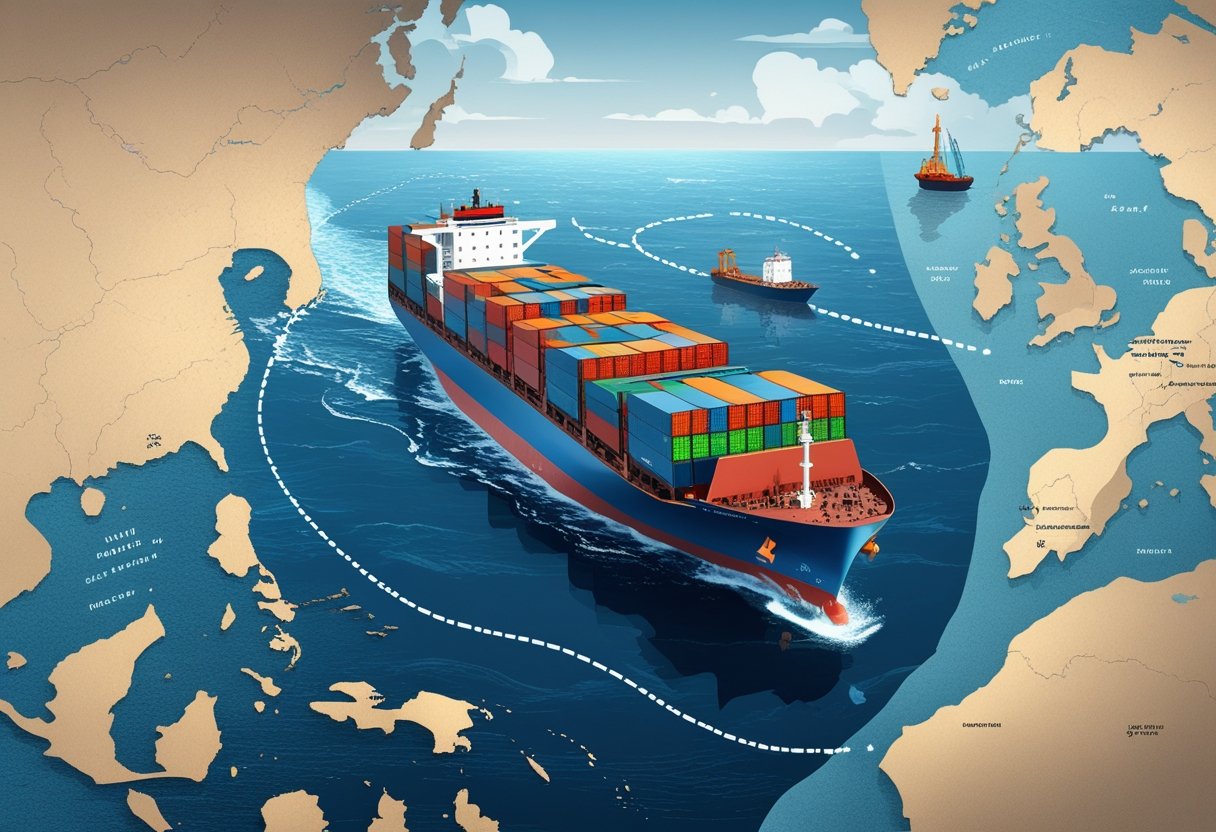
Shipping Freight From China to the USA: Essential Guide for Import Businesses
📅 November 08, 2025
Shipping freight from China to the USA forms the backbone of countless business operations across the United States. You face plenty of challenges when importing goods, from picking the most cost-effective transport method to wrangling complex documentation requirements.
The choices you make during this process hit your bottom line, delivery schedules, and customer satisfaction directly. It’s a lot to juggle.
Understanding how to navigate international freight operations gives you a real edge in today’s global marketplace. You need to weigh shipping costs, transit times, and reliability when planning your supply chain.
With ocean freight making up nearly 70% of American imports from China, getting good at these logistics is essential for business success.
Key Takeaways
- You can choose between air, sea, and express shipping options, each with different cost and time trade-offs.
- Your shipping expenses depend on factors like cargo type, weight, dimensions, and chosen transport method.
- Working with experienced freight forwarders helps you navigate customs requirements and avoid unexpected delays.
Shipping Freight From China to the USA: Transportation Methods for Moving Goods
When shipping freight from China to the USA, you mainly have two choices. Your decision depends on budget, deadlines, and what you’re actually shipping.
Shipping Freight From China to the USA: Flying Your Cargo—Fast but Expensive
Air transport gets your merchandise quickly between Chinese and American airports. Transit times usually range from 1-5 days for express services, so it’s the fastest way by far.
Key Benefits:
- Quick delivery: Perfect for urgent orders and time-critical products.
- Enhanced protection: Airport security cuts down theft and damage risks.
- Minimal handling: Your goods move through fewer transfer points.
Main Drawbacks:
- High costs: Prices can run 4-6 times higher than sea transport.
- Size limits: Not great for really big or heavy items.
- Environmental impact: More carbon emissions per shipment.
Ideal Products: Medical supplies, electronics, fashion samples, perishable items, and high-value goods needing rapid delivery.
**Cargo Type** **Best Choice** **Reason** Electronics Air freight High value, theft risk Clothing samples Air freight Time-sensitive decisions Bulk furniture Ocean freight Size and weight ### Shipping Freight From China to the USA: Sea Transport—Budget-Friendly Volume Solution
Ocean shipping handles most freight moving between China and America. Sea freight usually takes 15-35+ days depending on your ports.
You can pick between two main ocean shipping approaches:
Full Container Service (FCL) You rent an entire container just for your stuff. Standard sizes are 20-foot, 40-foot, and 40-foot high cube containers.
Benefits:
- Better security: Your sealed container stays untouched until it reaches the destination.
- Lower per-unit costs: Super economical for large shipments.
- Faster port processing: No waiting for consolidation.
Best for: Shipments filling at least half a 20-foot container (about 15-18 cubic meters).
Shared Container Service (LCL) Your products share space with other businesses’ cargo through consolidation.
Benefits:
- Smaller upfront investment: Pay for only the space you use.
- Shipping flexibility: Send smaller quantities more often.
- Business accessibility: Makes ocean rates possible for smaller companies.
Potential issues:
- Extended delivery times: Consolidation can add 5-10 days to total transit.
- Damage possibilities: Extra handling increases risk.
- Complex tracking: Your goods get mixed in with others.
Recommended for: Small to medium shipments, new product tests, and businesses with limited inventory needs.
Best Products for Ocean Transport: Furniture, machinery, raw materials, seasonal products, and any non-urgent bulk items where cost matters more than speed.
Your decision between these shipping methods from China to the USA really comes down to balancing your budget with delivery needs.
Shipping Freight From China to the USA: Step-by-Step Process

Shipping freight from China to the USA follows a pretty clear sequence of stages. You need to coordinate each phase carefully to keep things running smoothly.
Production and Preparation Phase Your journey starts when Chinese factories finish making your products. Goods get packaged and prepped for international transport according to shipping requirements.
Carrier Booking and Paperwork You or your logistics partner reserves space with shipping companies. You also need to create key paperwork at this stage:
Document Type Purpose Commercial Invoice Shows product value and details Packing List Lists contents and quantities Bill of Lading Ocean freight receipt Air Waybill Air freight receipt **Chinese Export Operations** Products move from factories to departure ports or airports. Chinese customs process [export clearance](https://aeblogistics.com/shipping-from-china-to-the-usa-3/) before your goods can leave.
International Transit Cargo loads onto ships or planes for the trip across the Pacific to American ports and airports.
American Arrival Procedures Ships and planes unload at US facilities. Less than container load shipments get separated at warehouses.
US Customs Processing Customs brokers submit documents to US Customs and Border Protection. They handle duty payments and get import approval for your shipments.
Final Transportation Cleared merchandise loads onto trucks for delivery to your addresses across the country.
Shipping Freight From China to the USA: Key Factors Impacting Cost

Several pricing elements shape your total expenses when shipping freight from China to the USA. Knowing these helps you budget smarter and dodge surprise fees.
Base Transportation Fees Your main cost comes from the carrier’s rate for moving your cargo. Ocean shipments include the steamship line’s charge, and air freight uses airline rates. These prices can swing based on demand and season.
Fuel Adjustments Carriers tack on surcharges to cover changing fuel prices. Sea freight includes Bunker Adjustment Factor (BAF), and air cargo adds Fuel Surcharge (FSC). These fees change monthly based on global fuel markets.
Port and Terminal Expenses Your shipment faces handling charges at both ends. Chinese ports charge for terminal services and documentation, while US ports add their own service fees and processing costs.
Government Fees and Duties Customs duties and tariffs depend on your product type, value, and trade agreements. You pay these directly to US Customs, separate from freight bills.
Additional Service Costs Insurance protects against cargo loss or damage during transit. Inland trucking moves containers from ports to your warehouse. Documentation and clearance services help things move through customs.
Always ask for detailed quotes breaking down each piece to compare shipping costs from China to USA accurately. Otherwise, you might end up guessing—or worse, overpaying.
Navigating U.S. Customs Clearance: What You Must Know
U.S. customs clearance can feel overwhelming if you’re not prepared. Getting your goods through the border means you need the right paperwork and a solid understanding of your responsibilities as the importer of record.
As the importer, you’re legally on the hook for making sure everything checks out. If you miss a step, you could face delays or worse—penalties.
Required Documentation for U.S. Customs Clearance
- Commercial Invoice: List accurate product values, detailed descriptions, and correct HS codes for every item.
- Packing List: Show package weights, measurements, and a full breakdown of contents.
- Bill of Lading or Air Waybill: This is your shipping contract and proof you own the goods.
- Certificate of Origin: Needed if regulations ask for proof of where your goods were made.
- ISF Filing: You or your freight forwarder must submit this electronically to CBP 24 hours before loading at the origin port.
Most freight forwarders handle ISF filing for you, but it’s your job to double-check. The customs clearance process involves multiple government systems and some pretty strict deadlines.
Professional Assistance Benefits for Customs Clearance
While customs brokers aren’t required by law, most importers end up using one. These pros handle tricky CBP communications and help you avoid mistakes that could hold up your shipment for weeks.
Paying for a good customs broker protects you from penalties and keeps your supply chain moving. It’s a small investment compared to the headaches of doing it alone.
Why a Skilled Freight Forwarder is Essential for U.S. Customs Clearance
Trying to manage international shipments without a freight forwarder? Honestly, that’s risky. Professional freight forwarders are essential for handling the complex shipping process and act as your project manager from start to finish.
Key advantages of using an expert freight forwarder for customs clearance:
- Strategic transport advice – They’ll help you decide between air or ocean freight based on your timeline and budget.
- Better pricing power – Forwarders combine shipments and score lower rates than you could on your own.
- Complete coordination – They juggle all the moving parts between carriers, trucks, and warehouses.
- Regulatory expertise – They handle filings and make sure your paperwork is up to standard.
- Real-time visibility – You get updates from pickup all the way to delivery.
- Problem resolution – If something goes sideways, you have one point of contact who sorts it out.
Import and export compliance requirements are mandatory for many goods. Having real expertise is crucial if you want to avoid delays or fines.
Expert Strategies for Seamless U.S. Customs Clearance & International Shipping
Always build some extra time into your shipping schedule. Ocean freight can get stuck in port congestion, hit by bad weather, or slowed down by customs inspections. A little buffer time can save you from a supply chain mess.
Don’t skimp on packaging. Secure packaging keeps your products safe through long journeys and lots of handling. If you’re doing less-than-container-load, your goods will share space with others, so protection matters even more.
Get every agreement with your supplier and freight forwarder in writing. Confirm product specs, delivery terms, and who’s responsible for what. It seems obvious, but it’s easy to forget when you’re busy.
Buy marine cargo insurance for your shipments. Carrier coverage is limited, and good insurance usually costs just a small percentage of your shipment value.
Key requirements for smooth U.S. customs clearance:
- Use the right HS codes for all your products.
- Double-check classifications with your forwarder.
- Don’t pay the wrong duties or risk penalties.
If you get product classification wrong, customs can delay your shipment and hit you with extra fees. Your freight forwarder should help guide you through the paperwork so you can avoid these issues.
Frequently Asked Questions About U.S. Customs Clearance
What Are Current Ocean Freight Rates for China to USA Shipments?
Ocean freight rates between China and the USA jump around a lot, depending on market conditions and the time of year. They can swing higher or lower without much warning.
Typical rate ranges include:
- 20-foot container (FCL): $1,200 – $3,500
- 40-foot container (FCL): $1,800 – $5,200
- 40-foot high cube container: $2,000 – $5,800
Your exact rate depends on which ports you use and what’s happening in the market. Prices usually spike during Chinese New Year and before big Western holidays.
LCL (Less than Container Load) costs more per cubic meter but makes sense for smaller shipments. You’ll pay by volume or weight—whichever is greater.
How Much Does Container Shipping Cost from China to America?
A 40-foot container is the most common way to move freight from China to the USA. The total cost goes beyond just the ocean freight rate.
Cost breakdown for 40-foot containers:
Cost Component Price Range Ocean freight $1,800 – $5,200 Port charges (origin) $200 – $400 Port charges (destination) $300 – $600 Documentation fees $150 – $350 Customs clearance $200 – $500 Plan to spend about 20-30% more than the base freight rate for these extras. During peak season, rates can double, so keep that in mind.
Which shipping line you pick also changes the price. Big names like COSCO, MSC, and Evergreen set their own rates and service levels.
What Is the Transit Duration for Sea Freight Between China and USA?
Transit times for sea freight depend on your departure and arrival ports. Peak seasons usually mean longer waits.
Common transit times:
- Shanghai to Los Angeles: 12-16 days
- Shanghai to New York: 18-25 days
- Shenzhen to Los Angeles: 14-18 days
- Ningbo to Long Beach: 13-17 days
Bad weather can add a couple of days. If ports are congested, you might see delays of up to a week.
Don’t forget to add 3-5 days for customs clearance and getting your goods to their final stop.
How Do Air and Sea Freight Costs Compare for China to USA Routes?
Air freight costs a lot more than sea freight, but it’s much faster. The right choice depends on how urgent your shipment is, what you’re shipping, and your budget.
Cost comparison per kilogram:
- Sea freight: $2 – $8 per kg
- Air freight: $4 – $12 per kg
Time comparison:
- Sea freight: 12-25 days transit
- Air freight: 3-7 days transit
Air freight is great for high-value, urgent, or lightweight products. You pay more, but your goods arrive fast.
Sea freight fits bigger, heavier, or less time-sensitive shipments. You save money, but you wait longer.
Think about your inventory needs and what your customers expect. Sometimes it’s worth paying for speed, and other times you can plan ahead and save big.
Which Major Shipping Companies Handle China to USA Freight Best?
Several big carriers dominate the China to USA shipping routes. Each one brings something different to the table.
Top ocean freight carriers:
Carrier Strengths Service Focus COSCO Extensive Chinese port network Cost-effective rates MSC Global coverage, reliable schedules Balanced service Evergreen Modern fleet, good tracking Technology focus OOCL Premium service, on-time performance Quality oriented CMA CGM Flexible routing options Route diversity **Air freight leaders:**
- FedEx: Fast express service, excellent tracking
- UPS: Reliable delivery, strong US network
- DHL: International expertise, door-to-door service
Your freight forwarder can compare options and help you get better rates. They often have volume deals that save you money.
Shipping Method Selection: What Key Factors Matter Most?
Shipping method selection isn’t just a box to tick—it’s a decision that shapes your costs, timelines, and even your relationships with customers. Your choice of shipping method can really make or break your business flow, so don’t take it lightly.
Critical factors to evaluate:
Budget considerations:
- Total shipping budget available
- Cost per unit vs. total shipment value
- Hidden fees and surcharges
Timing requirements for Shipping Method Selection:
- Customer delivery expectations
- Seasonal demand patterns
- Inventory planning needs
Product characteristics for Shipping Method Selection:
- Weight and dimensions
- Fragility and handling requirements
- Temperature or special storage needs
Risk tolerance in Shipping Method Selection:
- Weather and delay acceptance
- Insurance and liability coverage
- Backup plan availability
Think about your shipping experience level when narrowing down your options. If you’re new to importing, you’ll probably want a freight forwarder who can walk you through documents and customs headaches.
Chinese holidays and US retail peaks can throw off both your costs and your timelines. I’d suggest planning shipments carefully around those periods if you want better rates and fewer surprises.
Ready to Ship from China to USA?
Get a free quote from our logistics experts today.
Get a Free Quote →