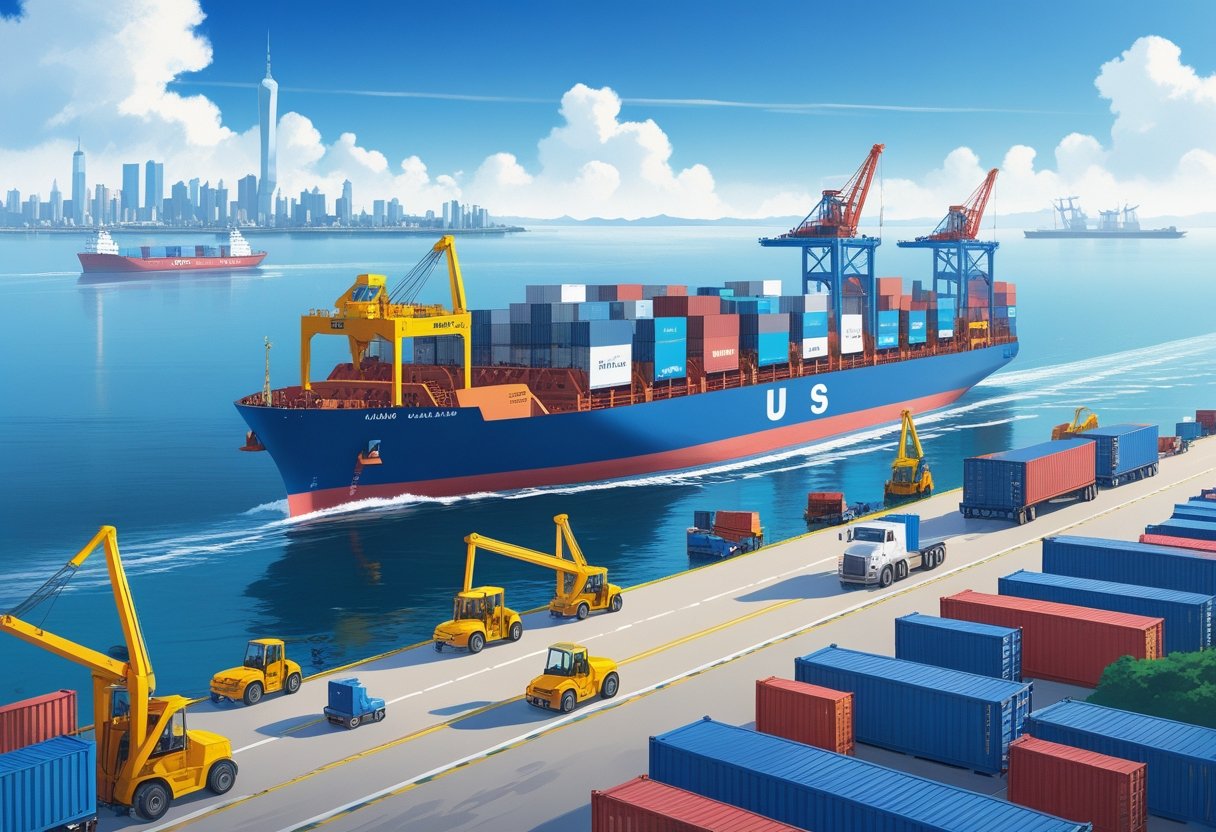
Shipping Machinery from China to USA: Methods, Costs, and Compliance
📅 November 14, 2025
Shipping machinery from China to USA isn’t just a matter of loading cargo onto a ship—it’s a whole process with plenty of decisions along the way. If you’re importing construction equipment, industrial machines, or farming tools, understanding your shipping options can honestly save you a ton of money and headaches.
Sea freight stands out as the most cost-effective way for shipping machinery from China to the USA. Container shipping usually runs about $1,500-$2,800, and you’re looking at transit times of 25-40 days.
Your machinery’s size, weight, and how quickly you need it will decide whether you go with full container load, roll-on/roll-off, or break bulk shipping. The process goes beyond picking a shipping method, though.
You’ll need to handle documentation, get through US customs, and work with freight forwarders who know the ins and outs of shipping machinery. Smart choices on packaging, insurance, and compliance really help your equipment arrive safe and sound.
Key Takeaways for Shipping Machinery from China to USA
- Sea freight usually gives you the best mix of price and reliability for machinery shipments from China to the USA.
- Your pick between container shipping, RoRo, or break bulk depends on your equipment’s size and whether it can roll.
-
Experienced freight forwarders help with paperwork and customs, so your machinery actually gets delivered smoothly.
Key Shipping Methods for Machinery from China to USA
When shipping machinery from China to the USA, you’ve got four main transport options. Sea freight is cheapest for big, heavy equipment, while air freight is for when you’re in a rush.
Sea Freight Shipping Machinery from China to USA
It is the go-to for shipping large machinery from China to the US. If you can plan ahead and don’t need it yesterday, this is usually the way to go.
Pick between Full Container Load (FCL) or Less than Container Load (LCL). FCL means the whole container is yours. LCL lets you share that space with other shipments.
Container Types for Shipping Machinery:
- 20ft containers: Up to 28 tons
- 40ft containers: Up to 32 tons
-
40ft high cube: Extra height for tall stuff
If you’ve got oversized machinery, like an excavator, break bulk shipping works better. They load your equipment right onto the ship, no container needed.
RoRo (Roll-on/Roll-off) is perfect for machinery on wheels. Just drive it on and off the ship at each port.
Transit times? Anywhere from 15-35 days, depending on where you’re shipping from and to. West Coast ports like Los Angeles get your machinery faster than the East Coast.
Air Freight Shipping Machinery from China to USA
Air freight is way pricier than sea but gets your machinery there in 3-7 days. Sometimes, you just can’t wait.
Airlines have strict size and weight rules. Most cargo planes can only handle up to 20 tons. Really big machinery won’t fly—literally.
They charge you for whichever is higher: actual weight or dimensional weight. Watch out for that.
Best times to use air freight:
- Urgent replacement parts
- Small, precise equipment
- High-value machinery that fits size rules
-
Time-sensitive projects
Major cargo airports are Los Angeles, JFK in New York, and Chicago O’Hare. Your freight forwarder can help with pickups.
Express Courier Services for Machinery from China to USA
Express couriers like DHL, FedEx, and UPS are for small machinery parts and tools. They do door-to-door in 2-5 business days.
There’s a 150-pound limit per package, plus size restrictions. Not great for big stuff, but perfect for smaller shipments.
Express services include customs clearance and tracking. You’ll always know where your shipment is.
Great for shipping:
- Spare parts under 150 lbs
- Small tools and components
- Urgent replacement equipment
-
Stuff that needs quick customs clearance
It costs more per pound than other methods. Use it when speed is more important than saving money.
Multimodal Transport Solutions for Shipping Machinery
Multimodal transport mixes different shipping methods for better efficiency. Maybe sea freight for the big machines, air for urgent parts.
This way, you balance cost and speed. Ship heavy stuff cheap, rush the critical pieces.
Rail transport from West Coast ports can lower inland delivery costs. Trains move containers from Long Beach to farther inland.
Common combos:
- Sea + truck for final delivery
- Air + truck for inland moves
- Sea + rail for cross-country
-
Express + truck for last-mile
Your freight forwarder handles the connections. They make sure everything transfers smoothly between modes.
Selecting the Right Transport Method for Shipping Machinery from China to USA

The size and weight of your machinery really decide which shipping option fits your budget and timeline. Sea freight handles big, heavy loads better than anything else, so picking the right container is a big deal for cost control.
### Evaluating Machinery Size and Weight for Shipping from China to USA
Your machinery’s measurements tell you what shipping methods are even possible. Standard containers are 20 or 40 feet long, with specific height and weight limits.
20-foot containers max out at 28 tons. 40-foot containers can carry up to 32 tons. If you’re over, you’ll need special handling.
Big equipment like excavators often goes break bulk—loaded right onto the ship, no container needed. Always measure your machinery carefully, including packaging. Weight distribution matters for safe shipping.
Small machinery under 10 tons fits fine in standard containers. Medium equipment (10-25 tons) usually goes FCL.
### Budget and Delivery Timeline When Shipping Machinery
Sea freight is way cheaper than air for heavy machinery. Transit runs 15-35 days, depending on your ports.
Air freight is for urgent shipments, but it’ll cost 5-10 times more than sea. Most companies stick with sea freight for regular machinery imports.
Budget factors to watch:
- Base shipping rates
- Fuel surcharges
- Port fees
- Inland trucking
-
Insurance
Try to ship during off-peak seasons for better rates. Summer is usually pricier than winter.
Express shipping exists, but it’s expensive. Only use it if delays would cost more than the shipping itself.
When to Choose Full Container Load for Machinery Shipping
Full Container Load (FCL) means the whole container is yours. It’s the move when your machinery takes up most of the space.
Pick FCL if:
- Your cargo is over 15 tons
- You’re shipping multiple machines
- You want better security
-
Your equipment is fragile or needs careful handling
FCL cuts down on handling, so there’s less risk of damage. You get to control the loading, which is great for expensive or delicate equipment.
FCL is usually cheaper per ton than sharing a container. The break-even point is around 15 tons of cargo.
When to Use Less Than Container Load for Machinery
Less Than Container Load (LCL) lets you share space with other shippers. It’s a money-saver if your machinery doesn’t fill a container.
LCL works best for:
- Single machines under 10 tons
- Spare parts
- Sample equipment
-
Projects on a tight budget
LCL means more handling at warehouses—your cargo gets loaded and unloaded a few times. That can add 3-7 days to your shipping time.
LCL is great for regular small shipments. You can send one machine at a time, no need to wait for a full load.
Always compare per-ton costs between LCL and FCL. Sometimes, booking a whole container is cheaper even if you don’t fill it.
Machinery Packaging and Container Types for Shipping from China to USA
Picking the right container and packaging depends on your machinery’s size, weight, and shape. The right shipping option protects your equipment and keeps costs in check when moving machinery from China to the USA.
Standard Container Packing for Machinery Shipping
Standard containers are great for smaller machinery that fits normal size limits. These 20-foot or 40-foot boxes keep your equipment safe from weather and theft.
Use a full container load (FCL) when you’ve got enough machinery to fill it. That way, you get exclusive use and less handling.
Standard container sizes:
- 20-foot: 19’4″ L × 7’8″ W × 7’10” H
- 40-foot: 39’5″ L × 7’8″ W × 7’10” H
-
40-foot high cube: 39’5″ L × 7’8″ W × 8’10” H
Secure your machinery with wooden blocks, steel straps, and protective wrapping. Always remove fluids and disconnect batteries before shipping.
Open-Top and Flat Rack Containers for Shipping Machinery from China to USA
Open-top containers are for tall machinery that won’t fit regular height limits. The tarpaulin roof comes off so you can load with a crane from above.
Manufacturing equipment shipping often needs these special containers for oversized stuff.
Flat rack containers are for super wide or odd-shaped machinery. No roof, no walls—just a flat platform and collapsible sides.
You secure your equipment with chains and blocks. It costs more but handles machinery that just won’t fit anywhere else.
Roll-On/Roll-Off (RoRo) Shipping
Roll-On/Roll-Off (RoRo) shipping is a favorite for self-propelled or towable machinery. With this method, your equipment drives or gets towed straight onto the ship’s deck.
RoRo shipping for machinery from China to USA keeps things simple. It cuts down on handling and means you don’t have to take apart your equipment.
Construction equipment, farm machinery, and industrial vehicles all ship well using RoRo. It’s a go-to option for many businesses.
RoRo advantages:
- No crane lifting required
- Minimal handling reduces damage risk
- Faster loading and unloading
-
Lower costs for wheeled equipment
Your machinery needs to be operational enough to move on its own or at least be towable. Make sure to drain all fluids to minimal levels before shipping.
Special Packaging Requirements
Heavy machinery really needs custom wooden crates or steel frames to stay safe. Use moisture-resistant materials and toss in desiccants to keep rust at bay during the ocean trip.
Critical packaging steps:
- Drain all fluids completely
- Remove or secure loose parts
- Apply rust preventive coatings
- Use vapor barrier films
-
Add shock-absorbing materials
Precision machinery often needs climate-controlled containers to keep temperature and humidity steady. Packaging must meet both U.S. customs and international shipping standards.
Take photos and write up detailed lists for every packaging step. If something goes wrong, this documentation can help with insurance and customs clearance.
Required Shipping Documentation for Machinery from China to USA
Getting the paperwork right is crucial when importing machinery from China to USA. You’ll need three main types: transport documents, commercial paperwork, and compliance certificates.
Bill of Lading for Machinery from China to USA
The bill of lading acts as your main shipping contract and proof of ownership. It transfers legal title of your machinery from the Chinese supplier to you.
You’ll get either an ocean bill of lading for sea freight or an air waybill for air cargo. Both include the essential shipment details.
Key information includes:
- Shipper and consignee details
- Port of loading and discharge
- Machinery description and weight
- Container numbers and seal information
-
Freight charges and payment terms
Every detail on your bill of lading must match the rest of your shipping documents. Even a small error can cause customs delays or rejection.
Hold onto the original bill of lading. You’ll need it to claim your machinery at the port, and it proves you own the cargo.
Commercial Invoice and Packing List for Machinery from China to USA
The commercial invoice serves as your official sales receipt and customs declaration. It determines the duties and taxes you’ll pay on imported machinery.
Make sure your invoice has accurate machinery descriptions and proper HS codes. These codes set your tariff rates and import requirements.
Required invoice details:
- Complete buyer and seller information
- Machinery model numbers and specifications
- Unit prices and total value in USD
- Payment terms and currency
-
Country of origin marking
The packing list gives customs a detailed look at how your machinery is packed and marked. Include gross and net weights, dimensions, and package quantities.
Everything on the packing list should match the commercial invoice exactly. Use company letterhead and authorized signatures for both documents.
Incomplete or inaccurate paperwork leads to customs clearance delays and potential fines.
Certificates and Compliance Documentation for Machinery from China to USA
Machinery imports need certificates to prove safety and regulatory compliance. These documents show your equipment meets U.S. standards.
Essential certificates include:
- Certificate of Origin (for preferential duty rates)
- Quality inspection certificates
- Safety compliance documentation
-
Environmental compliance certificates
Electrical machinery might need UL or FCC approval. Industrial equipment could require EPA compliance, depending on the type.
Your Chinese supplier should provide most compliance documents before shipping. Double-check that all certificates are current and match your machinery models.
Some certificates need third-party testing, which can take weeks. Plan ahead for this part.
Government agencies regulate different machinery types and require different documents. Always check regulations for your equipment before shipping.
Missing certificates can get your cargo held at U.S. ports. Don’t let your machinery ship from China without all the right paperwork.
US Customs Compliance and Duties for Machinery from China to USA
Correct classification with HS codes decides your machinery’s duty rate. Knowing the full tax structure helps you budget for importing machinery from China to USA.
Most agricultural equipment enters duty-free. Industrial machinery might get hit with standard rates and extra China-specific tariffs.
Using HS Codes for Machinery from China to USA
HS codes are 10-digit numbers that classify machinery for customs. The first six digits are global; the last four are U.S.-specific.
Get your machinery classified correctly to avoid penalties. Tractors and harvesters often go duty-free under certain HS codes.
Industrial machinery falls under Chapter 84. Construction, manufacturing, and processing equipment each have their own classifications, which affect your duty rates.
Common Machinery HS Code Categories:
- 8426: Cranes and lifting equipment
- 8429: Bulldozers and excavators
- 8433: Harvesting machinery
-
8479: Industrial processing machines
Check your HS code on the USITC website by searching your product description. Wrong codes lead to incorrect duty payments or customs penalties.
Import Duties and Taxes on Machinery from China to USA
You pay import duties on goods valued over $800. Machinery from China faces both standard import duties and possible extra tariffs under Section 301 trade rules.
Standard machinery duty rates usually range from 0% to 5.7%. Agricultural equipment often qualifies for 0% duty.
Additional costs include:
- Merchandising Processing Fee (MPF): 0.3464% of shipment value ($27.20 minimum, $528.33 maximum)
- Harbor Maintenance Fee (HMF): 0.125% for ocean freight only
-
Section 301 tariffs: Up to 25% extra on Chinese machinery
Machinery and electronics for manufacturing face the 25% tariff under Lists 1 and 2. Check for extra tariffs by looking up HTS codes 9903.88.01 through 9903.88.04.
Customs Clearance Process for Machinery from China to USA
CBP recommends importers learn the laws and work with the Office of Trade for smoother clearance. Your machinery shipment needs specific paperwork before CBP will release it.
Required documents include:
- Commercial invoice with detailed machinery info
- Bill of lading or airway bill
- Packing list showing weight and dimensions
-
Certificate of origin (if claiming preferential rates)
Shipments over $2,500 require formal entry. You have 15 days after arrival at the U.S. port to file your entry documents.
Accurate documentation helps your shipment clear customs fast and avoids penalties. CBP may inspect your machinery to make sure it matches the paperwork and meets safety rules.
Your customs broker files everything electronically through CBP’s Automated Broker Interface. They’ll pay duties on your behalf too.
Choosing a Reliable Freight Forwarder for Machinery from China to USA
Picking the right freight forwarder can make shipping machinery from China to USA much less stressful. They handle pickup, delivery, customs paperwork, and insurance.
Freight Forwarder Services for Machinery from China to USA
Freight forwarders offer end-to-end shipping for your machinery. They’ll pick up equipment from the Chinese factory or warehouse.
The forwarder handles all export paperwork and customs declarations in China. They keep the process moving.
Transportation Services:
- Ocean freight booking and container loading
- Air freight for urgent machinery shipments
- Inland trucking from factory to port
-
Door-to-door delivery to your USA location
Documentation and Compliance:
- Export licenses and permits
- Commercial invoices and packing lists
- Bills of lading and insurance certificates
-
USA customs clearance and duty payments
Many reliable freight forwarders from China to USA also offer cargo insurance. That’s real peace of mind for your valuable machinery.
They work with shipping lines and airlines to get the best rates. Some forwarders even offer tracking so you can keep an eye on your shipment.
How to Evaluate Freight Forwarders for Machinery from China to USA
Start by checking for proper licenses and certifications in both China and the USA. NVOCC (Non-Vessel Operating Common Carrier) licenses are a must.
Key Evaluation Criteria:
- Years of experience with machinery shipments
- Network of offices in China and USA
- Customer reviews and references
- Insurance coverage and claims handling
-
Technology for tracking and communication
Ask for references from other companies shipping similar machinery. Reach out and ask how things really went—did the forwarder handle problems well?
Request detailed quotes from several forwarders. Compare more than just prices; look at what’s included. When choosing freight forwarders from China to USA, transparency matters—nobody likes hidden fees.
Test their communication. Send questions and see how fast and helpful their replies are. If they’re slow now, imagine how they’ll be when your shipment’s on the line.
Working with Forwarders for Machinery Shipments
When shipping machinery from China to the USA, your freight forwarder plays a crucial role. Make sure to provide detailed machinery specifications early in the process to streamline your shipment.
Include exact dimensions, weight, and any special handling requirements. Some machinery calls for climate-controlled containers or unique securing methods.
Information to Share:
- Machinery type and model numbers
- Pickup location and delivery address
- Required delivery timeline
- Any hazardous materials or batteries
-
Value for insurance purposes
Talk through packaging needs with your forwarder. Heavy machinery usually needs custom crating or extra blocking inside containers.
The forwarder can help arrange professional packaging services if you need them. It’s worth asking about options early.
Set clear expectations for communication. Request regular shipping updates and quick notice if any issues pop up.
Get direct contact info for the main people handling your shipment. That way, you’re not left guessing who to call if something goes sideways.
Look over all documentation before you sign anything. Double-check that your freight forwarder understands any special needs for your machinery.
Confirm that your insurance coverage matches the full value of your machinery. Don’t skimp here—better safe than sorry.
Be prepared for customs clearance delays. Machinery shipments sometimes need extra inspections or paperwork at USA ports.
Frequently Asked Questions About Shipping Machinery from China to the USA
Importers run into some specific cost and paperwork headaches when moving machinery across the Pacific. If you know the current shipping rates, tax rules, and what documents you need, you’ll plan better and dodge avoidable delays.
What are the current rates for shipping machinery by sea from China to the USA?
Sea freight rates for machinery usually fall between $1,500 and $4,000 per 20-foot container. The exact price depends on your departure and arrival ports.
Popular routes like Shanghai to Los Angeles tend to cost less than shipping to smaller ports. Oversized machinery that needs flat rack or open-top containers will add extra fees.
Rates can jump by 20-40% during peak shipping seasons, usually September through November. If you can, book during slower months to cut costs.
Can I import a machine from China without paying import tax in the USA?
There’s no real way to avoid all taxes when importing machinery from China. Most machinery gets hit with import duties ranging from 0% to 25%, depending on the type and current trade policies.
You have to pay the right Harmonized Tariff Schedule (HTS) duty rate for your machine’s category. Some Chinese-made equipment also faces extra Section 301 tariffs.
Some machinery does qualify for duty-free treatment under certain trade programs. But you’ll still pay other fees, like harbor maintenance and customs processing charges.
What is the average cost per kilogram for shipping machinery from China to the United States?
Sea freight costs for machinery generally range from $0.50 to $2.00 per kilogram. Your rate depends on the weight, dimensions, and how you pack your machinery.
Heavy machinery often ships more cheaply per kilogram, since ocean freight favors weight over volume. Light but bulky equipment can cost more per kilogram due to dimensional weight rules.
Air freight runs $4 to $8 per kilogram but delivers in 5-10 days instead of 25-40 days for ocean shipping. Most importers stick with sea freight for non-urgent machinery to save money.
How much does it cost to ship a 40-foot container with machinery from China to the US?
Shipping a 40-foot container with machinery from China to the USA usually costs $2,500 to $6,000. If you need a high cube container for taller machinery, expect to pay $200 to $500 more.
Your total bill includes ocean freight, terminal handling, documentation fees, and customs clearance. You’ll also pay $800 to $1,500 in extra charges beyond the base freight rate.
Flat rack containers for oversized machinery can cost 50-100% more than standard containers. Adding door-to-door delivery tacks on another $1,000 to $3,000 depending on your final destination.
What are the cheapest options available for shipping heavy machinery from China to the USA?
Sea freight is still the most cost-effective option for heavy machinery shipments. If you can, consolidate several machines into one container to lower your per-unit shipping costs.
Major ports like Los Angeles, Long Beach, or New York usually offer better rates than smaller ports. Sometimes it’s cheaper to use port-to-port service and then arrange inland transport yourself.
Booking in off-peak seasons and staying flexible with delivery times can land you a better rate. Freight forwarders who specialize in machinery shipping often have access to deals you won’t find on your own.
What are the necessary steps to take when importing machinery from China to the USA?
When importing machinery from China to the USA, you’ll need to gather specific documentation for machinery imports. This usually means commercial invoices, packing lists, and bills of lading.
Make sure you get your machinery’s correct HTS code, since customs uses this for classification. The right code can save you plenty of hassle later.
If you haven’t already, register for an Importer of Record number. Some types of machinery also need certifications like CE marks, FDA approvals, or EPA compliance certificates, depending on what you’re bringing in.
Work with a licensed customs broker to arrange customs clearance before your shipment arrives. You’ll want to prepare payment for duties, taxes, and fees so you don’t get hit with storage charges at the port.
Once customs releases your machinery, go ahead and schedule delivery or pickup. Customs processing usually takes about 3-7 business days after your shipment lands at a US port, but sometimes it moves faster—or drags on a bit.
Ready to Ship from China to USA?
Get a free quote from our logistics experts today.
Get a Free Quote →