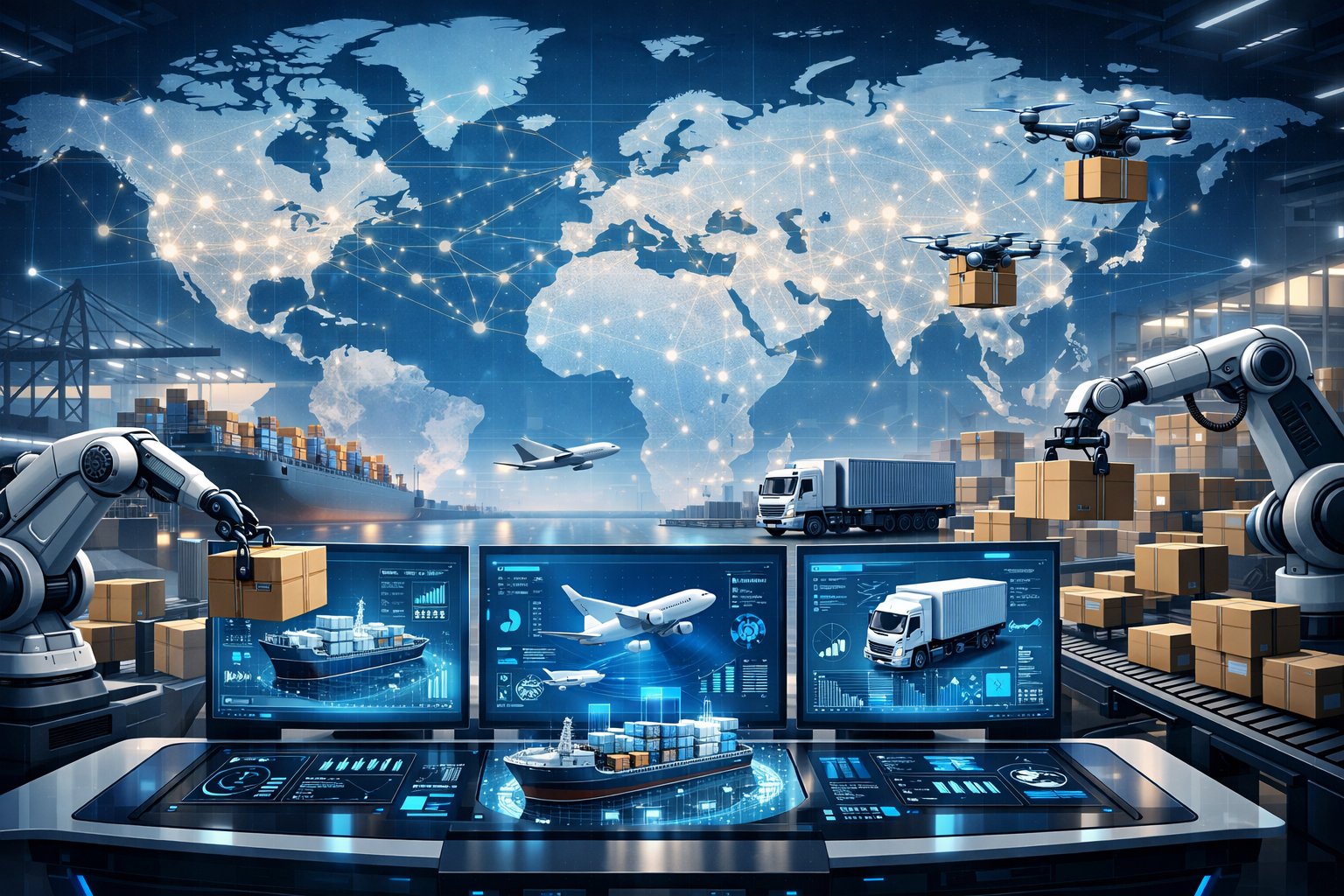
AI in Global Logistics: Transforming Supply Chains Worldwide
Global logistics companies are turning to AI to tackle problems that traditional methods just can’t handle efficiently. AI in global logistics combines machine learning, predictive analytics, and automation to optimize routes, forecast demand, cut costs, and boost delivery times across supply chains.
The global AI in logistics market could top $25 billion by 2026, which says a lot about how quickly companies are jumping on board.
How does artificial intelligence actually fit into real shipping and warehouse operations? AI is transforming logistics by predicting when trucks need repairs, finding the fastest delivery routes, and managing inventory with minimal human input.
These changes mean your packages usually arrive faster, and there’s less waste in the system. The shift from reacting to problems to predicting them is shaking up global logistics in a big way.
AI is shifting supply chains by running thousands of what-if scenarios, optimizing safety stock, and spotting risks across massive networks. Companies can now see problems coming and act before delays hit.
Key Takeaways
- AI helps logistics companies predict issues, optimize routes, and automate warehouses to save time and money
- Technologies like generative AI and machine learning push logistics from reactive to predictive
- Data quality and implementation are tough, but getting AI right means better efficiency and customer service
The Role of AI in Global Logistics
AI is fundamentally changing how you manage and operate global logistics networks. These systems now handle everything from predicting disruptions to optimizing delivery routes in ways that would’ve been hard to imagine just a few years ago.
Defining AI and Its Key Technologies
AI means computer systems that take on tasks needing human-like smarts. In logistics, that covers learning from data, spotting patterns, and making decisions with little human help.
Machine learning is at the heart of most AI in your supply chain. These algorithms dig through shipping data, weather, and traffic info to predict what comes next.
You’ll also see computer vision systems reading shipping labels, checking cargo for damage, and guiding robots through warehouses. Natural language processing lets you ask logistics systems simple questions—no need for complicated database searches.
Ask about inventory or shipment status, and these systems get it. Generative AI now helps manage messy data like bills of lading and customs docs, not just content creation.
Digital twins create virtual copies of your supply chain. You can test thousands of scenarios and spot weak points before real trouble hits.
Evolution of AI in the Logistics Industry
The logistics industry has moved through different phases of AI adoption. Back in the 2010s, early systems focused on basic automation and route optimization using pretty simple algorithms.
By 2020, machine learning models could forecast demand and optimize inventory, analyzing past sales but still needing lots of human oversight. The pandemic sped up digital transformation as companies scrambled to handle wild supply chain swings.
Now, it’s all about “predictive orchestration.” Systems pull data from different departments into unified AI-based control towers. These platforms even use outside signals like port congestion and social media buzz to predict issues before they explode.
Autonomous systems have gone from basic line-following robots to advanced agents navigating busy warehouses with human workers. AI now acts like an air traffic controller for global freight, optimizing container moves across sprawling networks.
Drivers of AI Adoption Across Global Supply Chains
Volatility and disruption push you to adopt AI faster than you might’ve planned. Geopolitics, climate swings, and pandemic aftershocks have wrecked old just-in-time models.
You need systems that crunch massive data volumes just to keep up. Cost pressure keeps investment in AI going strong, especially since the last mile of delivery is pricey.
AI brings down those costs with smarter routing and load planning. Environmental rules are getting stricter, and AI-powered route optimization cuts fuel use to meet ESG targets.
Competitive advantage is real as AI moves from experiment to daily operations. Companies using predictive AI can see market shifts coming, while others just react after the fact.
Being able to simulate scenarios and tweak safety stock on the fly gives early adopters a big leg up. Labor challenges are also a factor. AI takes over routine tasks, freeing your team for strategy and relationship-building.
That means new skills are needed, but it also lets people focus on the stuff machines can’t do as well.
Core Applications of AI in Logistics
AI is changing how logistics companies run day-to-day operations. The main areas? Predicting product demand, managing stock, finding faster delivery routes, and automating warehouse tasks to speed up order fulfillment.
AI-Powered Demand Forecasting and Inventory Management
AI-powered forecasting uses machine learning to predict future demand by looking at past sales, seasonal trends, and market shifts. Traditional methods like ARIMA struggle with sudden changes, but AI algorithms blend real-time feeds with history for sharper predictions.
Your warehouse management system gets smarter with predictive analytics that tell you exactly how much inventory to keep at each spot. This cuts storage costs and helps avoid those annoying stockouts.
If demand suddenly jumps, AI tweaks reorder points and safety stock on its own. Key benefits include:
- 15–30% lower inventory holding costs
- Better match between supply and what customers actually want
- Way fewer manual steps in managing inventory
- Easier handling of seasonal swings
Companies using AI-driven logistics for demand forecasting can tighten up their whole supply chain, from raw material buying to final delivery.
Route Optimization and Dynamic Scheduling
AI-powered route optimization looks at traffic, weather, delivery windows, and vehicle capacity to find the best paths. Unlike static routing, dynamic routing changes on the fly as the day unfolds.
Your delivery fleet benefits because AI juggles tons of variables at once. It can evaluate thousands of possible routes in seconds, something no human planner could do. Dynamic scheduling also helps you send out drivers based on predicted order volumes.
Mile’s AI-driven logistics platform cut planning time by 85% and achieved same-day delivery for 90% of on-demand orders with automated route optimization. The system even optimizes geo-zones, pallet loading, and vehicle assignments straight from order systems.
Dynamic routing means lower fuel bills, fewer emissions, and better on-time delivery. Customers notice when things just work.
Warehouse Automation and Smart Warehousing
Smart warehousing blends robotics, computer vision, and AI to automate picking, packing, sorting, and quality checks. Warehouse robots move inventory and process orders faster than people alone ever could.
Your warehouse management system ties in with AI tools that spot damaged goods using visual inspection. Computer vision reviews product images live, catching defects that humans might miss in the rush.
This tech boosts accuracy and speeds up order processing. Amazon uses over 200,000 robots in its warehouses to handle peak volumes more efficiently.
The robots work alongside people, cutting labor costs and processing times. Other companies see up to 57% more productivity at packing tables after adding automation.
AI also powers predictive maintenance for warehouse equipment. By analyzing sensor data, it flags issues before breakdowns happen, keeping your operations humming.
Transforming Transportation and Last-Mile Delivery
AI is redefining how goods get from warehouses to your door. Smarter route planning, vehicle maintenance predictions, and automated delivery systems are all part of the mix.
These technologies help you cut costs, speed up deliveries, and use less fuel across your transportation network. It’s not just a tech upgrade—it’s a whole new way of thinking about delivery.
Transportation Management with AI
AI-powered transportation management systems (TMS) help you plan and run shipments way more efficiently than old-school methods. These tools analyze huge data sets to optimize routes, pick the right carriers, and predict delivery times with impressive accuracy.
Modern TMS platforms use machine learning to track real-time traffic, weather, and past delivery data. This means you can tweak routes as conditions change, not just stick to a plan made hours before.
AI in logistics enables route optimization that sequences 120 stops in seconds, considering delivery windows, urgency, and distance. Your TMS can also learn customer quirks over time.
If you’re shipping internationally, AI remembers customs preferences and suggests the right tariff codes, so you don’t have to re-enter the same info all the time.
Fleet Management and Predictive Maintenance
AI changes how you monitor and maintain your delivery vehicles. Instead of sticking to rigid maintenance schedules, you can spot issues before they turn into breakdowns.
Predictive maintenance systems analyze sensor data from your vehicles and pick up on patterns that signal wear or trouble ahead. This approach slashes unexpected downtime and helps your vehicles last longer.
AI also keeps tabs on fuel efficiency, flagging when vehicles idle too much or when loading routines waste time and gas. Fleet management powered by AI tracks driver behavior, vehicle health, and route efficiency all at once.
You get alerts about inefficiencies and can take action to cut costs. Electric vehicles in your fleet also benefit, as AI can optimize charging schedules based on delivery plans and battery levels.
Autonomous Vehicles, Drones, and Robotics in Logistics
Self-driving trucks, delivery drones, and mobile robots are finally moving from pilot projects to real-world use. These tools lower labor costs and allow round-the-clock operations without human fatigue.
Autonomous vehicles use AI to navigate, dodge obstacles, and make delivery calls in real time. Self-driving trucks handle long hauls, while people focus on trickier city deliveries that need a human touch.
Drone delivery can reach remote spots faster and skip traffic jams entirely. Mobile robots work inside warehouses and handle last-mile delivery in places like campuses or neighborhoods.
These robots use computer vision and machine learning to get around, find delivery spots, and avoid bumping into people. AI and robotics integration means robots keep learning and getting better with every delivery.
Vision picking tech with smart glasses lets warehouse workers scan barcodes hands-free and get voice directions. That speeds up sorting and reduces mistakes when loading up delivery vehicles.
Enhancing Operational Efficiency and Supply Chain Visibility
AI is transforming how you run logistics by providing real-time insights and automating tough decisions. These systems help you cut costs, improve tracking, and spot potential disruptions before they mess up your supply chain.
Real-Time Tracking and Data Integration
AI-powered real-time tracking systems give you visibility into your shipments and inventory at every stage of the supply chain. Machine learning models can pull data from sensors, GPS, ERP systems, and external sources to create a live dashboard showing inventory levels, shipment locations, and facility status.
AI technologies including computer vision and IoT offer a unified view from raw materials through final delivery. You can monitor multiple data streams at once without the headache of manual checks.
This integration wipes out information gaps that used to force you to call carriers or suppliers. The consolidated data lets you make faster decisions about routing, inventory, and resource deployment.
Your operations team can jump on delays or disruptions within minutes instead of hours. It’s a huge shift from the old days of waiting for updates.
AI-Driven Analytics for Cost Reduction
AI-driven analytics spot inefficiencies that traditional methods easily overlook. These systems dig into patterns in fuel use, route selection, warehouse operations, and fleet utilization to find savings opportunities.
Predictive models help you optimize delivery schedules and cut down on empty miles in your transportation network. The algorithms factor in traffic, weather, and customer delivery windows to recommend the most cost-effective routes.
Data analytics also help you negotiate better rates with carriers by showing clear evidence of shipping volumes and patterns. Studies show that AI adopters in supply chain management see measurable improvements in operational performance over companies sticking to old-school methods.
Improving Supply Chain Visibility and Risk Management
Supply chain visibility remains a pain point for most companies, especially when it comes to information beyond direct suppliers. AI-enhanced frameworks for risk management help you spot vulnerabilities and predict disruptions before they hit.
Generative AI models analyze unstructured data from news, social media, and company reports to catch early warning signs of supplier issues or geopolitical risks. You gain insights into relationships between suppliers, manufacturers, and distributors that would otherwise stay buried.
These systems reveal complex dependencies in your supply network. You can see how a disruption at one supplier might ripple through multiple tiers and start building contingency plans now, not later.
Next-Generation AI: Generative AI, Agentic AI, and Virtual Assistants
AI in logistics has moved way past basic automation. Now, systems can create content, make autonomous decisions, and interact naturally with customers. This includes generative AI models that produce text and images, autonomous agents that handle complex tasks on their own, and conversational assistants that field customer inquiries.
Generative AI and Large Language Models
Generative AI creates new content by learning from massive datasets. You can use these systems to generate shipping documentation, write customer messages, and crank out logistics reports automatically.
Large language models drive most generative AI in logistics. They process natural language, understand context, and generate human-like responses. When you roll out GenAI tools, they can summarize long shipping contracts, translate international docs, and draft email replies to carrier questions.
Common applications include:
- Automated documentation for customs forms and bills of lading
- Real-time translation of international shipping documents
- Predictive text for warehouse management systems
- Code generation for logistics software development
Platforms like Azure offer GenAI services that plug right into your existing logistics software. These tools can cut down on manual data entry and speed up administrative work. The tech analyzes historical data and patterns, then produces new content that matches your organization’s style and requirements.
Agentic AI and AI Agents in Logistics
Agentic AI works autonomously to complete complex tasks without constant human direction. Unlike generative AI, which creates content on demand, AI agents decide and act toward specific goals.
You can deploy agentic AI systems to manage supply chain operations independently. These agents monitor conditions, weigh options, and make decisions in real-time. If weather disrupts a shipping route, an AI agent can reroute shipments, notify customers, and adjust delivery schedules automatically.
Real-world applications include autonomous vehicles, predictive inventory systems, and smart warehouse robots. In your warehouse, AI agents coordinate with each other to optimize picking routes and loading sequences.
They learn from experience and improve on their own over time. The technology blends machine learning with decision-making skills, so your AI agents perceive their environment, reason through choices, act, and learn from what happens. That loop drives ongoing efficiency gains.
AI Chatbots and Virtual Assistants in Customer Service
AI chatbots and virtual assistants answer customer questions using natural language processing. You can roll out these tools to provide 24/7 support for tracking shipments, answering delivery questions, and handling common issues.
Modern virtual assistants do more than spit out scripted replies. They get context, access multiple systems at once, and handle complex requests, like processing returns or updating delivery addresses. If a customer asks about a delayed package, your AI assistant checks real-time tracking data, figures out the cause, and gives an accurate update.
Key capabilities include:
- Shipment tracking and status updates
- Delivery scheduling and rescheduling
- Address verification and corrections
- Basic claims processing and documentation
Copilot-style assistants work alongside your customer service team. They suggest responses, pull up relevant info, and automate routine tasks so your human agents can focus on the tough stuff. You can connect these systems to your existing platforms to keep service quality steady across all channels.
The real difference between basic chatbots and advanced virtual assistants is autonomy. Basic bots answer specific prompts, but AI-powered assistants can anticipate needs, start conversations about possible delivery issues, and fix problems before customers even notice.
Implementation Challenges and Strategic Considerations
Scaling AI from pilot projects to full operations means tackling data infrastructure gaps, compliance requirements, and workforce transitions. It takes careful planning and real investment to get meaningful results.
Data Quality, Integration, and IoT
Your AI systems are only as good as the data you feed them. Many logistics companies still deal with poor data integration and outdated IT systems that hold AI back.
You need clean, structured data from multiple sources to train accurate AI models. That means pulling info from warehouse management, transportation networks, and customer databases. If your data is stuck in disconnected silos, AI can’t spot patterns or make solid predictions.
IoT devices play a huge role in collecting real-time data from trucks, warehouses, and shipping containers. These sensors track location, temperature, humidity, and other shipment conditions. But integrating IoT data with your current systems? It’s a big technical lift.
Data quality and governance form the foundation for AI success. You’ll need processes to clean historical data, standardize formats, and keep data accurate over time.
Regulatory Compliance and Model Transparency
There’s growing pressure to explain how your AI systems make decisions. Regulatory compliance and model explainability are big hurdles, especially when AI handles critical docs like customs paperwork and contracts.
Logistics runs under strict regulations that change by country and region. Your AI models must follow data privacy laws, safety standards, and industry-specific rules. If algorithms make decisions in a black box, you risk penalties and lose customer trust.
Model transparency is especially important when AI affects hiring, route planning, or pricing. You need systems that can explain their recommendations clearly so your team can check for accuracy and fairness.
Addressing Labor Shortages and Change Management
Labor shortages are one of the biggest headaches in logistics. AI can automate repetitive tasks, but digital transformation means your workforce has to adapt to new roles and tools.
Your employees might push back if they worry about job loss or struggle with new tech. Good change management means training programs that help workers build skills for AI-assisted operations. By automating routine documentation and data entry, you free up your team to focus on strategy and customer relationships.
It’s smart to target specific operational bottlenecks where AI brings the most value before scaling up. This approach builds internal support and shows real results to any skeptics.
The Future Impact of AI on Global Logistics
AI will change how companies manage transportation, warehousing, and delivery—while also opening up new ways to cut costs and boost environmental responsibility. The logistics industry could see $1.3 to $2 trillion in annual economic value over the next twenty years from AI adoption.
Emerging Trends and Innovations
Autonomous systems and digital twins are shaking up logistics operations. You’ll start to see AI-driven routing and autonomous mobile robots cutting last-mile delivery costs and reducing emissions in global supply chains.
Physical-internet concepts are picking up steam. These systems aim to optimize how goods move through shared networks, not just isolated channels.
Agentic AI is a big leap in automation. These systems can create and coordinate multi-agent operations for complex tasks like freight invoicing, customs management, and dynamic pricing—all without human help. Network-based transportation management systems will probably see the biggest changes as AI capabilities keep expanding.
AI-powered real-time decision-making lets your operations adapt instantly to disruptions, weather swings, and sudden changes in demand.
Scaling AI Adoption Across the Supply Chain
You’ll need three building blocks for successful AI: adaptive cloud infrastructure to connect siloed teams and sites, comprehensive business suites like Dynamics 365 Supply Chain Management, and AI/agentic AI solutions to automate business processes.
Over 75% of logistics leaders admit the industry has dragged its feet on digital transformation. At this point, incremental improvements probably won’t cut it.
AI-powered innovations could deliver:
- 15% reduction in logistics costs
- 35% optimization in inventory levels
- 65% boost in service levels
You’ll want to integrate emerging technologies across demand forecasting, route optimization, load management, and customer service. Ready-to-deploy solutions from specialized vendors can speed up your rollout.
Sustainability and Business Value Creation
AI helps cut environmental impact and boosts your bottom line. Route optimization algorithms slash fuel use, which supports both cost savings and sustainability.
You’ll notice less waste thanks to better demand forecasting. SPAR Austria hit over 90% forecast accuracy with AI and cut costs by 15% by minimizing waste across 1,500 stores.
Logistics and supply chain management powered by AI helps you meet ESG goals. Load management algorithms make the most of space in trucks and warehouses, so you avoid unnecessary trips.
Efficiency gains and environmental perks give you a real edge. Your customers want seamless, end-to-end logistics, and 91% of logistics firms are seeing this shift. AI lets you meet these demands, stay profitable, and shrink your carbon footprint at the same time.
Frequently Asked Questions
AI now handles route planning, inventory predictions, and warehouse operations. It cuts costs and improves delivery times across global supply chains.
How is artificial intelligence transforming logistics planning and operations?
AI changes how you plan and run logistics by turning data into smarter decisions. The tech looks at past shipping patterns, weather, and traffic to predict the best routes and delivery times.
AI in logistics optimizes route planning and helps you use your transportation capacity better. Machine learning systems adjust plans on the fly when problems pop up. That means fewer delays and lower fuel bills for your fleet.
AI can also predict when equipment needs maintenance before it breaks down. This keeps your operations running and prevents surprise downtime.
What are the primary benefits of adopting AI within the supply chain management?
The big wins from AI are lower costs and faster deliveries. AI systems chew through huge amounts of data to find inefficiencies you might not spot.
You save money through better inventory management. AI predicts demand more accurately, so you avoid overstocking or running out. That means less storage cost and fewer missed sales.
AI improves efficiency and reduces costs while helping you serve customers better. Your business can process more orders with the same resources. You also get clearer visibility into your supply chain, so you can react faster to changes.
In what ways has AI been integrated into the global logistics and supply chains?
AI now plays a role in several key parts of your supply chain. Demand forecasting systems use AI to predict what customers will want and when.
Warehouse automation relies on AI to guide robots that pick and pack orders. These robots learn the most efficient paths through your warehouse and can work around the clock.
You’ll see AI transforming simulations into learning environments for vehicle fleets. Transportation management uses AI to optimize delivery routes and cut empty miles. Inventory platforms track stock across locations and can trigger reorders automatically.
Can you provide examples of successful implementations of AI in the logistics sector?
Major shipping companies use AI-powered systems to plan container loading and vessel routes. These tools cut fuel use and improve on-time deliveries.
Warehouses with AI-driven robots process orders up to three times faster than old-school methods. The robots actually improve as they learn from each task.
The global AI in logistics market exceeds $25 billion in 2026, which shows just how common this tech is getting. Delivery companies use AI to predict package volumes and schedule staff, so they avoid bottlenecks during peak times.
Some logistics providers use AI for predictive maintenance on truck fleets. This cuts breakdowns by up to 50% and helps trucks last longer.
What role does AI play in improving the efficiency and effectiveness of logistics?
AI makes logistics more efficient by taking the guesswork out of planning. The technology digs through millions of data points to spot patterns people might miss.
You get more done with less waste. AI matches loads to trucks more accurately and tweaks warehouse layouts based on which products move fastest.
AI facilitates smart finance that enables new business models in logistics. Your customer service gets better because AI can predict and prevent delivery problems before they start. The tech also helps you adapt fast to surprises like weather or supply hiccups.
How does AI contribute to the decision-making process within logistics and supply chain management?
AI gives you data-driven insights that improve your strategic decisions. It processes current conditions and historical data to show you likely outcomes of different choices.
You can test scenarios before actually implementing them. AI models simulate how changes to your network or processes might affect costs and service levels.
This helps reduce risk when you’re making big decisions. AI uses predictive analytics and machine learning algorithms to optimize operations.
The systems flag problems early so you can fix them before they become serious. You also get recommendations for improvements based on your specific situation and goals.
AI helps you juggle priorities like cost and speed. Sometimes it finds solutions you might never have considered.