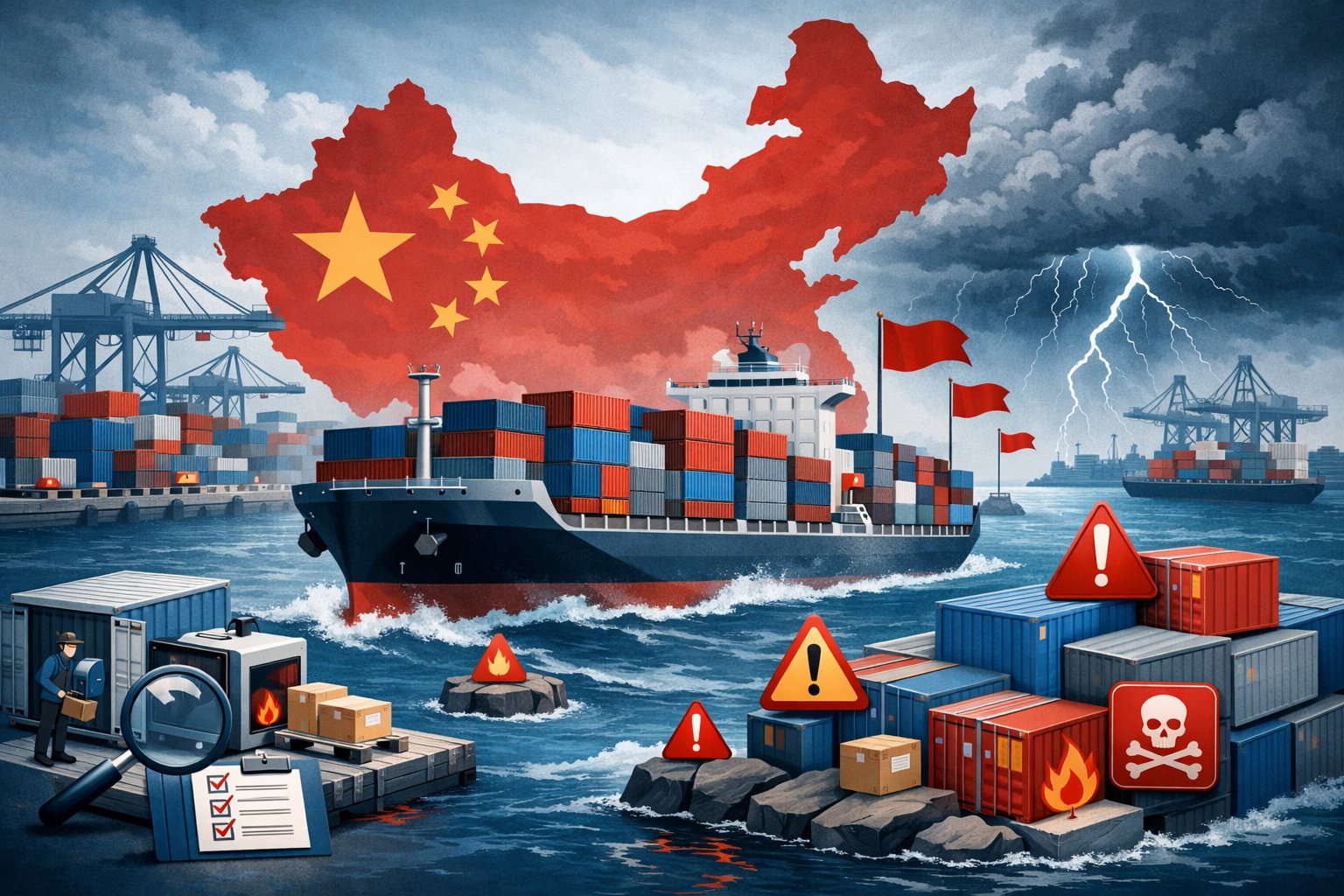
DDP Shipping Risk When Shipping From China: Key Factors Every Importer Must Consider
Delivered Duty Paid DDP shipping risk is something every importer should think about before moving goods from China. The supplier takes care of nearly everything: purchase price, export charges, transportation, import taxes, and final delivery to your door.
The appeal’s obvious. You pay one price and get your goods without wrestling with customs clearance or surprise fees.
If you’re selling on Amazon or eBay, knowing your total landed cost upfront makes cost planning much easier.
Key Takeaways
- Understanding DDP Shipping Risk: Delivered Duty Paid (DDP) shipping puts almost all the responsibility on the supplier. The supplier covers costs, taxes, and delivery, but importers still face risks with customs compliance and legal issues.
- What DDP Incoterms Cover: DDP includes manufacturing, export, international freight, customs clearance, import duties, taxes, and last-mile delivery. Unlike CIF and DDU, DDP puts most of the responsibility on the seller.
- Risks and Legal Issues with DDP from China: Some suppliers try to cut corners by undervaluing goods or misclassifying products to dodge duties. This can lead importers straight into legal trouble or customs violations.
- Signs of Questionable DDP Shipping and Managing Risks: If you see DDP quotes that seem way too low, that’s a red flag for non-compliance. It’s usually safer to work with reputable freight providers who give you all the right documents.
- Best Practices and Alternatives to Minimize DDP Risks: You can manage customs yourself with accurate classification and proper paperwork. Working with experienced brokers or picking alternative terms like DAP might help you steer clear of DDP’s legal and financial headaches.
What DDP Incoterms Include
When you use legitimate DDP shipping from China, the seller takes on nearly all the responsibility. They handle everything from their warehouse to your doorstep.
The arrangement covers:
- Product manufacturing costs
- Export documentation and fees
- International freight charges
- Customs clearance procedures
- Import duties and taxes
- Last-mile delivery to your address
This is different from CIF, which covers costs only until the goods reach your country’s port. With DDU (Delivered Duty Unpaid), you’re the one handling duties and taxes.
How DDP Terms Should Work
Under proper DDP terms, the supplier acts as the importer of record or works with a licensed U.S. customs broker. They pay all import duties based on the correct declared value and product classification.
You should get documentation showing the customs bond was posted and all fees paid to U.S. Customs and Border Protection. This paperwork proves your inventory entered the country legally and helps with your accounting records.
The Reality of DDP Shipping Risk From China
Many suppliers on Alibaba and other platforms don’t fully understand what delivered duty paid actually means. They might offer DDP shipping but skip proper customs clearance.
Instead, they use tricks to avoid paying the full duties and taxes you owe.
- Marking packages with low declared values
- Using the wrong HTS codes to lower tariff rates
- Claiming goods qualify for de minimis exemption when they don’t
- Shipping without proper customs paperwork
These actions amount to smuggling, even if the supplier thinks they’re helping you cut costs. Some see it as just undervaluing small packages, like they’ve always done.
Why DDP Shipping Risk Creates Legal Problems For You
If goods enter the U.S. without proper customs clearance, you’re on the hook—even if you didn’t know about misclassification or undervaluation. U.S. importers are responsible for ensuring the right duties get paid.
If Customs audits your shipment, you won’t have documentation proving legal entry. The supplier can’t provide a legitimate customs entry form if they never filed one.
Without proper import docs, you can’t record this inventory correctly in your books.
- Payment of all duties and taxes that should have been collected
- Penalties for customs compliance violations
- Seizure of goods
- Criminal charges in serious cases
Price Indicators of Questionable DDP Shipping Risk
You can spot suspicious DDP shipping from China to the USA offers by looking at the pricing. Calculate what shipping would cost using regular air or sea freight, then add the estimated import duties for your product’s HTS code.
Say freight costs $2,000 and your duties should be $500. A real DDP price would be $2,500 or more.
If a supplier quotes $2,200 for DDP shipping, they’re probably not paying all the duties owed. The numbers just don’t add up unless they’re cutting corners on customs compliance.
When DDP Shipping Risk Can Be Managed Legitimately
Some freight forwarders and DDP providers actually do things by the book. They work with licensed U.S. customs brokers, act as the IOR, and handle all customs paperwork the right way.
- They give you a detailed breakdown of all duties and taxes in the quote
- To show you customs entry docs after clearance
- They provide proof of payment to U.S. Customs
- They use your company’s customs bond or arrange one properly
Always ask your freight forwarder to list import duties and taxes separately in any DDP shipping quote. This transparency lets you check their math.
Better Alternatives to DDP Shipping Risk
If you’re importing from China, managing customs yourself gives you more control. You can use DDU terms, where the supplier handles international freight but you manage customs clearance through your own broker.
- Accurate HTS code classification for your products
- Proper declared value on all shipments
- Complete customs entry documentation
- Protection during customs audits
- Transparent calculation of all duties and taxes
Shipping Methods and DDP Shipping Risk With Customs Requirements
Whether you use air freight, sea freight, or courier, proper customs clearance is still crucial. Even small packages shipped by courier need accurate customs declarations.
For FCL (Full Container Load) shipments, you really need a customs broker to handle the entry and keep you compliant with CBP rules. Ocean freight comes with more complex paperwork than small parcels.
Documentation You Need to Reduce DDP Shipping Risk
No matter how you ship, you need real invoices showing the true value of your goods. These must match the declared value on customs forms.
Your supplier should give you commercial invoices for your accounting records. Without proper docs, you can’t prove you paid the right import duties.
This can cause tax headaches and exposes you to risk if customs delays pop up or CBP asks for more info.
Avoiding DDP Shipping Risk and Customs Compliance Issues
The safest move is to handle customs clearance through established channels. Ask suppliers to mark the correct value on all customs forms. Work with reputable customs brokers who really know international trade regulations and U.S. Customs rules.
Double-check your HTS codes to avoid misclassification penalties. Know which products qualify for de minimis exemption and which need full customs entry.
Keep all customs paperwork organized in case you get audited. Good documentation shields you from penalties tied to undervaluation or improper entries.
Common Questions About DDP Shipping Risk
What dangers should you watch for when using DDP shipping risk from China to America?
You face several big dangers with this shipping method. The main DDP shipping risk is customs compliance—your supplier imports goods under your business name, but you’re still responsible.
- Undervalued declarations – Some freight companies drop the declared value to lower duty payments, putting you at risk of penalties
- Wrong product classifications – Incorrect tariff codes can trigger audits and fines
- Importer of Record issues – The seller files customs paperwork using your info, but you’re legally responsible for accuracy
- Hidden fees – You might get hit with surprise charges for storage, delivery attempts, or address corrections
Your supplier might not get U.S. customs compliance requirements, which creates legal exposure for your business. If customs finds problems, you could face import bans or fines.
Quality control is another DDP shipping risk. You lose visibility into the shipping process since the seller manages everything until delivery.
How do prices compare between DDP shipping risk and other shipping terms from China?
DDP shipping usually costs more upfront, but the total expense depends on what’s included. You’re paying for convenience and for the seller to take on more DDP shipping risk.
Shipping Term Your Costs Seller Costs **DDP** None until delivery All freight, duties, taxes, delivery **DDU** Duties and taxes at delivery Freight and delivery only **FOB** Everything after port of origin Loading at origin port **EXW** Everything after factory pickup Making goods available only With DDP, you get predictable costs and no surprise fees at delivery. That helps with budgeting and avoids cash flow problems from unexpected duty bills.
Smaller shipments often benefit from DDP pricing, since you can’t negotiate better rates for each service. Larger importers usually save by handling customs and freight themselves under FOB or EXW terms.
What elements influence how long DDP shipments take to arrive?
Lots of factors affect your delivery time when you ship from China under DDP terms. The DDP shipping risk here is that delays can sneak up on you.
Transit time factors:
Shipping method – Air freight takes 5–10 days, while ocean shipping needs 20–40 days just for the water part.
Customs clearance speed – Standard shipments take 1–3 days, but inspections can add weeks.
Distance and routing – West coast destinations get ocean shipments faster than the east coast. Extra stops or transfers slow things down.
Peak season congestion – Chinese New Year, Golden Week, and holidays create port backups and carrier shortages.
Your destination matters, too. Remote areas need more time for final delivery after customs. Cities with good freight networks get faster service.
Documentation accuracy is huge. Missing or wrong paperwork stops shipments at customs until you fix it. And let’s be honest—weather, port strikes, or equipment shortages can throw off even the best-laid plans.
How does DDP Shipping Risk change what you’re responsible for?
DDP Shipping Risk shifts your responsibilities in ways that might surprise you. It sounds convenient, but there are hidden pitfalls you should know about.
With DDP terms, you only need to:
- Give your supplier the right delivery address and contact info
- Be ready to receive goods at the agreed spot
- Check items when they arrive and report damages fast
- Pay your supplier the agreed price
The seller takes care of customs paperwork, duty payments, and delivery arrangements. You’re not directly involved in those steps.
But don’t get too comfortable—DDP Shipping Risk means you still face legal and compliance issues.
Your ongoing responsibilities:
You’re the legal importer of record even if your supplier files all the paperwork. Customs authorities expect you to ensure declarations and duty payments are accurate. If something’s off, the violation lands on your company’s import record.
It’s smart to check that your supplier uses correct product values and classifications. Ask for copies of the customs documents so you can double-check everything.
If you’re importing regulated products, you need the right business licenses and permits. DDP Shipping Risk doesn’t remove those legal requirements.
And if something goes wrong with the product after import—say it hurts someone or fails safety standards—you’re still on the hook. The freight company won’t take that fall for you.
What problems do freight companies encounter with DDP Shipping Risk from China?
Freight agents run into some tough problems that can impact your shipment. DDP Shipping Risk isn’t just about paperwork; it’s about real-world headaches.
Customs authority limitations – Chinese freight forwarders can’t legally act as importer of record in a lot of countries. They end up using your business info, which complicates things fast.
Liability exposure – Agents sometimes pay duties and taxes out of pocket before they get paid by clients. If a buyer refuses to pay after delivery, the agent eats the loss.
Regulatory knowledge gaps – Rules in destination countries change all the time. Chinese agents can’t always keep up with dozens of different markets—it’s a lot to track.
Communication barriers – Time zones and language differences slow everything down. If there’s a problem in transit or at customs, it can take ages to sort it out.
Sometimes, agents cut corners by undervaluing or misclassifying goods. It might protect their margins, but that DDP Shipping Risk shifts straight to you.
Some freight companies try to do things right. They invest in compliance and destination country expertise, and yeah, they charge more for it. But you get transparent, reliable service.
Peak season makes things worse. Agents might book more shipments than they can actually handle, and that leads to delays or service failures.
Can You Ship to Every Country Using DDP Shipping Risk?
Thinking about DDP shipping risk? Let’s be upfront—DDP doesn’t work for every country. There are some real roadblocks that limit where you can use this shipping method.
Common DDP Shipping Risk Restrictions:
- Some countries insist you use local customs brokers with government licenses.
- In certain places, foreign companies can’t legally clear customs at all.
- Complex import rules can trip up Chinese agents who just don’t know the ins and outs.
- Remote destinations might not even have a proper delivery network in place.
The United States, Canada, United Kingdom, and most of the European Union usually allow DDP shipments. Your supplier can usually find agents who handle the whole door-to-door process in these spots.
But in developing countries, things get trickier. Local customs brokers with the right licenses are often required, and your Chinese supplier won’t be able to arrange clearance there.
Product type throws in more DDP shipping risk too. Regulated goods—think medical devices, food, chemicals—need permits that foreign freight companies just can’t get.
Alternative shipping terms can help you avoid DDP shipping risk in restricted destinations:
- **DAP (Delivered at Place)