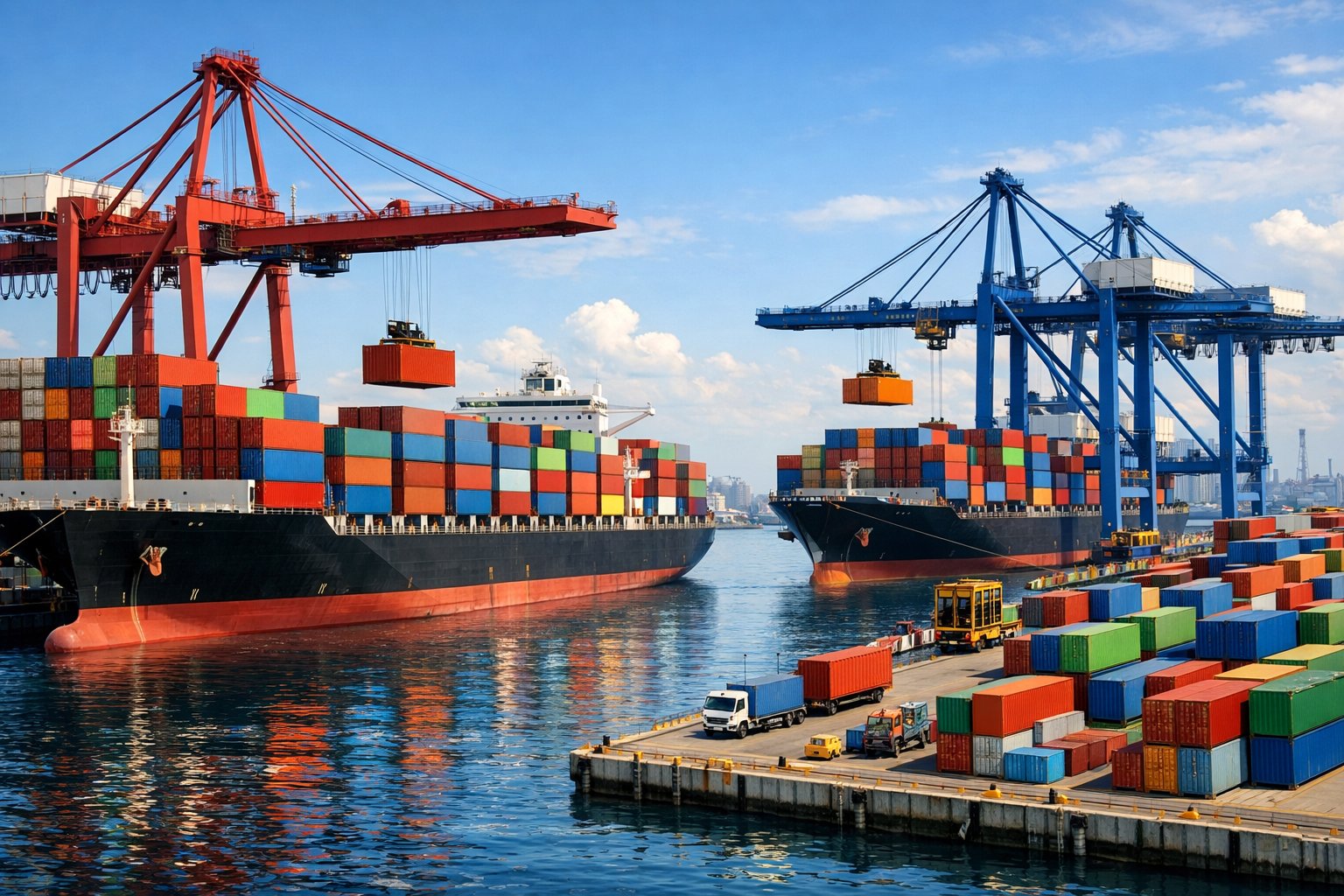
FCL Freight Forwarder
[vc_row full_width=”stretch_row” el_class=”hang-overs hang-right”][vc_column width=”1/2″][vc_single_image image=”117″ img_size=”full” alignment=”center” css_animation=”bounceIn”][/vc_column][vc_column width=”1/2″][vc_column_text css=””]Reliable FCL Shipping Solutions for Global Business Needs[/vc_column_text][vc_column_text css_animation=”fadeIn” el_class=”hang”]
FCL Sea Freight Forwarder
[/vc_column_text][vc_empty_space height=”100px”][vc_column_text css_animation=”bounceInUp” css=””] Full service from factory pickup directly to door delivery
Consolidation with multi-suppliers
| Customs clearance & Export license & Bond for customs entry[/vc_column_text][vc_btn title=”GET A QUOTE” style=”classic” shape=”square” link=”url:%2Fsign-up%2F | ”][/vc_column][/vc_row][vc_row el_class=”faq”][vc_column][vc_separator][vc_column_text css=””]Welcome to AEB Logistics, your reliable partner for FCL shipping needs. We offer top-notch ocean freight services for Full Container Load (FCL) shipping. Our team of experts is dedicated to delivering your cargo from China to the USA and beyond with the utmost care and efficiency. With years of experience in the industry, we understand the complexities and challenges that come with international shipping, which is why we offer tailored solutions to meet your unique needs. Let us handle your FCL shipping needs and take the hassle out of your logistics operations. |
If you’re looking for reliable FCL shipping services, look no further than AEB Logistics. Contact us today for a free shipping quote and let us handle your logistics needs.[/vc_column_text][vc_column_text css=””]
[/vc_column_text][vc_raw_html css=””]JTNDZGl2JTIwc3R5bGUlM0QlMjJwb3NpdGlvbiUzQSUyMHJlbGF0aXZlJTNCJTIwcGFkZGluZy1ib3R0b20lM0ElMjA1Ni4yNSUyNSUzQiUyMGhlaWdodCUzQSUyMDAlM0IlMjBvdmVyZmxvdyUzQSUyMGhpZGRlbiUzQiUyMiUzRSUwRCUwQSUyMCUyMCUzQ2lmcmFtZSUyMCUwRCUwQSUyMCUyMCUyMCUyMHNyYyUzRCUyMmh0dHBzJTNBJTJGJTJGd3d3LnlvdXR1YmUuY29tJTJGZW1iZWQlMkZiZms3X2J3S2xmMCUyMiUyMCUwRCUwQSUyMCUyMCUyMCUyMHN0eWxlJTNEJTIycG9zaXRpb24lM0ElMjBhYnNvbHV0ZSUzQiUyMHRvcCUzQSUyMDAlM0IlMjBsZWZ0JTNBJTIwMCUzQiUyMHdpZHRoJTNBJTIwMTAwJTI1JTNCJTIwaGVpZ2h0JTNBJTIwMTAwJTI1JTNCJTIyJTBEJTBBJTIwJTIwJTIwJTIwZnJhbWVib3JkZXIlM0QlMjIwJTIyJTIwJTBEJTBBJTIwJTIwJTIwJTIwYWxsb3dmdWxsc2NyZWVuJTNFJTBEJTBBJTIwJTIwJTNDJTJGaWZyYW1lJTNFJTBEJTBBJTNDJTJGZGl2JTNF[/vc_raw_html][vc_column_text css=”” el_id=”5″]
Our Expertise
At AEB Logistics, we have a team of experts with years of experience in the logistics industry. We understand the complexities of FCL shipping, which is why we offer tailored solutions to meet your unique needs. Our team will work with you to ensure that your cargo is delivered safely and on time, and we will keep you informed every step of the way.
FCL Shipping Services
Our FCL shipping services are designed to meet the unique needs of our clients who require dedicated container space for their cargo. We offer a wide range of container sizes and types to accommodate your specific requirements, including 20-foot, 40-foot, and 40-foot high cube containers. With our FCL shipping services, you can enjoy the benefits of faster transit times, lower costs, and greater security for your cargo.
Door-to-Door Delivery
We offer a complete door-to-door service, ensuring that your shipment is delivered right to your doorstep. Our team will handle everything from pickup to delivery, including customs clearance, documentation, and cargo insurance.
Shipping from China
We specialize in shipping cargo from China to the USA and beyond, ensuring that your goods arrive at their destination safely and on time. We have a strong network of partners in China, which allows us to provide efficient and reliable services.
Amazon FBA Forwarder
We offer Amazon FBA forwarding services, ensuring that your cargo complies with Amazon’s strict requirements. We will handle everything from labeling and packaging to customs clearance and delivery to Amazon’s fulfillment centers.
[/vc_column_text][vc_column_text css=””]
What Is Sea Container Shipping?
Sea container shipping moves goods across oceans in standardized metal containers loaded onto massive vessels. This method handles over 90% of global trade and forms the backbone of modern supply chains.
### Definition and Role in Global Trade
Container shipping uses standardized steel or aluminum cargo containers to move goods by sea. These containers act as protective shells, shielding your products from the elements and damage.
The standardized design changed everything. Before containers, crews loaded individual items by hand, taking days or weeks. Now, cranes move entire containers in minutes.
More than half of all goods moved internationally by sea now travel in containers on liner ships. Your phone, clothes, or electronics probably crossed an ocean in one of these boxes. Container ships connect manufacturers with buyers worldwide, making international trade practical for businesses of any size.
### How Container Shipping Works
The container shipping process starts when you book space on a vessel. You specify your cargo, destination, and delivery timeline.
At the origin port, cranes load containers onto the ship using a detailed stowage plan. This plan balances weight and maximizes space. Containers lock together with twist locks to keep them steady in rough seas.
Your container travels along planned ocean routes to the destination port. Ships often stop at several ports to load and unload more cargo. Once your vessel arrives, cranes unload your container and transfer it to trucks or trains for final delivery.
### Key Benefits and Limitations
Benefits of sea container shipping:
- Cost-effective for large shipments and heavy cargo
- Secure with locked, sealed containers to prevent theft
- Standardized sizes work across ships, trucks, and trains
- Efficient loading and unloading compared to the old ways
Limitations to consider:
- Slower than air freight, taking weeks instead of days
- Port congestion can cause delays
- Environmental impact from greenhouse gas emissions
- Weather dependent—storms can disrupt everything
Ocean freight is best for heavy items, large quantities, or non-urgent cargo. The lower cost per unit makes it ideal when speed isn’t everything.
## Types of Sea Containers
Sea containers come in several designs to handle different cargo. The weight, size, and special needs of your shipment decide which container works best.
### Standard Shipping Containers
Standard dry storage containers are the most common shipping containers in global trade. These weatherproof boxes come in 10ft, 20ft, and 40ft lengths.
A 20-foot container measures 20 feet long, 8 feet wide, and 8.5 feet tall, holding about 1,170 cubic feet of cargo. The 40-foot version doubles the length, so you get roughly 2,390 cubic feet.
They’re sealed tight, protecting your cargo from weather and water. These are perfect for dry goods like clothes, electronics, furniture, and packaged products.
The standardized dimensions make loading and unloading quick at any major port. You can stack them on ships or move them with standard equipment.
### High Cube Containers
High cube containers give you extra vertical space. They’re one foot taller—9.5 feet instead of 8.5.
This extra height means about 344 more cubic feet in a 40ft container. It’s handy for shipping lightweight but bulky items that need more vertical room.
You’ll find high cube containers useful for:
- Furniture and household goods
- Machinery with tall parts
- Retail products packed in big boxes
- Anything that stacks high
The length and width are standard, so they fit the same equipment and ship slots. Most shipping lines offer 20ft and 40ft high cubes, but 40ft is more common internationally.
### Refrigerated Containers
Refrigerated containers, or reefer containers, keep your cargo at controlled temperatures all the way. They maintain temps from -30°F to 70°F.
These containers use electric refrigeration, powered by ship generators during transit and outlets at ports. They’re made from weathering steel to resist constant temperature swings.
You need refrigerated containers for:
- Fresh fruits and veggies
- Frozen meats and seafood
- Dairy products
- Pharmaceuticals and vaccines
- Flowers and plants
They come in 20ft and 40ft sizes. The insulated walls take up a bit of space, so they hold slightly less than dry containers. Temperature monitoring lets you track conditions and keep your perishable goods fresh.
### Specialized Containers
Specialized containers handle cargo that doesn’t fit in standard boxes. Flat rack containers have collapsible sides or no sides, so you can ship oversized machinery, vehicles, or construction equipment. You can load them from the sides or top with cranes.
Open-top containers have removable roofs. They’re great when your cargo is too tall for standard doors but still needs side protection. Lashing rings inside help secure tall or heavy materials.
Tank containers carry liquids like chemicals, oils, or food-grade liquids. The cylindrical tank sits inside a rectangular steel frame, matching standard container sizes. You can move up to 6,000 gallons of liquid safely this way.
Specialized Container Comparison:
**Container Type** **Best For** **Key Feature** Flat Rack Heavy machinery, vehicles Collapsible or no sides Open-Top Tall cargo Removable roof Tank Liquids and gases Built-in cylindrical tank Each specialized container solves a specific shipping challenge while still working with standard port equipment and ship storage.
## Core Shipping Methods: FCL and LCL
Ocean freight uses two main methods to fill shipping containers. FCL shipping gives you the whole container for yourself, while LCL lets you share space with others based on how much you need.
### Full Container Load (FCL)
Full Container Load means you book the entire container just for your cargo. You pay a flat rate for the whole thing, whether you fill it or not.
Your cargo stays sealed from the origin to the destination. The container gets loaded at your facility and isn’t opened until it reaches its final stop. This reduces handling and keeps everything more secure.
FCL works best when you have:
- 15 cubic meters or more of cargo
- High-value or fragile goods
- Time-sensitive shipments
- Products that need extra security
The more you ship, the lower your cost per unit. Sometimes FCL is cheaper than LCL even if you don’t fill the whole container.
### Less Than Container Load (LCL)
Less-than-container load shipping lets you share a container with other shippers. You only pay for the space your cargo uses.
Your freight gets consolidated with other shipments at the origin port. At the destination, the container is deconsolidated and your goods are separated for delivery. This adds some handling and time to the process.
LCL is great for smaller shipments—2-3 pallets or under 15 cubic meters. You don’t have to pay for container space you won’t use.
LCL advantages include:
- Lower upfront costs for small volumes
- Flexible shipping schedules
- No need to wait until you have enough cargo
The trade-off is longer transit times and more handling along the way.
### When to Choose FCL vs LCL
Your shipment volume really determines which method will save you money. If you’re shipping less than 15 cubic meters, LCL usually gives you better value.
Once you cross that volume, FCL often becomes cheaper overall. So, keep your numbers in mind before you book anything.
Transit speed matters, especially if your cargo is time-sensitive. FCL gets your goods there faster since your container skips the whole consolidation and deconsolidation process.
LCL adds a few days, sometimes more, to the journey. That extra time can be a dealbreaker if you’re on a tight schedule.
Cargo type also plays into your decision. Fragile, high-value, or tightly regulated goods benefit from FCL’s sealed security and less handling.
If your products are pretty standard and not high risk, LCL works just fine. It’s really about how much risk you’re comfortable with.
Budget matters, too. LCL needs less upfront cash, which is great if you’re watching your spending closely.
FCL asks for a bigger payment up front, but the per-unit cost drops as your volume goes up. It’s a trade-off, as usual.
## Sea Container Shipping Process
Moving cargo by sea takes several steps, from booking to final delivery. You’ll need the right documents, solid loading practices, and coordination between ports to keep your shipment safe and on schedule.
### Booking and Documentation
You’ll start by booking space with a shipping line or freight forwarder based on your cargo and how much you’re sending. Standard containers are 20 feet (1 TEU) or 40 feet (2 TEU), but you can get specialized ones—like refrigerated units—if your goods need it.
Your booking confirmation gives you container release info and sailing schedules. For customs clearance and crossing borders, you’ll need a few key documents. The commercial invoice states the value and description of your goods. Your packing list shows exactly what’s inside.
The Bill of Lading acts as your receipt and shipment proof. You’ll also need a Certificate of Origin to show where your goods were made. If these documents aren’t spot-on or filed late, customs can hit you with delays and extra costs.
Your Incoterms spell out who pays for what at each shipping stage. FOB (Free on Board) and CIF (Cost, Insurance, and Freight) are common—these define who’s responsible for each part of the journey.
### Packing and Inland Transport
Packing matters more than you’d think. Palletize your goods for easier handling, and spread the weight out so things don’t shift or tip in transit.
Use straps, dunnage bags, and airbags to keep everything snug. Always check your empty container before loading—make sure it’s clean, undamaged, and watertight. Labels on your packages should match your packing list.
Inland transport is how you get your loaded container from your place to the port. This drayage service uses trucks or trains depending on where you are.
Plan your schedule to hit port cut-off dates and avoid demurrage charges for late arrivals. Before your container leaves, put a high-security seal on it—the number must match your shipping documents exactly.
### Port Operations and Loading
Your container goes through port security, scanning, and stacking before it gets loaded onto the ship. Port teams check your paperwork and inspect containers for safety compliance.
They load containers by weight and destination to keep the ship balanced and make unloading easier. Heavy containers go low, lighter ones on top.
You’ll get tracking info through your carrier’s portal for container tracking during the voyage. Most of the world’s traded goods—well over half—move in containers on liner ships.
To keep things safe, workers secure your container with twist locks and lashing rods so it doesn’t budge even if the seas get rough.
### Ocean Transit and Final Delivery
Transit time varies—a few days to several weeks—depending on your origin and destination ports. Weather and routing can mess with your ETA, so it’s smart to keep an eye on tracking updates.
Most carriers send real-time notifications about your shipment. Once your container arrives, port workers unload it and move it to storage or customs.
Customs officials check your paperwork and clear your goods. Watch out for terminal handling charges and storage fees at the destination port.
If you’re missing paperwork or something’s wrong, expect delays. For final delivery, trucking, rail, or both get your goods to your warehouse or home.
Unpack with care and check for any damage. If you leased the container, return it to the depot on time to dodge extra fees.
## Key Stakeholders and Service Providers
Sea container shipping brings together a bunch of different players. Each one handles a specific part—whether it’s owning the cargo, moving it, or connecting all the dots between origin and destination.
### Shippers and Consignees
If you’re sending goods abroad, you’re the shipper. The consignee is whoever’s on the receiving end.
Shippers get the ball rolling by arranging for cargo to move from their warehouse to its final stop. You could be a manufacturer exporting or a retailer importing for sale.
As a shipper, you’ll pick transport modes, haggle over freight rates, and sort out the paperwork. The container shipping supply chain means you’re coordinating with several parties to get your goods delivered on time.
It’s on you to provide accurate shipment details, prep cargo for containerization, and make sure customs docs are in order. Consignees receive the goods at the destination port and handle the rest.
Your job as a consignee? Pay freight charges, clear customs, and arrange inland delivery to your final spot.
### Freight Forwarders and NVOCCs
Freight forwarders are your go-between with ocean carriers. They manage the whole shipping process but don’t own ships themselves.
Your forwarder books cargo space, preps documents, arranges customs clearance, and lines up inland transport on both ends. NVOCCs (Non-Vessel Operating Common Carriers) are a special type of forwarder. They group smaller shipments from several shippers into full containers.
An NVOCC issues you its own bill of lading, even though it doesn’t own the ships. Handy if you’re shipping a small load and don’t want to pay for a whole container.
Both types negotiate better rates with carriers since they move so much volume. They bring expertise in international rules, paperwork, and route planning. Some will even handle warehousing, insurance, or special cargo needs if you ask.
### Ocean Carriers and Logistics Providers
Ocean carriers own and run the container ships that move your cargo across the sea. Big names like Maersk control a huge chunk of the world’s freight capacity.
These shipping companies build or buy vessels and handle ship operations, crews, and maintenance. Your ocean carrier offers scheduled services along set trade routes, keeps container fleets running, and manages ship logistics.
Large carriers join shipping alliances to share space and cover more routes. Logistics providers go further, managing your whole supply chain—warehousing, trucking, distribution, you name it.
Some carriers now offer full logistics services, while others stick to one piece of the puzzle. If you need extra containers, leasing companies like xChange step in to fill the gap.
### About AEB Logistics
AEB Logistics handles integrated shipping services for your container moves. We partner with major ocean carriers and tap into global shipping networks to get you solid rates and reliable space.
Our team covers freight forwarding, customs, and supply chain coordination. You get a dedicated account manager who actually listens and understands your shipping needs. We offer both FCL and LCL options to fit your cargo size and budget.
## Container Shipping Rates and Cost Factors
Container shipping costs swing a lot, depending on things like fuel prices and demand. Knowing the factors that affect shipping costs helps you budget and avoid nasty surprises.
### What Impacts Shipping Costs
Several things shape your final ocean freight rate. The distance between ports matters—a longer route means more fuel and time.
Container size makes a difference, too. Forty-foot containers cost more than twenty-footers. Fuel prices hit rates hard, since ships burn through thousands of gallons per voyage.
Port fees add up—loading, unloading, and terminal handling all cost something. If you’re paying in a different currency, exchange rates can nudge your price up or down.
Your shipping volume also impacts rates. Larger loads often snag better pricing because carriers want to fill their ships. If your goods are hazardous or oversized, expect special handling and higher fees.
Popular routes cost less since more ships run them, while off-the-beaten-path lanes can get pricey. It’s all about supply and demand.
### Peak Season Surcharges and Extra Fees
Peak season surcharges hit during busy times—think before big holidays or retail booms. You could pay 20% to 50% more as space gets tight.
Carriers usually add these surcharges from August through October when retailers are stocking up. Beyond base rates, extra fees can sneak up fast.
Bunker adjustment factors cover fuel price swings and change every month. Container handling charges apply at every port your cargo passes through.
If your container sits too long at the terminal, demurrage fees stack up. Storage charges start after your free window—usually three to five days—runs out. Documentation fees cover customs forms and bill of lading processing.
### How to Get a Freight Quote
You can calculate shipping costs online with tools from freight forwarders. Just enter your origin, destination, container size, and cargo type. Many sites spit out a quote in under a minute.
To get a freight quote, gather your shipment details—weight, dimensions, pickup, and delivery addresses. Decide if you need a 20-foot or 40-foot container.
It’s smart to contact a few forwarders and compare. Ask for quotes two to three weeks before you want to ship. Some companies offer binding rates that lock your price for a set period, which can save you from sudden hikes.
## Transit Times and Major Shipping Routes
Sea freight transit times can be all over the place depending on distance and how many stops your route has. Port-to-port schedules change if you choose direct shipping or a route with layovers.
### Typical Transit Times
Ocean transport usually takes anywhere from 25 to 60 days for most international shipments. The time depends on your route and the shipping method you pick.
Transit times from China to the UK often fall between 35 and 45 days. Ships travel through the South China Sea, Indian Ocean, Malacca Strait, and Suez Canal along the way.
Shorter routes take less time, as you’d expect. Shipping within the Americas—like between US ports, the Caribbean, and South America—can be as quick as 3 to 12 days.
Europe to Americas routes generally take 15 to 25 days for most shipments. Your cargo might face delays during peak seasons, especially when ports get crowded.
High demand periods can lead to longer wait times at ports. It’s just the reality of busy shipping schedules.
### Popular Global Routes
Asia to Americas is still the busiest corridor in global container shipping. Shipments from Shanghai to West Coast Latin American ports usually take 25 to 40 days, depending on the service type.
Europe to Americas offers some of the most reliable schedules. Routes from Hamburg or Valencia to American ports generally stick to a 15 to 25 day window.
China to Europe stands out as a critical trade lane. This one passes through several strategic waterways and typically takes 35 to 45 days.
Transpacific routes link Asian manufacturing hubs with North American markets. These routes really keep global freight moving.
### Factors Affecting Delivery Times
Port congestion can cause major delays when vessels wait at anchorage before berthing. Busy ports force ships to stay anchored outside until they get the green light to dock.
Direct routes are usually faster than transshipment services. Transshipment adds 5 to 10 days since your container gets unloaded at intermediate ports—like Panama or Singapore—and moved to another vessel.
Weather can shake up your shipping schedule. Hurricanes in the Atlantic or typhoons in the Pacific might force vessels to slow down or change course for safety.
Seasonal demand messes with reliability during peak periods. The weeks before Christmas often see higher volumes, which leads to port bottlenecks and operational delays called “rollings” when cargo misses its scheduled vessel.
## Customs and Documentation Requirements
Moving cargo across borders means you need accurate paperwork and customs approval. The customs clearance process involves submitting specific documents, paying duties, and meeting each country’s rules before your container gets released.
### Customs Clearance Process
Customs clearance starts the moment your shipment arrives at the destination port. Officials check your documents to make sure the cargo matches what you declared.
They look at the value, classification, and origin of your goods. You need to submit your declaration before or right after arrival—some countries even want it 24 hours in advance.
Officials use that time to assess risk and decide if they need to inspect your container. Inspections might be just paperwork or could include a physical check of your cargo.
Random checks happen all the time, but high-risk shipments get more attention. Customs delays pop up when documents have errors, missing info, or inconsistencies.
Once you get approval, you pay duties and taxes based on your cargo’s declared value and classification. After payment, customs releases your container for pickup.
### Essential Shipping Documents
Your bill of lading serves as your transport contract and proof of ownership. It needs to match your other documents exactly.
You also need a commercial invoice that shows the buyer, seller, product description, value, and payment terms. The packing list details what’s inside each box, including weights, dimensions, and package counts.
Customs uses the packing list to check physical cargo against your declaration. You need a certificate of origin to prove where your goods were made, which can help you get better tariff rates under trade agreements.
Additional documents may include:
- Import/export licenses for regulated products
- Health certificates for food or agricultural items
- Safety data sheets for hazardous materials
-
Insurance certificates
Role of Customs Brokers
A customs broker takes care of the technical side of clearing your shipment through customs. They prepare and submit declarations for you and know tariff classifications, duty rates, and all the country-specific requirements.
Customs brokerage services really help if you ship regulated products, use documentary financing, or deal with tricky trade agreements. Brokers check your paperwork before submission to prevent rejections.
They talk directly with customs officials during inspections. If issues come up, they know how to fix them fast and help you avoid penalties for incorrect filings.
## Cargo Insurance and Risk Management
Protecting your cargo during sea container shipping means understanding insurance options and the risks that can mess with your shipments. Cargo insurance covers physical loss or damage to goods during sea transportation, protecting your investment from common shipping hazards.
### Types of Cargo Insurance
There are three main coverage levels under the Institute Cargo Clauses framework, which most people in shipping recognize. ICC (A) gives you all-risk coverage, protecting against physical loss from any cause—like theft, water damage, and contamination—except for a few exclusions like poor packaging or delays.
ICC (B) covers specific risks such as fire, vessel stranding, or collision. It’s a mid-level option, cheaper than ICC (A), but it doesn’t cover theft, water damage, or contamination.
ICC (C) is the most restricted, only covering major perils like fire, explosion, and vessel stranding. You can get specialized coverage for unique cargo types too:
Cargo Type Coverage Focus Refrigerated goods Temperature variation, power failure, machinery breakdown Oversized cargo Specialized handling, loading/unloading damage, project delays High-value items Enhanced theft protection, security requirements Palletized cargo Stacking damage, forklift handling, moisture protection You can pick single shipment policies for one-off needs or open annual policies that cover all your shipments at a lower cost—sometimes 20-40% less.
### Common Shipping Risks
Your cargo faces a lot of threats during ocean transport. Physical damage happens from rough handling, containers shifting in heavy seas, or accidents during loading and unloading.
Palletized cargo can get water damage from condensation inside containers or rain during transfers. Theft and pilferage are big concerns, especially for high-value electronics or consumer goods.
Container shipping brings its own risks, like entire containers going missing or being broken into at ports. Weather events—hurricanes, storms—can damage vessels or cause cargo loss at sea.
Financial and operational risks include:
- Demurrage charges from delayed container returns due to port congestion
- General average declarations that make cargo owners share vessel rescue costs
- Carrier liability limits—only $30 per kilogram for air freight or less than 5% of cargo value for ocean shipping
- Port strikes or political unrest delaying deliveries
Temperature-sensitive goods might suffer if equipment fails or there’s a power loss during transit. Oversized cargo often faces loading challenges and weather exposure during special handling.
### Importance of Insurance for Global Shipping
International carriers operate under conventions that really limit their liability for cargo damage or loss. Ocean carriers typically cover only $666.67 per package under the Hague-Visby Rules, which is often less than 5% of your cargo’s real value.
Cargo insurance protects your working capital and profit margins when something goes wrong. You keep your business running instead of taking a huge loss from a single damaged container.
Insurance also lets you offer competitive pricing while managing risk in international markets. Risk assessment in container shipping helps you figure out the right coverage and premium costs—usually between 0.05% and 2% of your cargo value, depending on what you’re shipping, the route, and packaging quality. Better packaging and reliable carriers can lower your premiums by 10-20% and boost your protection.
## Intermodal and Last-Mile Logistics
Sea containers almost never finish their trip using just ocean vessels. Most shipments need multiple transportation methods to get from the original port to the final destination, whether that’s a warehouse, distribution center, or someone’s doorstep.
### Intermodal Transport Solutions
Intermodal transportation combines two or more ways to move your cargo—ships, trains, trucks—so everything gets where it needs to go efficiently. Your container stays sealed the whole way, which cuts down on handling and lowers the risk of damage or theft.
The main upside is cost savings, especially on long routes. Rail transport is way cheaper than trucking for trips over 500 miles. Plus, you can shrink your carbon footprint since trains produce fewer emissions per ton-mile than trucks.
Containerization makes it easy for cargo to switch between ships, trains, and trucks without unpacking. Standard 20-foot and 40-foot containers fit on all these modes, so transfers at ports and rail terminals go faster.
### Door-to-Door vs Port-to-Port Services
Port-to-port service covers just the ocean leg between two ports. You handle and pay for inland transportation on both ends yourself, which gives you more say over carrier selection and routing for the land parts.
Door-to-door service includes the whole journey—from your supplier’s place to your receiving facility. Your shipping line or freight forwarder handles all the transportation modes and customs. You get one point of contact and a single bill.
Door-to-door costs more but saves you time managing logistics. Port-to-port works better if you already have relationships with trucking companies or need specific delivery requirements that standard door-to-door services don’t cover.
### Final Delivery and Tracking
The last-mile delivery from the final terminal to your destination needs careful coordination. Drayage trucks move containers from ports and rail yards to your facility, usually within a 50-mile radius.
Most carriers now offer real-time GPS tracking for your containers throughout the journey. You get notifications when your container changes transportation modes, clears customs, or arrives at terminals.
Delivery appointments help prevent delays and cut down on demurrage charges. Make sure you confirm your receiving hours, loading dock requirements, and any restrictions at your facility before the container shows up.
## Trends and Technology in Sea Container Shipping
The container shipping industry keeps rolling out new digital tools and green tech to improve how companies track shipments and reduce environmental impact. These changes affect how you book ocean freight and monitor your cargo along the way.
### Digital Quote and Tracking Tools
Now you can get instant shipping quotes and track containers in real time through online platforms. Most carriers have digital booking systems that let you compare prices, reserve space, and handle documentation—no endless phone calls or email threads needed.
Container tracking technology has taken a leap with IoT sensors and GPS devices. You get updates on your shipment’s location, temperature, humidity, and even shock events during transit.
These tools make it easier to spot delays early and adjust your receiving plans. Digital platforms also plug into port systems and customs databases, so you see estimated arrival times that factor in port congestion and clearance.
Some services send automatic alerts when your container hits key milestones like departure, arrival, and customs release. It’s a lot less guesswork than before.
### Automation and Smart Containers
Smart containers use sensors to monitor cargo conditions through the shipping process. You can check if refrigerated goods stay cold enough or if fragile items get jostled too much.
This data helps you file claims faster if something goes wrong. AI-powered shipping systems optimize vessel routes by considering weather, fuel costs, and port schedules.
Carriers use these tools to reduce delays and cut operating costs. Automated cranes and guided vehicles at ports speed up loading and unloading.
Blockchain technology is making documentation more secure and efficient. You can track bills of lading and customs papers digitally, which reduces paperwork errors and speeds up cargo release at destination ports.
### Sustainability in Ocean Freight
Ocean freight companies are shifting to cleaner fuels to meet environmental rules. Low-sulfur fuel, liquefied natural gas, and biofuels cut harmful emissions from container ships.
Some carriers are even testing electric and hydrogen-powered vessels for shorter routes. Sustainable shipping practices like slow steaming, where ships travel at reduced speeds, burn less fuel.
You might notice longer transit times, but this approach can cut carbon emissions by up to 30%. Carriers are also using advanced hull designs and air lubrication systems to boost fuel efficiency.
Collapsible and reusable containers are becoming more popular since they take up less space when empty. This reduces the number of repositioning trips and lowers transportation costs and emissions overall.
[/vc_column_text][vc_column_text css=””]
Frequently Asked Questions
Sea container shipping rates depend on route demand, fuel costs, and container availability. Costs are based on cargo weight, volume, and distance traveled.
Shipping times can range from a few days to several weeks, depending on your route and service type.
### What factors influence sea container shipping rates?
Several key factors shape what you pay for sea container shipping. Ocean freight rates swing up and down with supply and demand on specific routes.
Fuel costs play a big role in your final price. When oil prices jump, carriers add fuel surcharges to cover their extra costs.
Container availability can seriously affect rates. During peak seasons like Chinese New Year or Golden Week, container shortages push prices higher as demand outpaces supply.
Port congestion and delays add costs through extra fees. You might face demurrage and detention charges if you don’t return containers on time.
Your cargo type matters too. Refrigerated goods that need reefer containers cost more than standard dry cargo.
### How are international container shipping costs calculated?
Your shipping costs include several components beyond the basic ocean freight rate. The calculation starts with your cargo’s weight and volume in cubic meters.
Carriers charge based on whichever is higher: the actual weight or the volumetric weight. This way, they cover both heavy and bulky shipments.
The distance between your origin and destination ports directly affects the base freight rate. Longer routes simply cost more.
Extra fees get tacked on to your base rate. These include customs duties, insurance, terminal handling, and documentation fees.
Your choice of Full-Container Load (FCL) versus Less-than-Container Load (LCL) changes the pricing structure. With FCL, you pay for the whole container, no matter how much you fill it.
The Incoterms you pick decide who covers which costs. This impacts your total out-of-pocket expenses for the shipment.
### Which companies are considered leaders in sea container shipping?
Maersk stands as one of the largest container shipping companies globally. The Danish carrier runs a huge network of routes and services worldwide.
Mediterranean Shipping Company (MSC) competes closely with Maersk for the top spot. This Swiss-Italian company controls a massive fleet of container vessels.
CMA CGM, based in France, is among the top three carriers. The company offers comprehensive shipping services along major trade lanes.
COSCO Shipping Lines is China’s largest state-owned carrier. They’ve expanded a lot through acquisitions and investments.
Hapag-Lloyd from Germany provides reliable service on big shipping routes. The carrier is known for its quality standards and container fleet.
These major carriers control the largest share of global container shipping capacity. They run regular scheduled services between major ports around the world.
### What is the typical timeframe for ocean freight shipping?
Your shipping timeline depends on your specific route and the service you pick. Ocean transport between Asia and the West Coast of North America usually takes 14 to 21 days.
Routes from Asia to the East Coast of North America need 28 to 35 days through the Panama Canal. Direct routes between Europe and Asia generally run 21 to 28 days.
Don’t forget to add extra time for loading, unloading, and customs clearance. These steps can tack on several days to weeks depending on port efficiency and customs.
Seasonal peaks and port congestion can really stretch out transit times. Expect delays during busy periods like holiday shopping seasons.
Your choice between direct and transshipment services affects delivery speed. Direct routes are faster but might cost more than services that require cargo transfers at intermediate ports.
### What is the difference in cost between 20-foot and 40-foot sea containers?
A 40-foot container doesn’t cost twice as much as a 20-foot container. The price difference is usually about 50% to 80% more for the bigger one.
The 20-foot container (TEU) holds about 33 cubic meters of cargo. A 40-foot container holds roughly 67 cubic meters, so you’re basically doubling your shipping capacity.
Your cost per cubic meter drops when you go with the 40-foot option. If you’ve got enough cargo to fill it, the larger container is almost always more economical.
Shipping lines price containers based on the deck space they take up on the vessel. Since a 40-foot container uses the space of two 20-foot units, carriers offer better rates per unit of volume.
It’s smart to calculate your total cargo volume before picking a container size. If your shipment fills more than half of a 40-foot container, you’ll probably save money by choosing the larger one.
### How can one obtain an accurate estimate for sea container shipping?
You need to give specific details about your shipment to get an accurate quote. Start with your cargo’s exact weight, volume, and dimensions.
Share your complete origin and destination addresses. That way, carriers can figure out if you need port-to-port service or door-to-door shipping.
Clearly identify your commodity type. Let carriers know if you’re shipping standard goods, refrigerated items, or dangerous cargo that needs special handling.
Ask your shipping provider for a full breakdown of all costs. Make sure they include ocean freight, customs duties, insurance, handling charges, and any extra surcharges.
Online platforms can give you instant quotes for standard shipments. These tools let you compare rates from different carriers pretty quickly.
If your shipment’s more complicated, it’s better to contact freight forwarders or carriers directly. They’ll give you a customized quote that fits your needs and timeline.
[/vc_column_text][vc_column_text css=”” el_id=”6″]
What is a pallet?
A pallet is a standard sized platform, usually made of wood, on which goods are stacked. On two of its sides, it has open areas that serve as an entry for the forks of a lifting truck – forklifts are needed to move palletized goods around. The purpose of using a pallet is to help small units of goods (cartons or individual products) stay together and to provide protection from damage.
If you haven’t done much bulk international shipping, you may not know that there are three main pallet types: Standard Pallets, Europallets, and North American standard pallets. International container shipments use mainly the Standard and the Europallets, while the North American pallets are used within the US for inland freight.
[/vc_column_text][vc_column_text css=”” el_id=”7″]
How many standard pallets can fit in a container?
Pallets are recommended to be loaded as non-stackable, in order to prevent damage to the goods caused by stacking. However, some shippers choose to stack pallets regardless of this designation. You can make a careful evaluation of your products and whether or not the pallets can be stacked within a container without damaging the goods – if this is the case, more pallets can fit. If you do choose to stack whenever possible, we recommend analyzing whether or not your pallets can be safely stacked with each shipment.
- Standard pallets – International
Measurement: 47.24 x 39.27 in
20’ ST/HC: 10 or 11 pallets
40’ ST/HC: 20 or 21 pallets
- Europallets – International
Measurement: 31.50 x 47.24 in
20’ ST/HC: 11 pallets
40’ ST/HC: 23 or 24 pallets
- North American standard pallets – USA
Measurement: 40 x 48 in
20’ ST/HC: 10 pallets
40’ ST/HC: 20 pallets
The arrangement of pallets within a container should maximize the space in length, width, and height, and should be within appropriate weight limits. In addition, there might be limitations in the loading and unloading heights (perhaps your warehouse cannot receive tall pallets). Therefore, it is best to seek the help of your logistics expert who knows the height and weight restrictions at the locations of departure and arrival of your goods. Once the requirements and limitations are clear, you’ll be able to figure out the number of pallets that can fit your container.
[/vc_column_text][vc_separator][vc_column_text]Back to Top[/vc_column_text][/vc_column][/vc_row]