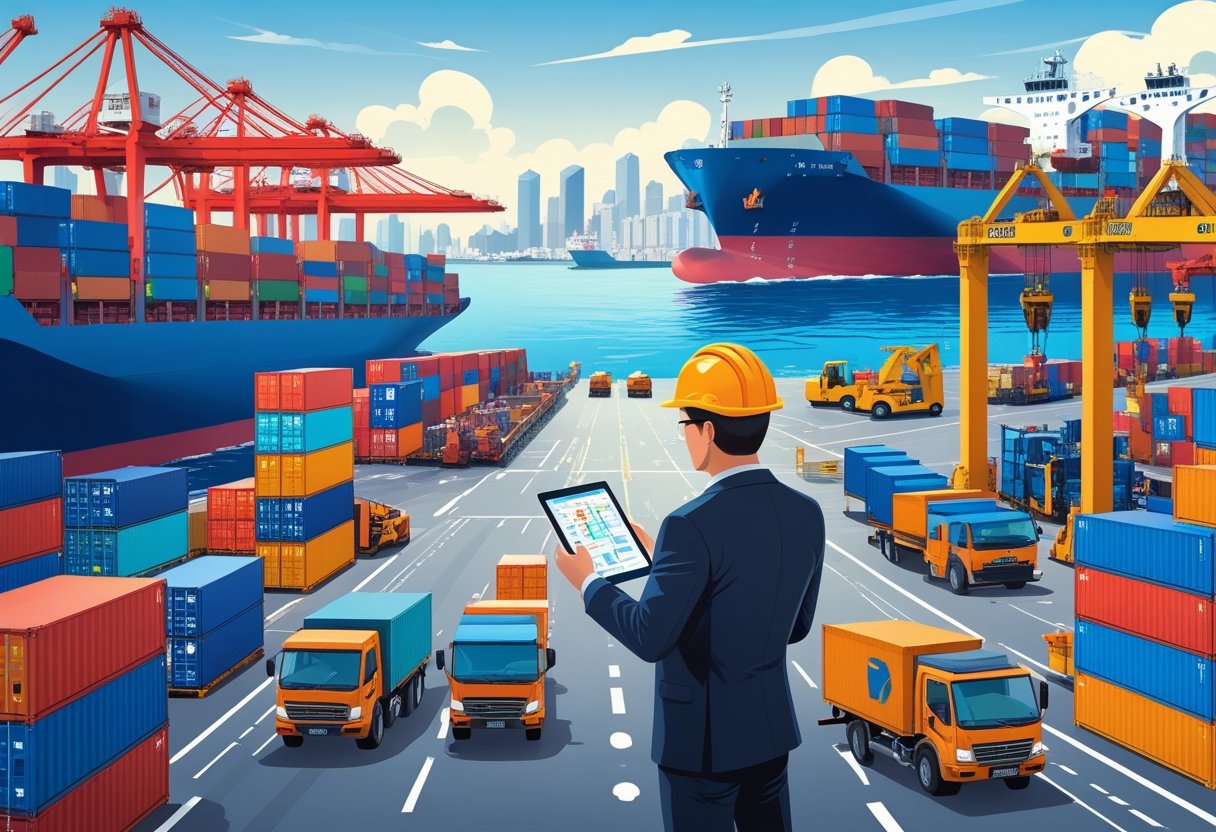
Freight Forwarder in China: Comprehensive Shipping & Logistics Guide
China handles more international shipping than any other country in the world, and that’s not just a fun fact—it’s reality for anyone moving goods in or out of the country. If you buy or sell products across borders, you need a reliable way to move goods through Chinese ports and customs. A freight forwarder in China acts as your logistics partner, arranging transportation, handling customs paperwork, and coordinating your cargo’s journey from Chinese factories to your destination.
Working with the right freight forwarder in China can save you money and cut down on shipping headaches. These companies know Chinese export rules inside out and have connections with carriers that are tough for most businesses to get on their own.
They book container space, prepare customs documents, and track shipments across borders. The Chinese freight forwarding industry has exploded thanks to booming international trade and new tech.
Major names like Sinotrans and COSCO SHIPPING International now reach over 150 countries. If you understand what these forwarders do and how to pick one, you’ll ship products more smoothly and avoid costly mistakes.
Key Takeaways
- Freight forwarders in China arrange transportation and customs clearance for goods moving in and out of the country.
- These companies handle ocean freight, air cargo, warehousing, and customs compliance.
- Choosing the right freight forwarder in China depends on your shipping volume, destination, and what services you need.
What Is a Freight Forwarder in China?

A freight forwarder in China is the middleman between your manufacturer and your customer, wherever they are. They coordinate shipping methods, handle paperwork, and navigate customs so your products move efficiently.
Freight Forwarder in China: Role and Functions in Global Trade
A freight forwarder in China organizes international transport for exporters and importers by sea, air, rail, or courier. They don’t own ships or planes—they work with carriers to book cargo space at good rates.
Your freight forwarder in China prepares all the export and import documents for customs clearance. They manage warehousing if your goods need storage before shipment or after arrival. If you want peace of mind, they’ll arrange cargo insurance to cover loss or damage.
They give you real-time tracking so you always know where your shipment is. And they coordinate with manufacturers, carriers, customs agents, and delivery services to keep your cargo moving at every stage.
Benefits of Using a Freight Forwarder in China
Using a freight forwarder in China saves you time by taking over the complicated logistics. You don’t have to deal with a pile of paperwork or juggle multiple carriers.
Costs drop because freight forwarders in China consolidate shipments and negotiate better rates. They use their relationships with carriers to get you preferential pricing and guaranteed space, even when things get busy.
They help you avoid customs delays and compliance headaches. Forwarders know Chinese export rules and destination country requirements. If you’ve got fragile or tricky cargo, their expertise can be a lifesaver.
Freight Forwarder in China vs. Logistics Providers
A freight forwarder in China focuses on moving goods internationally and handling cross-border documentation. They’re all about international shipping, not managing your entire supply chain.
Logistics providers handle more—like inventory, order fulfillment, and domestic delivery networks. They might manage everything from raw materials to the end customer.
Freight forwarders in China shine when it comes to international regulations and carrier contacts. They’re your go-to for import and export logistics. Third-party logistics providers (3PLs) usually manage warehousing, packaging, and last-mile delivery in one country.
So, if you just need to ship from China to another country, a freight forwarder is your best bet. If you want someone to run your whole supply chain, look for a full-service logistics provider.
Core Shipping Services Provided by a Freight Forwarder in China

Freight forwarders in China offer several ways to move your goods internationally. Each comes with its own speed, cost, and capacity perks.
Your choice depends on how urgent your shipment is, your budget, cargo size, and where you’re sending it.
Air Freight Solutions from a Freight Forwarder in China
Air freight is the fastest way to ship from China if you need products delivered ASAP. Most shipments arrive in 3-7 days, so it’s great for time-sensitive, high-value, or perishable goods.
Your freight forwarder in China works with airports like Shanghai Pudong, Guangzhou Baiyun, and Shenzhen Bao’an to book space. They handle documentation, security checks, and customs clearance on both ends.
Air freight costs a lot more per kilo than ocean freight—sometimes 5-10 times more. You pay based on actual or volumetric weight (length × width × height in cm ÷ 6000), whichever is higher.
This method is best for shipments under 500 kg or when storage costs would eat up any savings from slower shipping.
Ocean Freight and Sea Freight with a Freight Forwarder in China
Ocean freight is the workhorse—over 90% of global trade by volume moves this way. Freight forwarders in China coordinate sea transport through big ports like Shanghai, Ningbo, Shenzhen, and Qingdao.
You pick between Full Container Load (FCL) or Less than Container Load (LCL). FCL means the whole container is yours; LCL means your goods travel with others’ cargo.
Transit times range from 15-45 days, depending on where you’re shipping. West Coast US takes about 15-20 days, East Coast 30-35 days, and Europe usually 25-35 days.
Sea freight is the most affordable for large shipments, though prices jump around with season and fuel costs. Your freight forwarder in China can offer door-to-door or port-to-port service.
Rail Freight and Multimodal Transportation by Freight Forwarder in China
Rail freight sits between air and ocean shipping for routes from China to Europe and Central Asia. The China-Europe Railway Express delivers in 15-20 days through Kazakhstan, Russia, Poland, and Germany.
It’s about 50-70% cheaper than air freight and twice as fast as ocean. You get stable transit times with fewer weather delays.
Multimodal shipping combines two or more methods for efficiency. Maybe rail from inland China to a port, then ocean freight. Or sea freight to a hub, then rail or truck for the last leg.
Your freight forwarder in China manages the handoffs, paperwork, and logistics at every step.
LCL and Shipping Container Options with a Freight Forwarder in China
LCL shipping works for smaller shipments—usually under 15 cubic meters. Your freight forwarder in China consolidates your cargo with others, so you only pay for your share of the container.
Standard container sizes:
- 20-foot container: 28-30 cubic meters (max 33 m³)
- 40-foot container: 56-58 cubic meters (max 67 m³)
- 40-foot high cube: 66-68 cubic meters (max 76 m³)
FCL gets cheaper if you ship more than 15 cubic meters or over 10 tons. It’s also faster because you skip consolidation steps.
Special containers cover special needs—reefers for perishables, open-tops for oversized cargo, and flat racks for heavy equipment or vehicles.
Customs and Compliance Services by Freight Forwarder in China
Freight forwarders in China deal with the maze of paperwork and rules for cross-border shipping. They handle customs clearance and offer brokerage support to keep your shipments legal and on time.
Customs Clearance Procedures with a Freight Forwarder in China
Customs clearance in China means moving your goods through checkpoints while following all national laws. For exports, your products need approval to leave China. For imports, the process gets your goods into the local market.
Your freight forwarder in China submits documents like invoices, packing lists, bills of lading, and origin certificates. They also handle HS codes for tariffs and taxes.
Clearance usually takes 1-3 days, but inspections or missing paperwork can slow things down. Your forwarder keeps tabs on the process and lets you know about any hiccups.
Customs Brokerage and Documentation Support from Freight Forwarder in China
Freight forwarders in China offering customs brokerage act as licensed go-betweens for you and customs. They prep and file paperwork to make sure you meet Chinese export and foreign import rules.
Your broker classifies products, calculates duties, and checks for special requirements on restricted goods. They handle all the certificates, permits, and licenses you might need.
Experienced customs brokers stay updated on changing rules in different countries. Their know-how helps you dodge penalties, cut clearance delays, and avoid shipment holds. Many forwarders give real-time updates so you always know where your cargo stands.
Warehousing and Value-Added Solutions from a Freight Forwarder in China
Freight forwarders in China offer warehousing and integrated logistics solutions to streamline your supply chain. These services can cut costs and make life a lot easier for businesses shipping goods internationally.
Warehousing and Storage Capabilities for Chinese Freight Forwarders
Chinese freight forwarders support your storage needs with extensive warehouse networks across the country. Many companies maintain over 50 warehouses throughout China at strategic locations near manufacturing hubs and major ports.
These facilities offer flexible storage for both short-term and long-term inventory management. You can store products close to suppliers before consolidating shipments, which cuts transportation costs and speeds up delivery times.
Modern warehouses feature real-time inventory tracking systems. You always have visibility into your stock levels.
Warehousing facilities in China also include free trade zones. These areas offer tax advantages for international shipments.
Additional services often include cargo consolidation and special handling for fragile items. Quality control inspections help identify defects before goods ship out, protecting your brand reputation.
Integrated Logistics Solutions from Chinese Freight Forwarders
Comprehensive logistics providers in China combine warehousing with transportation, customs clearance, and distribution under one contract. This end-to-end approach simplifies your supply chain management by letting you work with a single partner.
You get access to multimodal transport options that connect air freight, ocean shipping, rail, and trucking. These integrated solutions work especially well for e-commerce businesses needing fulfillment alongside freight forwarding.
Value-added services include product labeling, repackaging, kitting, and assembly work right in the warehouse. Your forwarder can prep goods for destination country requirements before shipping.
Contract logistics arrangements provide customized solutions for your business. This flexibility lets you scale operations up or down based on seasonal demand, without investing in your own warehouse.
Choosing the Right Chinese Freight Forwarder
Looking for the right Chinese freight forwarder means evaluating established companies, knowing what makes a forwarder reliable, and understanding how shipping certifications affect your cargo. The Chinese freight forwarding market covers both international giants and specialized regional players who can handle different shipping needs.
Top-Rated Chinese Freight Forwarding Companies
Several major companies dominate the Chinese freight forwarding landscape. DHL Global Forwarding operates extensive networks across major Chinese ports and cities.
DB Schenker maintains a strong presence with integrated logistics solutions throughout China. Sinotrans stands out as one of China’s largest state-owned logistics providers, offering deep local knowledge and government connections for complex customs situations.
Expeditors brings technology-driven services with real-time tracking capabilities. Regional specialists like Ningbo Tiedada SCM focus on consolidation services from manufacturing hubs.
Greatmicro Supply Chain specializes in e-commerce fulfillment and cross-border shipping. HBB Ltd handles project cargo and oversized shipments.
Portlink Shipping offers competitive rates for small to medium businesses. Xi’an Silk Road Container Supply Chain serves inland routes and rail connections to Europe. Each company brings different strengths depending on your cargo type and destination.
Key Selection Criteria for Chinese Freight Forwarders
Before you commit to a forwarder, verify their licensing and certifications from Chinese authorities. Ask about their experience with your product category and destination country.
Evaluate their communication capabilities and response times. Good forwarders provide clear English support and quick answers to urgent questions. Request references from current clients in your industry.
Compare pricing structures carefully. Look at base rates and additional fees for documentation, customs clearance, and destination charges.
Some forwarders bundle services, while others charge separately for each step. Technology matters for tracking and visibility—modern forwarders offer online portals so you can monitor shipments and access documents.
This transparency helps you plan inventory and communicate with customers.
Importance of NVOCCs for Chinese Freight Forwarders
An NVOCC (Non-Vessel Operating Common Carrier) gives you crucial flexibility for your shipments. These companies consolidate cargo from multiple shippers to fill containers and negotiate better ocean freight rates.
CGL Cohesion operates as an NVOCC offering competitive pricing through volume discounts. NVOCCs issue their own bills of lading and take responsibility for cargo movement.
This setup gives you more control compared to working directly with shipping lines. You gain access to multiple carrier options without needing separate relationships.
Chinese NVOCCs know local port procedures and handle documentation efficiently. They often provide warehousing near ports for consolidation services, which helps you ship smaller quantities without paying for a full container.
Work with a licensed NVOCC to get legal protections. They must maintain bonds and insurance to operate. Always verify their NVOCC license through official channels before signing contracts.
Real-World Examples and Industry Performance for Chinese Freight Forwarders
Chinese freight forwarders handle millions of shipments every year. They’ve built solid track records managing complex logistics scenarios and solving tricky shipping obstacles.
Case Studies: Chinese Freight Forwarder Success Stories
One Beijing-based forwarder ranked first among China’s top 100 freight forwarders and handled 4.872 million TEUs in ocean freight during 2025. This company managed a tough shipment of temperature-sensitive pharmaceuticals from Shanghai to Europe.
They used specialized reefer containers and coordinated with multiple carriers to keep the cold chain intact the whole way. Another case involved an electronics manufacturer shipping components to the United States.
The forwarder created a multimodal solution—ocean freight for bulk, air for urgent parts. This approach cut overall shipping costs by 30% and met tight production deadlines.
In a third example, DDP shipping services helped a small business owner with customs clearance. The forwarder handled all documentation, duties, and taxes, delivering products directly to Amazon FBA warehouses without the client needing to manage paperwork.
Challenges and Solutions in International Shipping for Chinese Freight Forwarders
Port congestion is a big headache in Chinese logistics. When Shanghai faced delays in 2025, experienced forwarders rerouted shipments through alternative ports like Ningbo and Shenzhen.
This flexibility saved clients from costly delays. Customs documentation errors cause 40% of shipping delays, so top forwarders use digital platforms to verify paperwork before submission.
Customs specialists understand both Chinese export rules and destination country requirements. Currency fluctuations throw shipping costs out of whack sometimes.
Leading companies offer fixed-rate contracts for set periods, protecting you from sudden price jumps. They also give you multiple carrier options, letting you choose between cost savings and faster delivery.
Language barriers between Chinese suppliers and international buyers can create misunderstandings. Professional forwarders assign bilingual account managers who communicate clearly with everyone throughout the shipping process.
Frequently Asked Questions about Chinese Freight Forwarders
Selecting a Chinese freight forwarder involves checking experience, pricing transparency, and service capabilities. Understanding documentation requirements, customs procedures, and current industry developments helps you make smart shipping decisions.
What are the criteria for selecting the best Chinese freight forwarder for imports?
Prioritize experience and specialization when choosing a Chinese freight forwarder. Look for companies with a proven track record handling shipments to your specific destination country.
Network and infrastructure matter a lot. The forwarder should have warehouses in key Chinese cities like Guangzhou, Shenzhen, or Yiwu and be able to pick up from your supplier locations.
Transparent pricing protects you from unexpected costs. Request itemized quotes that include all fees for customs, documentation, and delivery before you commit.
If you work with multiple suppliers, consolidation capability becomes essential. This service lets you combine shipments from different vendors into one, cutting overall costs.
Customer service quality directly impacts your shipping experience. You want a forwarder that responds quickly and communicates clearly, especially when problems come up.
Which Chinese freight forwarders offer the most reliable services for USA shipping?
Reliable Chinese freight forwarders for USA shipments provide door-to-door services from Chinese ports to your final destination. They handle both air and sea freight options based on your timeline and budget.
Always check that the forwarder has established relationships with major US carriers. This ensures smooth handoffs and reliable last-mile delivery in the States.
The most common shipping ports in China include Shanghai, Ningbo, Hong Kong, Xiamen, Qingdao, Guangzhou, Shenzhen, and Tianjin. Your forwarder should access these hubs for flexible routing.
Tracking is non-negotiable for USA shipments. You need real-time visibility into your cargo location across the Pacific.
How can businesses effectively evaluate and compare Chinese freight forwarders?
Start by researching online, verifying licenses, requesting quotes, and signing a contract with a trusted forwarder. This approach helps you avoid unreliable operators.
Ask specific questions about their shipping options from your supplier’s location. Find out if they can consolidate products from multiple suppliers and how long shipping to your country will take.
Compare their customs clearance capabilities and what documents they need from you. Check if door-to-door delivery is available and what’s included in their quote.
Watch for red flags like suspiciously low quotes that hide fees later. Poor communication and limited shipping options usually mean the forwarder isn’t a good fit.
Check reviews and ask for client references before you decide. Direct feedback from other importers gives you real insight into the forwarder’s performance.
What essential documents are required when working with a Chinese freight forwarder?
You need a proforma invoice listing all items being shipped with their values and descriptions. This document forms the basis for customs declarations and duty calculations.
A packing list details what’s inside each box or container, including dimensions, weights, and packaging details. The bill of lading serves as your receipt and contract for moving goods.
It proves ownership and lets you claim your cargo at the destination port. Commercial invoices are required for customs clearance in most countries and must accurately reflect the transaction value and product details.
You might need certificates of origin, depending on your destination country’s trade agreements. Some products also need special permits or compliance certificates before import.
How do Chinese freight forwarders handle customs clearance and compliance?
Most freight forwarders manage imports effectively by coordinating with customs authorities for you. They prepare and submit all required documentation to prevent clearance delays.
Experienced forwarders know the regulations for different destination countries. They advise you on proper product classification and duty rates before shipping.
Some forwarders offer full customs clearance services included in their rates. Others charge separately for customs brokerage, so clarify what’s covered in your quote.
Professional forwarders keep relationships with customs officials at major ports. These connections help resolve issues quickly when questions pop up about your shipment.
They also stay updated on changing regulations and compliance requirements, protecting you from penalties for improper documentation or restricted items.
What are the latest trends and updates in freight forwarding services within China?
Freight forwarding services in China have changed a lot lately, and it’s honestly kind of fascinating. The focus keyword—freight forwarding services—is at the heart of these updates, shaping how companies move goods in and out of China.
Rail freight to Europe has become a popular middle ground between air and sea transport. It delivers shipments faster than ocean shipping, but doesn’t cost as much as air freight for businesses using the China-Europe rail network.
Digital tracking tools are now pretty much standard in freight forwarding services. You can track your shipments in real time with online platforms and mobile apps, which is honestly a relief if you’ve ever worried about where your goods are.
Freight forwarding services have also expanded consolidation options for smaller importers. More forwarders offer free or low-cost warehouse space, letting you combine shipments from different suppliers.
Shipping rates in freight forwarding services have calmed down since the chaos of the pandemic. Pricing is more predictable, which makes budgeting a bit less stressful—though there are still ups and downs depending on your shipping method.
Environmental pressure is changing how freight forwarding services operate. Some forwarders now offer carbon-neutral shipping, emissions calculators, and offset programs for businesses that care about their environmental footprint.