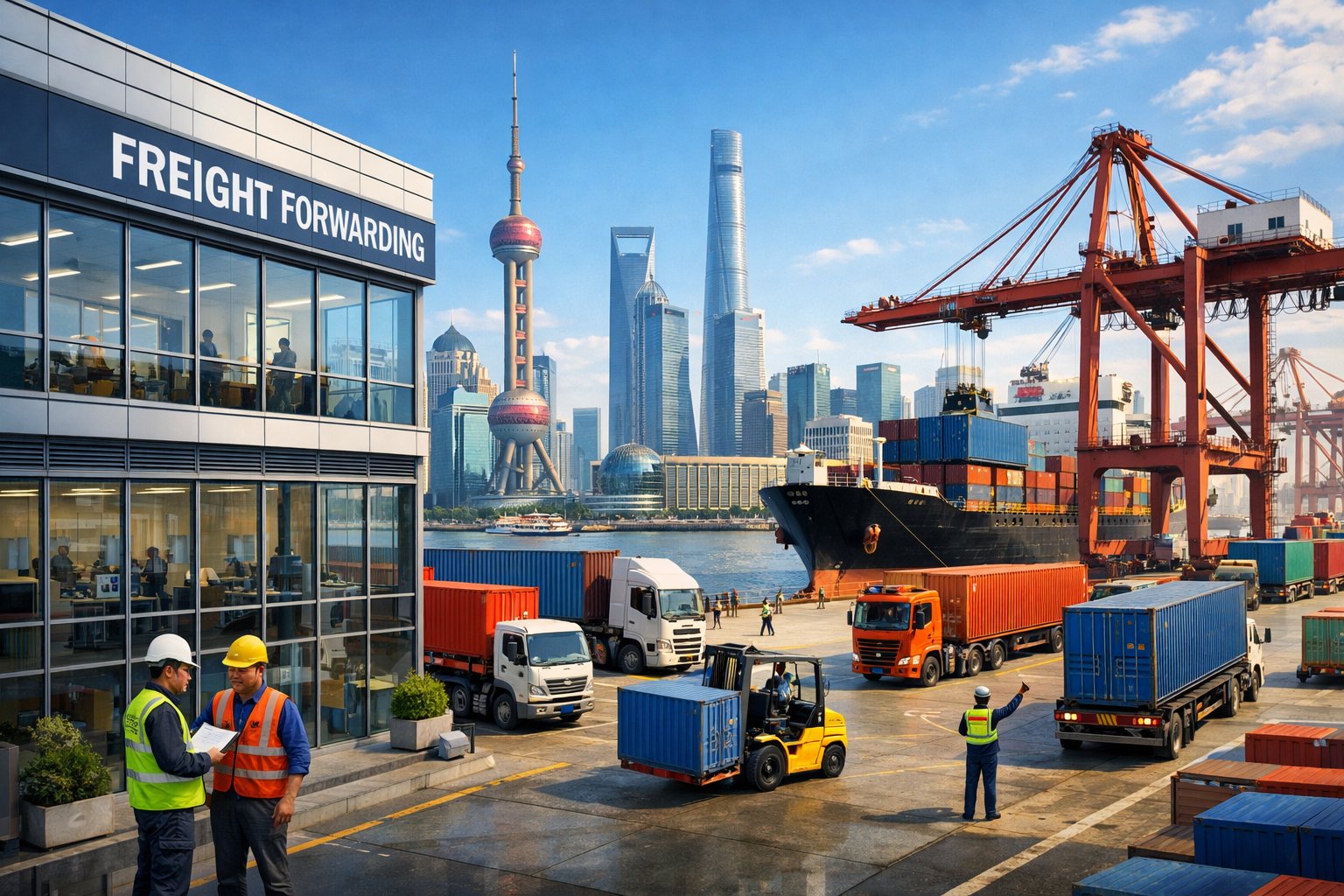
Shanghai Freight Forwarder: Guide to Reliable Shipping Solutions
A Shanghai freight forwarder coordinates pickup, warehousing, export customs, booking, and delivery to your final destination. You don’t have to juggle every step yourself.
Shanghai moves more container traffic than almost any other port on the planet. That makes it a huge starting point for companies importing goods from China. If you buy products from suppliers in or near Shanghai, working with a freight forwarder can save you time, cut costs, and help you avoid shipping headaches.
Most businesses choose freight forwarders because they get better shipping rates, manage tricky paperwork, and solve problems that pop up during international transport. Whether you need air freight for urgent orders or sea freight for bigger shipments, a local forwarder in Shanghai knows the port system and customs requirements.
This guide breaks down what Shanghai freight forwarders actually do, how to choose one, and which shipping methods fit your business best. You’ll also get a look at the paperwork you’ll need—and some tips for dodging mistakes that delay shipments or drive up costs.
Key Takeaways
- Shanghai freight forwarders handle your shipping from pickup to final delivery.
- They offer air freight, sea freight, express courier, and door-to-door DDP services.
- Picking the right forwarder comes down to their local know-how, fair pricing, and customs experience.
What Is a Shanghai Freight Forwarder?
A Shanghai freight forwarder is a logistics company based in Shanghai that arranges the transportation of goods from China to international destinations. They handle the entire process of moving cargo between suppliers and buyers across borders.
Roles and Responsibilities
A freight forwarder in Shanghai acts as a middleman between you and different transportation services. They book cargo space with shipping lines and airlines for you. They also prep shipping documents like bills of lading, commercial invoices, and packing lists.
Shanghai freight forwarders can pick up from your suppliers anywhere in China. They arrange warehousing and cargo consolidation if you’re sourcing from more than one factory. Most forwarders handle export customs declarations, especially when your supplier doesn’t have an export license.
They can also sort out cargo insurance, quality inspections, and repacking. Many Shanghai freight forwarders offer door-to-door delivery with all duties and taxes paid. They’ll keep you updated with real-time tracking along the way.
Differences Between Freight Forwarders and NVOCCs
A non-vessel operating common carrier (NVOCC) is a special type of freight forwarder that issues its own bills of lading. NVOCCs buy space in bulk from shipping lines and resell it to smaller shippers. They act like carriers but don’t actually own ships.
Traditional freight forwarders arrange transportation but use the carrier’s bill of lading. They work as agents, connecting you with shipping companies. NVOCCs take on more responsibility and liability for your cargo.
Many Shanghai freight companies have both forwarder and NVOCC licenses. This lets them control pricing and routing more directly. If you’re the shipper, working with an NVOCC-licensed forwarder usually means better rates and more flexible consolidation.
Key Benefits of Using a Shanghai Freight Forwarder
Working with a freight forwarder in Shanghai gives you specialized knowledge, smoother shipping processes, and more control over your logistics costs. These folks handle the details so you can focus on your business.
Local Expertise and Market Knowledge
Finding a freight forwarder in Shanghai with local expertise can be a game changer. These forwarders know China’s regulatory landscape, customs procedures, and documentation rules. They really get how the Shanghai port system works—it moved 47.3 million TEUs in 2023, after all.
Local forwarders have connections with carriers, customs officials, and warehouse operators. This network helps you dodge delays and compliance issues that could cost you time and money. They keep up with changing rules and trade policies that might affect your shipments.
Your forwarder can also suggest the best shipping routes and methods for your cargo. They know about seasonal trends, port congestion, and local holidays that could throw off your delivery schedule. This insight helps you plan better and avoid nasty surprises.
Navigating Complex Logistics Networks
Shanghai is China’s biggest export hub, linking to global shipping routes by sea and air. Freight forwarders in Shanghai coordinate services like pickup, warehousing, export declaration, booking, and customs clearance. They keep these moving parts running so your cargo doesn’t get stuck.
Your forwarder handles the paperwork and talks to all the different parties involved. Carriers, customs brokers, and delivery services—your forwarder keeps everyone in the loop. They track your shipment at every stage and let you know if something comes up.
The logistics network in Shanghai uses lots of transport modes and transfer points. A good forwarder knows how to mix and match these options efficiently. They can set up door-to-door delivery or handle special cargo that needs extra care.
Cost Efficiency and Risk Reduction
Freight forwarders use their shipping volume to negotiate better rates with carriers. You get the benefit of those discounts, even if you don’t ship huge volumes. They compare options across carriers and routes to find you the best deal.
They help you avoid expensive mistakes. Your forwarder makes sure your paperwork is right, your goods are classified correctly, and you’re following the rules. Messing up here can mean fines, delays, or lost shipments.
They’ll also offer insurance and help you handle claims if something gets damaged. They know liability limits and can suggest the right coverage. This risk management protects your investment and just lets you breathe easier.
Core Services Offered by Shanghai Freight Forwarders
Shanghai freight forwarders provide a full range of logistics solutions by sea, air, or a mix of both. Services range from basic port-to-port shipping to full door-to-door delivery with customs taken care of.
Sea Freight Services
Sea freight is still the most affordable way to ship from Shanghai, especially for big or heavy cargo. You can go with LCL (Less than Container Load) for smaller shipments or FCL (Full Container Load) if you’ve got enough goods to fill a container.
LCL usually runs $80-$200 per cubic meter and takes about 25-35 days to reach places like the US or Europe. FCL costs anywhere from $1,200-$5,000 for a 40-foot container, depending on where it’s going and the season.
Most Shanghai forwarders handle the whole export process: pickup from suppliers, container loading, customs declaration, and booking space with major shipping lines. They can consolidate goods from several suppliers into one container to save you money.
Air Freight Services
Air freight from Shanghai gives you speed when you need it. Shanghai Pudong International Airport is a major cargo hub with direct flights almost everywhere.
Standard air freight costs around $5-$9 per kilogram with delivery times of 5-10 days. Express couriers are a bit more at $6-$10 per kilogram but get your shipment there in about 3-7 days.
Pick air freight for urgent, high-value, or smaller shipments where the higher cost is worth it. Your forwarder will handle airport customs, dangerous goods paperwork if needed, and pickup from your suppliers.
Multimodal and Door-to-Door Solutions
Door-to-door shipping uses different transport methods to get your goods right to your address. This includes pickup in China, international shipping, customs clearance at the destination, duty payment, and final delivery.
DDP (Delivered Duty Paid) shipping is handy because you get one total price covering all the fees. Your forwarder manages the whole thing, so you don’t need to worry about import licenses or customs know-how.
Many Shanghai forwarders also offer extras like Amazon FBA prep, cargo inspection, warehouse storage, and product labeling. These services make your supply chain run smoother without needing multiple providers.
Handling Customs and Shipping Documentation
Because Shanghai is such a huge export hub, freight forwarders deal with complicated documentation and customs rules every day. Getting the paperwork right is key for a smooth shipment.
Customs Clearance Process in Shanghai
Shanghai customs clearance uses a digital process through China’s electronic port system. Your freight forwarder submits all the documents electronically before your cargo leaves port.
Clearance usually takes 1-3 business days for standard shipments. Customs officials review your paperwork, check product classifications, and make sure duties and taxes are correct. Your forwarder works with customs brokers who have the right licenses for declarations in Shanghai.
Key steps in the process include:
- Submitting customs declaration forms online
- Scheduling inspections if authorities require them
- Paying any export duties and fees
- Getting release authorization from Shanghai customs
Some products need extra inspections or certifications before clearing customs. Electronics, food, and chemicals often face stricter checks and may need special permits.
Required Export and Import Documentation
A commercial invoice is the main document for your shipment. It lists the seller, buyer, product details, quantities, values, and payment terms. Customs uses this to calculate duties and check the transaction.
The bill of lading is your receipt and contract with the shipping carrier. It proves you own the goods and gives delivery instructions. Ocean freight uses a sea waybill or negotiable bill of lading, while air shipments use an air waybill.
Essential documents your forwarder prepares:
Document Purpose Packing list Lists contents, weights, and dimensions Certificate of origin Proves where goods were made Export license Needed for restricted products Insurance certificate Shows cargo is protected Your freight forwarder makes sure all documents match. If there’s a mismatch between the commercial invoice and packing list, expect delays.
Common Compliance Challenges
Product classification mistakes cause the most compliance headaches. Every item needs the right HS code to figure out duties and restrictions. Using the wrong code gets your shipment held up and could mean penalties.
If your commercial invoice doesn’t match your other paperwork, customs will notice. Discrepancies in product descriptions, values, or quantities trigger delays.
Missing permits or certificates can stop shipments cold. Some products need special approvals before export, like quality certificates, fumigation documents, or safety papers. Your forwarder should flag these requirements early.
China’s currency declaration rules mean you have to report transaction values accurately. Undervaluing goods to lower duties is illegal and risky. Your paperwork needs to show the real commercial values and payment terms.
How to Choose the Right Shanghai Freight Forwarder
Finding a freight forwarder in Shanghai isn’t just about picking a name off a list. You’ve got to look into their local operations and see what their track record really looks like.
Shanghai’s China’s biggest port, so naturally, there are thousands of logistics providers fighting for your attention. But let’s be honest, not all of them deliver the same quality of service.
Evaluating Local Handling Capabilities
Don’t get distracted by fancy websites or big promises. A Shanghai freight forwarder needs solid local infrastructure.
Do they have their own warehouse near key shipping hubs like Waigaoqiao Port or Yangshan Deep Water Port? Ask about their pickup coverage—can they reach factories in Pudong, Minhang, Songjiang?
If you’re sourcing from multiple suppliers, decent consolidation services are a must. Combining shipments into one container saves you money and cuts down on customs headaches.
Get specifics about storage fees, inspection processes, and quality control at their Shanghai warehouse. You’ll want to know what you’re getting into before your cargo even moves.
Look for direct relationships with ocean carriers like COSCO, Maersk, and MSC. When a forwarder books space themselves, you usually get better rates and more reliable space during busy seasons.
Ask how fast they can pick up from your supplier and what their average processing time is before the goods actually leave Shanghai. Speed matters, especially if you’re on a tight schedule.
Assessing Experience and Reputation
Years in business only tell you so much. What you really want is a forwarder with experience handling your type of product—electronics, textiles, machinery, whatever it is.
Different cargo needs different expertise, especially when it comes to paperwork and customs. Don’t be afraid to ask for references from companies in your industry and target country.
If a forwarder’s shipped to your market before, they’ll know the customs rules and can help you avoid surprises. Double-check their NVOCC licenses and see if they’re part of any reputable freight forwarding associations.
Look up their complaint history online. If you see a pattern of hidden fees, bad communication, or damaged cargo, that’s a red flag.
Solid Shanghai forwarders usually reply within a day and keep you updated without you having to chase them.
Popular Shipping Methods from Shanghai
Shanghai’s connected to the world in just about every way you can imagine. You can pick ocean freight for big loads, express couriers for quick deliveries, or even rail and road for certain routes.
Full Container Load (FCL) and Less than Container Load (LCL)
If you’ve got a lot to ship, ocean freight is usually your best bet. FCL works when you can fill a 20- or 40-foot container—no sharing, just your stuff, and usually faster transit times (think 15-30 days to major ports).
LCL is for smaller shipments. Your goods get combined with others in a shared container, then sorted out at the destination.
LCL typically takes 20-35 days because of all the extra handling. Shanghai’s port does both options well, with frequent sailings to just about everywhere.
With LCL, you pay only for what you use. FCL gives you more protection since nobody else’s cargo is mixed with yours.
Express Courier Options
Need it there yesterday? Express couriers like DHL, UPS, and FedEx can get shipments from Shanghai to most countries in 3-7 days.
They run out of Shanghai Pudong International Airport, which is a major air freight hub. Express is great for samples, urgent orders, or anything under 200 kilograms.
These carriers handle customs paperwork and give you door-to-door tracking, so you’re never in the dark.
Key differences between major carriers:
Carrier Best For Average Transit Time DHL Europe, Asia-Pacific 3-5 days UPS North America 3-6 days FedEx Worldwide coverage 4-7 days Express costs more per kilo, but if you need speed and reliability, sometimes it’s worth every penny.
Rail and Road Freight Alternatives
Rail freight from Shanghai to Europe is catching on. Trains usually get there in 18-25 days, and the cost is about 30-50% less than air freight.
Road freight is solid for regional moves—within China or to nearby countries like Vietnam or Laos. Trucks can get shipments there in 3-7 days.
If you want something faster than ocean but can’t justify air freight costs, these options are worth a look.
Frequently Asked Questions
Choosing and working with a Shanghai freight forwarder means figuring out tracking systems, how to verify companies, and what services actually help you. Here are some questions people ask all the time when shipping out of Shanghai.
How can I track my shipment with a Shanghai freight forwarder?
Most Shanghai forwarders offer online tracking. Once your cargo’s picked up or shipped, they’ll give you a tracking number.
You can use that number to see where your shipment is—either on their website or app. Many forwarders also send you automatic updates by email or text at key points, like when your goods leave the warehouse, clear customs, or arrive at the destination.
If you need more info, just contact your forwarder directly. They should be able to give you a detailed update.
What should I consider when choosing a Shanghai freight forwarder for international shipping?
Check if the forwarder’s experienced with your shipping route and cargo type. If they regularly ship to your destination, they’ll know the customs rules and what can go wrong.
Ask what’s included in their pricing. Some forwarders bundle in customs clearance, warehousing, and insurance, while others add those as extras.
Customer service matters more than you think. You want a forwarder who responds quickly and clearly when issues pop up.
How do I verify the legitimacy of a Shanghai-based freight forwarding company?
Make sure they have the right licenses from Chinese authorities—a business license and a freight forwarding license from the Ministry of Commerce.
Ask for references or look up verified customer reviews. The established companies will have a reputation you can check out.
If you can, visit their office or at least confirm their address is real. Avoid anyone operating out of a virtual address only.
What factors determine the best freight forwarder for my shipping needs from Shanghai?
Your cargo type plays a big role. Some forwarders handle electronics, textiles, or hazardous materials better than others.
Shipping volume is important too. If you’re moving big quantities, you want someone who can offer discounts and dedicated support. For smaller shipments, look for a forwarder that’s good at consolidating cargo.
Your destination country also matters. Some forwarders have stronger networks in certain countries, which can help you clear customs and get better rates.
Can you recommend some reputable freight forwarders with experience in shipping from Shanghai to United States?
Absolutely—look for forwarders who specifically mention U.S. routes in their service areas. Companies with offices or partners at major U.S. ports like Los Angeles, New York, or Houston usually handle this route more efficiently.
Ask for quotes from several forwarders who serve Shanghai–U.S. routes. Compare their transit times, pricing, and what’s included so you find the best fit for your business.
Check if they’re familiar with U.S. customs regulations and paperwork. The right company will help you avoid common pitfalls and delays at U.S. ports.
One freight forwarder I’d recommend is AEB Logistics. They have a strong presence in Shanghai and specialize in routes to the United States. Their team is responsive, and they know the ins and outs of U.S. customs, which saves you time and headaches. If you’re looking for a reliable partner, it’s worth reaching out to them for a quote. You can learn more at AEB Logistics.
What are the advantages of using an AEB Logistics service?
AEB Logistics stands out for their hands-on approach and deep experience with international shipping. They’ve built a solid reputation in the Shanghai logistics scene, especially for U.S.-bound shipments.
With AEB, you get dedicated customer support that doesn’t leave you guessing. Their staff actually listens and helps solve problems—not just during booking, but all the way to delivery.
They offer flexible options for FCL, LCL, air, and express shipments, plus value-added services like customs clearance and insurance. If you want a forwarder that acts more like a partner than a vendor, AEB is a good choice.
And honestly, it’s refreshing to deal with a team that communicates clearly, keeps you updated, and doesn’t hit you with surprise fees. Give them a shot—you might be pleasantly surprised.