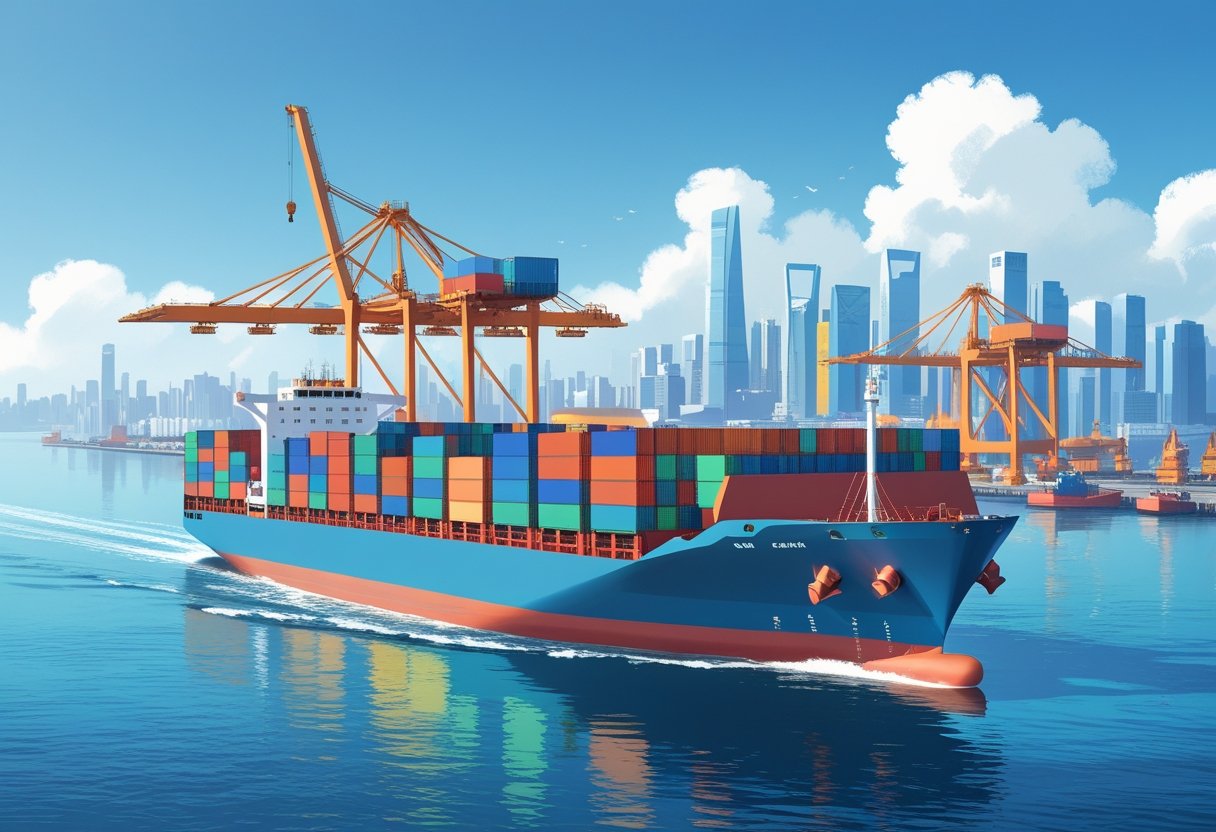
Shipping Freight from China: Cost, Methods & Strategies
Shipping freight from China is a huge part of global trade, whether you’re sending goods to the United States, the UK, the EU, or Canada. If you run a small e-commerce shop or manage larger imports, getting a grip on the basics of shipping freight from China can save you money and a lot of headaches.
The cost to ship freight from China depends on your shipping method. Ocean freight rates average $1,800 to $2,800 for a 20-foot container and $2,500 to $4,200 for a 40-foot container. Air freight costs around $3 per kilogram for standard service.
Your choice between air and sea freight affects both your budget and how fast your shipment arrives. Express shipping delivers in about three days but is pricier per kilo.
There’s more to shipping freight from China than just picking a carrier. You’ll need to sort out customs paperwork, choose a good freight forwarder, and decide between shipping options like full container load or less than container load.
This guide will break down transit times, customs requirements, and practical tips for making smart shipping freight from China decisions—whether your goods are headed for North America, Europe, or elsewhere.
Key Takeaways
- Ocean freight is the cheapest option for shipments over 500 kg, while air freight is better for faster delivery of lighter goods.
- Transit times go from three days for express shipping up to 30-40 days for standard ocean freight, depending on the route and method.
-
A good freight forwarder helps you manage documentation, customs, and any shipping delays.
Shipping Freight from China: Main Methods
When you’re shipping freight from China, you’ve got four main choices. Ocean freight offers the lowest rates for large volumes. Air freight gets your goods there faster but costs more. Express shipping is the quickest for small shipments.
Shipping Freight from China: Ocean Freight FCL
FCL (Full Container Load) means you rent an entire container for your shipment. You can pick a 20-foot or 40-foot container.
A 20-foot container fits about 28 cubic meters. A 40-foot container fits roughly 58 cubic meters.
FCL works best if you have:
- Large shipment volumes
- Goods filling most of a container
- Products needing extra security
-
Fragile items you want to keep separate
Major carriers like COSCO and Evergreen run frequent routes from China to ports worldwide. Your freight stays sealed from start to finish, so there’s less handling and less risk of damage.
FCL usually costs $1,500 to $4,000 for a 40-foot container, depending on where it’s going. Transit times run from 25 to 45 days.
Shipping Freight from China: Less-Than-Container-Load (LCL)
LCL ocean freight lets you share a container with other shippers. You pay for the space your cargo takes up.
This is a great fit for shipments too small for a full container. Freight forwarders combine several shipments in one container, separating them at the destination port.
LCL costs range from $30 to $60 per cubic meter, including consolidation and handling fees.
Key points about LCL:
- Minimum volume is usually 2 cubic meters
- Transit takes 25 to 40 days, sometimes a bit longer due to consolidation
- Your goods get handled more than FCL
-
Best for shipments under 15 cubic meters
Sea freight via LCL gives you flexibility if you don’t have enough to fill a container. But it can take a little longer because of the extra handling.
Shipping Freight from China: Air Freight
Air freight moves goods from China in 5 to 12 days. Airlines like Cathay Pacific and Air China fly cargo to major international airports in the US, UK, EU, and Canada.
You pay by actual or volumetric weight—whichever is higher. Volumetric weight is length × width × height (cm) divided by 6,000.
Rates are usually $4 to $8 per kilogram. Air freight is ideal for shipments between 50 and 500 kilograms.
Pick air freight if you need:
- Faster delivery than sea freight
- Temperature-controlled shipping
- High-value items worth the extra cost
-
Seasonal goods with tight deadlines
Air cargo needs customs clearance and local delivery at the destination. Your freight forwarder takes care of this. Most shipping freight from China experts recommend air freight for urgent orders where speed beats cost.
Shipping Freight from China: Express Shipping
Express shipping gets packages delivered in 3 to 7 days using carriers like FedEx and UPS. You’ll get door-to-door delivery and tracking.
Express means the fastest transit times out there. These carriers handle customs clearance for you, moving your shipment through their own networks.
Rates are $6 to $10 per kilogram, so it’s the most expensive per kilo.
Express shipping is best for:
- Small packages under 70 kilograms
- Product samples
- Urgent replacements or rush orders
-
Documents and time-sensitive stuff
It’s super convenient, but you pay for that speed. Most businesses use express shipping from China only for critical, time-sensitive shipments.
Freight Costs and Rates for Shipping Freight from China

Shipping freight from China costs depend on cargo size, method, and route. Freight charges from China can swing a lot between sea, air, and express options. Fuel surcharges and other fees add to your total, so always check the details.
### Factors Affecting Shipping Freight from China Costs
Your shipping mode makes the biggest difference. Air freight costs $2-$8 per kg. Sea freight runs from $2,000-$8,000 per full container. Express shipping through couriers is about $5 per kilo for packages up to 150 kg.
Cargo weight and volume shape your rates. Airlines charge on volumetric weight, so bulky but light items can cost more than you’d expect. Sea freight charges by the container (FCL) or cubic meter (LCL).
Distance and route matter too. For example, shipping from Shanghai to the UK or to Canada is usually less expensive than to inland Europe due to shorter inland transport legs.
Seasonal demand pushes up prices before major Chinese holidays or big shopping seasons. Ocean freight rates can spike by over 40% during peak periods.
The type of cargo matters as well. Hazardous, temperature-sensitive, or oversized items get hit with extra charges.
### How to Get a Shipping Freight from China Quote
Get quotes from a few freight forwarders to compare costs. Give them the origin city, destination, cargo weight, dimensions, and your deadline.
Online freight quote calculators give you instant estimates. They show both air and sea options, so you can weigh the trade-offs.
If your shipment is close to 15 cubic meters, get quotes for both FCL and LCL. FCL can be cheaper per cubic meter once you’re over that threshold.
Compare door-to-door quotes that include pickup, customs, and final delivery—not just port-to-port rates. Prices can change weekly, especially during peak demand, so re-quote if you’re not booking right away.
### Managing Fuel Surcharges and Extra Fees in Shipping Freight from China
Fuel surcharges update monthly and can add 10-30% to your freight bill. Carriers tack these on separately, so ask your forwarder for the current rate before you book.
Watch out for these extra fees:
- Peak season surcharges during holidays
- Customs and documentation fees
- Port congestion charges
- Container detention or demurrage
-
Warehouse storage at origin or destination
Read your bill of lading closely. Some forwarders sneak in documentation or handling charges. Negotiate all-inclusive rates when possible.
Ask for a detailed cost breakdown. That way, you can see which fees are negotiable and which are fixed by the carrier.
Shipping Freight from China: Transit Times and Routes
Shipping freight from China to the US, UK, EU, or Canada can take anywhere from 3 days (express) to 45 days (sea freight). The method and route you choose make the biggest difference in how fast your goods arrive.
Transit Times by Shipping Mode When Shipping From China
When shipping from China, it’s crucial to know how long each method really takes. Express shipping through DHL, FedEx, or UPS usually delivers in 3-7 days, but you’ll pay the most per kilogram for that speed.
Air freight takes around 5-12 days and works well for mid-sized shipments between 50-500 kg. Sea freight is the slowest option, with transit times of 25-45 days depending on your destination port.
You can choose FCL (Full Container Load) for big shipments, or LCL (Less than Container Load) if your volumes are smaller. Rail freight offers a middle ground at 14-20 days, though it’s mainly available for shipments headed to Europe or parts of Asia.
Your freight transit times also depend on customs clearance, which can tack on an extra 1-5 days. Peak periods like Chinese New Year or Black Friday tend to slow things down across all shipping modes.
Major Shipping Routes From China to the US, UK, EU, and Canada
The main China to USA shipping routes connect major Chinese ports to West Coast and East Coast destinations. West Coast routes from Shanghai, Shenzhen, or Ningbo to Los Angeles or Long Beach usually take 15-20 days.
East Coast routes to New York, Savannah, or Charleston take 30-40 days. Some ships travel through the Panama Canal, which adds time but gives direct access to Atlantic ports.
For the UK and Europe, sea freight typically goes from Shanghai, Ningbo, or Shenzhen to ports like Felixstowe, Rotterdam, or Hamburg. Transit time is around 25-40 days by ocean, but rail freight to Europe can cut this to 14-20 days.
Shipping from China to Canada mostly lands at Vancouver or Toronto, with sea freight taking about 15-25 days. Air freight is always faster, connecting through hubs like Guangzhou or Shanghai Pudong to airports in North America and Europe.
Dealing With Port Congestion and Delays When Shipping From China
Port congestion can really mess with your shipping timeline. US West Coast ports like Los Angeles and Long Beach often get backlogged during peak seasons.
Sometimes, you’ll face delays of 5-15 days when ships wait to dock. East Coast ports may process cargo faster, even if the ocean leg is longer.
For the UK, EU, and Canada, ports like Felixstowe, Rotterdam, Hamburg, and Vancouver also see congestion—especially during holiday surges or labor strikes. It’s smart to track global shipping conditions and check in with your freight forwarder about the latest port news.
Weather, labor actions, and equipment shortages can all throw off your schedule. Build in a buffer of 7-10 days to avoid stockouts or missed deadlines.
Your forwarder might suggest alternate ports or routes if your main destination gets too backed up. Flexibility helps you keep your supply chain moving.
Customs Clearance and Documentation for Shipping From China
Proper documentation and customs procedures really decide whether your shipment clears quickly or faces costly delays. You need the right paperwork, and working with experienced customs brokers helps you navigate requirements in the US, UK, EU, or Canada.
Essential Shipping Documents for China Exports
The commercial invoice is the main document for customs clearance. It should include your supplier’s details, your business info, product descriptions, HS codes, prices, total value, currency, and country of origin.
Your supplier gives you a packing list showing the physical contents of your shipment. This lists package counts, dimensions, gross and net weights, and how items are packed.
The bill of lading (for ocean freight) or air waybill (for air shipments) proves your goods are in transit. You need this document to release your cargo.
A certificate of origin verifies where your products were made. Sometimes you’ll need it for certain products or when customs requests verification.
Working With Customs Brokers for China Shipments
Licensed customs brokers handle the technical process of clearing your shipments through customs. They file entry documents, calculate duties and taxes, and communicate with authorities on your behalf.
Your broker needs your documents at least 48 hours before arrival. They prepare and submit the entry paperwork, arrange payment of duties, and coordinate cargo release.
Brokers usually charge per-shipment fees, and you’ll need either a single-entry bond or a continuous bond for regular shipping. Choosing a broker familiar with your product category helps you avoid costly mistakes.
They keep up with changing regulations and can advise you on compliance for your goods. Honestly, a good broker can save you time and headaches.
Customs Clearance Process When Shipping From China
Your customs clearance process starts when authorities receive your ISF filing at least 24 hours before vessel loading. When your shipment arrives, your broker submits the entry docs and estimated duties.
Customs reviews your paperwork and assigns a risk level. Low-risk cargo usually releases quickly, while high-risk shipments might get inspected, which adds a few days.
You must pay all duties, taxes, and fees before cargo release. Customs calculates these based on your product’s HS code, value, and trade agreements.
After payment, customs releases your goods to the carrier. Your freight forwarder or trucking company then arranges final delivery to your warehouse or chosen location.
Choosing and Working With Freight Forwarders for Shipping From China
Finding the right freight forwarder can make or break your shipping from China. These partners handle everything from booking cargo space to customs clearance, so you can focus on your business.
Role of Freight Forwarders in China Shipping
A freight forwarder acts as your middle person between Chinese suppliers and your destination country. They book cargo space, prepare documents, and coordinate the whole movement of your goods.
These companies don’t own ships or planes, but their relationships with carriers mean you get better rates and service. Freight forwarding services from China manage customs clearance, classify your products, file declarations, and pay duties if needed.
Many forwarders offer warehousing, letting you consolidate cargo from multiple suppliers into one shipment. The best forwarders provide real-time tracking so you always know where your goods are.
They also handle issues like shipping delays or document errors, so you don’t have to jump in every time something goes wrong.
Evaluating Freight Forwarding Services for Shipping From China
Check if your freight forwarder has the right licenses for China and your destination country. Ask about their experience with your product type, especially if you’re shipping electronics or food.
Compare their options: sea freight (FCL and LCL), air freight, and express courier. Get detailed quotes with all costs broken down, including:
- Ocean or air freight charges
- Customs clearance fees
- Documentation fees
- Destination charges
-
Fuel surcharges
Look for transparent pricing—nobody likes hidden fees. Test their communication by asking about transit times, insurance, and what happens if there’s a delay.
See if they have local staff in China who can visit suppliers and check cargo before shipping. Catching problems early is always better than fixing them later.
Freight Forwarding for Amazon FBA and E-commerce Shipping From China
E-commerce sellers have unique needs. Your freight forwarder should know Amazon FBA requirements like labeling, packaging, and delivery appointments.
Many forwarders offer specialized FBA services that include applying FNSKU labels and prepping shipments for Amazon. For online stores, speed sometimes matters more than cost.
Your forwarder should offer express shipping from China that gets products delivered in 3-7 days. They should also handle small shipments, since e-commerce businesses often test new products in low volumes.
Look for forwarders with warehousing near major ports, so you can split shipments to different FBA centers. This flexibility keeps your inventory moving without paying for multiple ocean shipments.
About AEB Logistics
AEB Logistics specializes in freight forwarding between China and North America, with offices in major Chinese cities. They handle sea freight, air freight, and express shipping for importers of all sizes.
Their services include supplier consolidation, customs brokerage, and direct delivery to Amazon FBA warehouses. You get a dedicated account manager who speaks both English and Chinese to coordinate with your suppliers and fix shipping issues fast.
Value-Added Services and Shipping Strategies From China
Freight forwarders and logistics providers offer more than just transportation. They help you cut costs and improve delivery reliability with extra services like warehousing, insurance, and ground transport.
Warehousing and Consolidation Options for Shipping From China
Warehousing and value-added services help you manage inventory more efficiently. Container Freight Station (CFS) facilities let you consolidate small shipments from multiple suppliers into one container, saving on shipping costs.
You can use warehousing to store goods temporarily while waiting for other orders. This strategy works well if you buy from different manufacturers across China.
The warehouse staff can inspect, label, and repackage goods before shipping. LCL (less-than-container-load) consolidation is great if you don’t have enough cargo for a full container.
Your forwarder combines your goods with other shipments heading to the same place, so you’re not paying for empty space.
Cargo Insurance and Risk Management for China Shipments
Cargo insurance protects your shipment against damage, theft, or loss during transit. Standard coverage usually includes all-risk protection, except for war, strikes, or product defects.
Your insurance premium depends on cargo value, route, and product type. High-value or fragile goods cost more to insure, with premiums typically ranging from 0.2% to 2% of your cargo’s value.
Buy insurance before your goods leave the factory. Some forwarders include basic coverage, but it’s often minimal. Extra insurance gives you peace of mind if something goes wrong.
Inland Trucking and Last-Mile Delivery for Shipping From China
Inland trucking moves your cargo from the factory to the port in China, and from the port to your final destination abroad. These ground transportation costs add up, but they’re necessary for door-to-door service.
In China, trucking rates depend on distance and road conditions. Moving goods from inland factories to coastal ports like Shanghai or Shenzhen can take 1-3 days.
Your freight forwarder usually arranges this pickup. Last-mile delivery in the US, UK, EU, or Canada completes your supply chain.
This final leg brings cargo from the port or warehouse to your business or customer. Costs vary based on speed, distance, and special requirements like liftgates or scheduled appointments.
Multimodal Transport Solutions for Shipping from China
Multimodal transport brings together different shipping methods to help balance cost, speed, and reliability when shipping from China. For example, you might use ocean freight for the main leg, then switch to air freight or expedited trucking for urgent parts of your shipment.
Rail options now connect China to Europe and Central Asia, offering a solid alternative to sea and air freight. While rail isn’t common for China-to-USA shipments, it’s a game-changer for moving goods to Europe or as part of a broader logistics plan.
Your freight forwarder can build a multimodal shipping from China plan tailored to your budget and timeline. This approach gives you more flexibility, especially when ports get congested or space is tight during peak seasons.
Some businesses split up their shipments—sending urgent items by air, while slower-moving stock travels by sea. It’s not one-size-fits-all, but the right mix can really smooth things out.
Frequently Asked Questions about Shipping from China
Shipping from China costs depend on weight, volume, distance, and the shipping method you pick. Transit times can range from just a few days for express shipping, to several weeks if you go with ocean freight.
What factors influence the cost of shipping from China to the USA, UK, Europe, and Canada?
Your shipping weight and volume set the base cost for shipping from China. Carriers will charge based on either actual weight or volumetric weight—whichever is higher.
The shipping method you choose has a huge impact on your total cost. Sea freight costs between $3,640 and $6,040 for a 20-foot container to the USA, while air freight usually runs $4.00 to $6.00 per kilogram, depending on your destination.
Shipping from China to the UK, major European ports, or Canada will have different rates, but the principle’s the same: distance and destination port matter a lot. For example, shipping to Rotterdam or Hamburg is often faster and sometimes less expensive than shipping to smaller European ports.
Fuel surcharges change with global oil prices and get tacked onto your base rate. And during peak season—think holidays or Chinese New Year—costs can jump 20-30%.
Customs duties and taxes add to your final landed costs. Goods valued over $800 for the USA face a 30% tariff, plus handling fees of $15-25. The EU, UK, and Canada each have their own thresholds and duty rates, so it’s worth double-checking those before you ship.
What is the average transit time for shipping from China to Europe, UK, and Canada?
Ocean freight from China to Europe usually takes 25-35 days, port to port. The actual time depends on your departure port in China and where you’re headed in Europe or the UK.
Major European ports like Rotterdam and Hamburg get faster service than smaller ones. Northern Europe destinations generally take 28-32 days from Shanghai or Shenzhen.
Rail freight via the China-Europe Railway Express hits a sweet spot at 18-22 days—faster than ocean, cheaper than air. This route is also gaining traction for UK-bound freight, though final delivery may add a few days.
Air freight to Europe or the UK usually takes 8-12 days including customs. Express services can get it there in 4-6 days, but you’ll pay a premium per kilogram.
Shipping from China to Canada by sea lands in Vancouver in about 18-25 days, while air freight can arrive in 5-8 days. Toronto or Montreal deliveries take a bit longer due to the extra ground transport.
How do you calculate shipping cost from China per kg?
For air freight from China, you use your shipment’s actual weight in kilograms and multiply by the per-kilogram rate—$4.00 for West Coast USA, $6.00 for East Coast, and similar rates for Europe, UK, or Canada depending on the carrier.
When your cargo is bulky but light, volumetric weight kicks in. Multiply length × width × height in centimeters, then divide by 5,000 for air freight. Carriers charge whichever is higher: actual or volumetric weight.
A shipment of pillows, for example, might be 50 kg actual weight but 200 kg volumetric weight. You’ll be billed for the bigger number.
Express shipping costs $7.54 to $9.54 per kilogram for super-fast delivery—think 2-5 days. Don’t forget extra fees for fuel, customs, and final delivery, which can add 15-25% to the base rate.
Sea freight works differently. Instead of per-kilogram pricing, you pay for container space or per cubic meter for less-than-container loads.
What are the most cost-effective alternatives for international freight shipping from China?
Less-than-container load (LCL) shipping is a winner for medium-sized shipments—say, 2-15 cubic meters. You share a container with others and only pay for the space you use.
LCL shipping costs about $382 per cubic meter to West Coast USA ports, and similar rates apply for Europe, UK, and Canada, depending on the route and demand.
Rail freight from China to Europe or the UK offers a solid balance between ocean and air shipping costs. The China-Europe Railway Express and trans-Eurasian routes are 30-40% less expensive than air, but 2-3 times faster than ocean freight.
Consolidation services can save you money. Your freight forwarder groups your cargo with others shipping from China to the same destination, reducing per-unit costs.
Economy air freight is another option. You get slower transit times than express, but you’ll save 30-40% compared to premium air freight. It’s a fair trade-off if you’re not in a rush.
What steps are involved in shipping goods from China to the USA, UK, Europe, or Canada?
First, check that your product meets all import regulations and safety standards for the destination—whether it’s the USA, UK, Europe, or Canada. Look up the Harmonized System code for your goods to find out the duty rates and any special requirements.
Pick your shipping method based on cargo size, urgency, and budget. Choose a freight forwarder who knows the ins and outs of shipping from China to your target country.
Gather your paperwork: commercial invoice, packing list, and bill of lading. Make sure your invoice has accurate product descriptions, values, and HS codes to avoid customs headaches.
Your supplier arranges pickup and delivery to the port or airport in China. The freight forwarder books cargo space and takes care of export customs clearance.
Once your shipment arrives, it goes through customs clearance where duties and taxes are assessed. You or your customs broker pays these fees before your cargo is released.
After customs, your goods get delivered to your warehouse or business. Final delivery usually takes another 1-3 days, depending on how far you are from the port or airport.
Sea Freight vs. Air Freight: Shipping from China to the USA, UK, EU, and Canada – Cost and Transit Time
When shipping from China, sea freight costs way less than air freight. We’re talking 5-8 times cheaper for the same cargo weight.
For example, a full 40-foot container by sea usually costs between $4,600 and $7,600. If you ship that same volume by air, expect to pay $25,000 to $40,000.
Transit times? There’s a big gap. Ocean freight takes about 30-40 days door-to-door.
Air freight, on the other hand, gets your goods there in just 8-10 days. That speed can be a lifesaver if you’re in a rush.
Sea freight is really the go-to for large, heavy, or non-urgent shipments over 500 kilograms. If you can fill a whole container and don’t need your goods right away, you’ll save a ton.
Air freight makes more sense for time-sensitive cargo or high-value goods. Smaller shipments under 500 kilograms also work well by air, especially when you need things fast or want to avoid tying up cash in inventory.
When it comes to reliability, air freight usually wins. Flights stick to schedules, while ocean freight can run late thanks to port congestion, bad weather, or equipment hiccups.
And it’s not just about shipping from China to the USA. Sea freight and air freight both play a huge role in moving goods to the UK, EU, and Canada too. The cost and transit time differences hold up across these destinations, so it’s worth weighing your options no matter where your cargo’s headed.