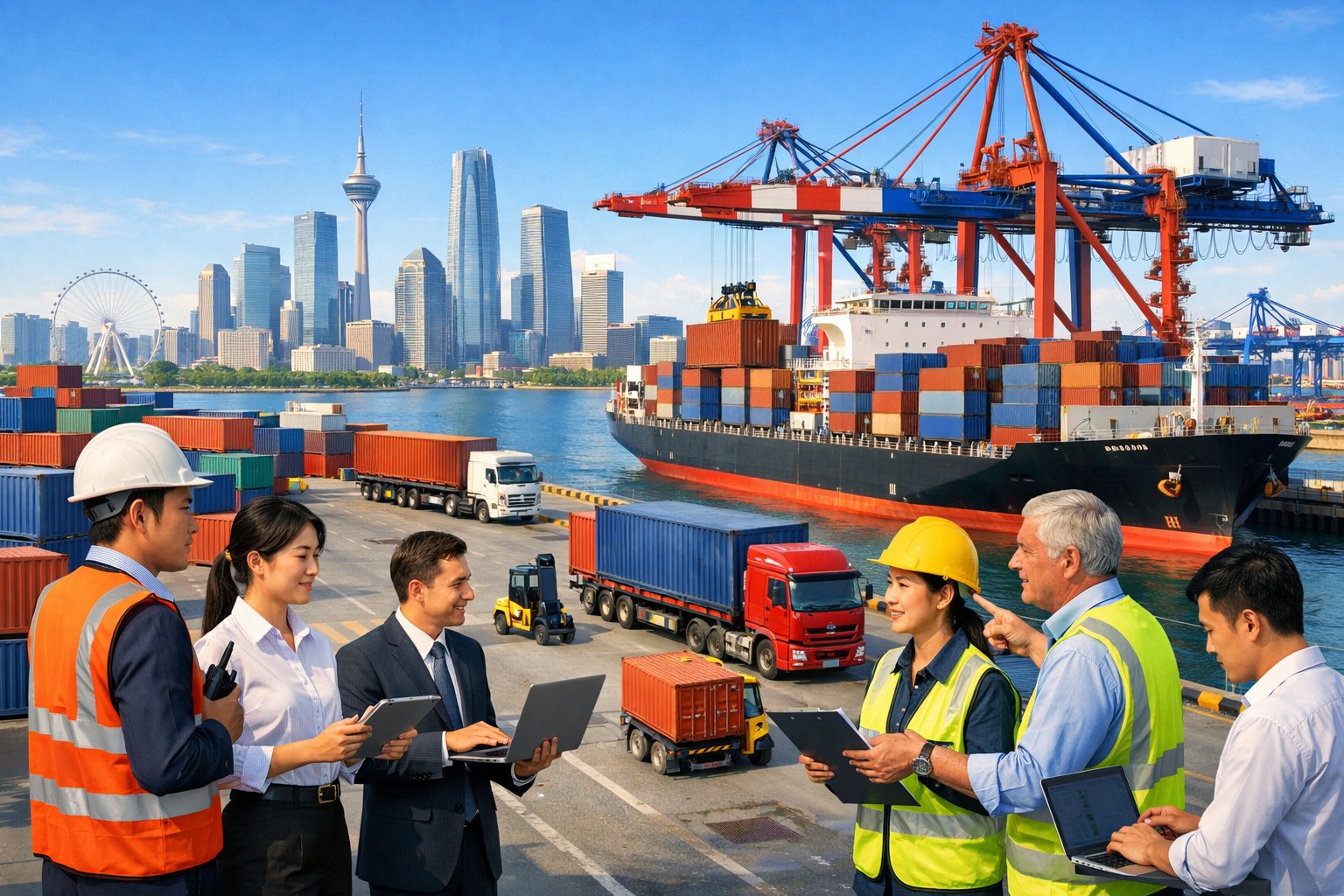
Tianjin Freight Forwarder: Expert Shipping via Tianjin Port
A Tianjin freight forwarder manages the entire shipping process for your cargo, including sea freight, air freight, rail transport, customs clearance, and documentation.
Tianjin acts as the main shipping gateway for northern China. The port moves millions of tons of cargo every year.
If you’re moving goods in or out of this region, teaming up with a freight forwarder in Tianjin can really make things easier. You’ll likely save money and avoid a lot of hassle.
These companies coordinate with ports, carriers, and government authorities. You won’t have to get lost in logistics or paperwork.
They offer both full container loads for big shipments and less than container loads for smaller cargo. It’s flexible, depending on what you need.
Choosing the right freight forwarder in Tianjin means thinking about what services you actually need. Not every company has the same expertise or reach.
This guide covers the main services, how to pick a reliable partner, and what you might experience when shipping through Tianjin’s port.
Key Takeaways
- Tianjin freight forwarders handle sea, air, and rail shipping, plus customs clearance
- Tianjin is the largest seaport in northern China and the main maritime link for Beijing
- To choose a good forwarder, look at their service range, local knowledge, and compliance skills
Understanding Tianjin Freight Forwarders
Freight forwarders in Tianjin organize the movement of goods from factories to their final destinations. They take care of international shipping details like paperwork, picking carriers, and making sure everything follows the rules.
What Is a Freight Forwarder?
A freight forwarder arranges transportation and logistics for your cargo, but they don’t actually move the goods themselves. They act as your agent, working with shipping lines, airlines, and trucking companies to get your products where they need to be.
In Tianjin, these companies manage shipments through one of China’s busiest ports. They book space, prepare documents, and track your goods along the way.
You don’t have to call multiple carriers or try to figure out foreign regulations on your own. That’s a relief for most people.
Freight forwarders work with different transport modes. They can set up sea freight for large loads, air freight if you’re in a hurry, or rail freight for overland routes.
They’ll help you pick the best option based on your schedule, budget, and cargo type.
Key Roles and Responsibilities
Your freight forwarder handles a lot of details to move your cargo efficiently. They prepare bills of lading, commercial invoices, and certificates of origin.
These documents are needed for customs clearance and prove you own your goods.
Freight forwarders negotiate rates with carriers for you. Thanks to their relationships with shipping lines and airlines, you often get better prices than if you went direct.
They also consolidate smaller shipments from different clients to help cut costs.
Key responsibilities include:
- Customs clearance and duty payment
- Cargo insurance arrangement
- Warehouse storage coordination
- Container loading and unloading oversight
- Route planning and optimization
Your forwarder tracks your shipment from pickup to delivery. If there are delays or paperwork issues, they jump in to fix things.
They keep you updated with tracking and handle any problems that pop up during transit. It’s a huge time-saver.
International Freight Forwarding Explained
International freight forwarding means moving goods across borders and dealing with customs and trade regulations. Your forwarder has to know import and export laws for several countries.
They navigate tariffs, restricted goods, and special permits. They make sure your shipment meets both Chinese export rules and the import requirements of your destination.
That knowledge helps avoid expensive delays at customs.
International forwarders sometimes offer Delivered Duty Paid (DDP) services. With DDP, they handle all costs and responsibilities until your goods arrive, including paying duties and taxes.
You know the total landed cost up front—no nasty surprises at delivery.
Tianjin’s international forwarders connect you to over 800 ports worldwide. They organize multimodal transport, mixing sea, air, and land freight to build the best route for your shipment.
Strategic Importance of Tianjin Port
Tianjin Port is one of China’s largest and busiest container ports. Every year, it handles over 21 million TEUs and connects to more than 800 ports worldwide via 133 cargo routes.
Overview of Tianjin Port Infrastructure
Tianjin Port sits on Bohai Bay and serves as the main sea gateway for Beijing and nearby areas. The port’s deep-water channels can handle ships up to 300,000 tons.
In 2023, container throughput hit 21.8 million TEUs. Just in the first quarter of that year, foreign trade through the port reached 498 billion yuan (about 72 billion U.S. dollars), up 24 percent from the previous year.
The port has advanced cargo handling equipment and automated systems. These features help move large volumes of goods quickly and safely.
You’ll also find plenty of warehousing and storage options for different cargo types.
Key Cargo Routes and Global Connections
Tianjin Port runs 133 cargo routes that link to over 800 ports worldwide. Big shipping lines like OOCL and ONE have regular service through Tianjin, connecting Asia with Europe, North America, and other regions.
The port is a key terminal for China-Europe rail freight, too. These rail links work with sea routes to give you more shipping options.
You can move goods between Asia and Europe by ocean or rail, depending on your timeline and budget. The port’s location gives you direct access to northern China’s manufacturing centers, which makes exporting from factories in the region much easier.
Tianjin Port vs Other Chinese Ports
Tianjin ranks among the top five ports in China by container volume. Shanghai handles the most, followed by Ningbo-Zhoushan and Shenzhen.
Tianjin’s real strength is its spot as the main port for northern China.
Port 2023 Container Volume Primary Region Served Shanghai ~49 million TEUs Yangtze River Delta Tianjin ~22 million TEUs Northern China/Beijing Shenzhen ~30 million TEUs Pearl River Delta Your choice between Tianjin and other ports depends on where your cargo starts or ends up. If you’re shipping to or from northern China, Tianjin usually offers shorter land routes than southern ports, which can save you time and money.
Essential Services Offered by Tianjin Freight Forwarders
Freight forwarders in Tianjin offer three main ways to move your cargo internationally: sea, air, and rail. The best method for you depends on your budget, timeline, and shipment size.
Sea Freight and Ocean Shipping
Sea freight is the most common way to ship internationally through Tianjin. The port handles both FCL (Full Container Load) and LCL (Less than Container Load) shipments.
FCL is ideal if you can fill a whole container. You get exclusive use and usually faster delivery.
LCL lets you share container space with others if your cargo is smaller. It’s more flexible and can save money.
Major carriers like OOCL run regular routes from Tianjin to ports around the world. Your freight forwarder books space, manages documents, and covers things like bills of lading, cargo insurance, and port communications.
Tianjin Port sits on the Bohai Sea and serves as Beijing’s main maritime gateway. It can take ships with drafts up to 60 feet.
Your forwarder handles all the coordination with port authorities and customs officials so your shipment keeps moving.
Air Freight Solutions
Air freight from Tianjin works well for urgent shipments that can’t wait. Your freight forwarder books space on commercial flights and looks after airport logistics.
This method costs more than sea shipping, but you’ll get much faster transit times. It’s great for high-value goods, perishable items, or last-minute orders.
Your forwarder handles air waybills and customs documents. They arrange pickup from your supplier and delivery to the airport.
You get tracking updates during the whole process. It’s quick but comes at a premium.
Rail and Multimodal Logistics
Rail transport is a solid middle ground between sea and air freight. It offers better speed than ocean shipping and costs less than air freight.
This approach works well for large, heavy shipments going to places connected by rail. Railways handle bulky goods efficiently and stick to reliable schedules.
Your freight forwarder can set up direct rail service or mix in other transport modes.
Multimodal logistics lets you use several transportation methods in one shipment. Your forwarder might truck goods to the rail terminal, send them by train to the coast, and then ship by sea to the destination.
This flexible approach helps balance cost and speed for your needs.
Customs Brokerage and Regulatory Compliance
Freight forwarders in Tianjin offer customs brokerage services. They take care of paperwork, duty calculations, and compliance for your shipments.
These services help you avoid delays and penalties at Chinese ports.
Customs Clearance Process
Your freight forwarder manages customs clearance at Tianjin by submitting required documents to Chinese authorities. They check that your goods meet import or export rules and calculate duties and taxes based on your cargo.
Clearance usually takes one to three business days for standard shipments. Your customs broker tracks the status and talks to port officials to sort out any problems.
They make sure your goods get inspected and approved before leaving the port.
Required Shipping Documentation
You’ll need specific paperwork for customs clearance in Tianjin. Your broker prepares and files these for you:
- Commercial invoice – lists product value and transaction terms
- Packing list – describes what’s in the shipment and how it’s packed
- Bill of lading – acts as a receipt and title document
- Certificate of origin – shows where the goods were made
- Import/export licenses – needed for restricted items
Your freight forwarder checks that all paperwork is complete and accurate before sending it in. Missing or incorrect documents can delay clearance and lead to fines.
Managing Import and Export Regulations
Tianjin customs brokers keep up with Chinese import and export rules that impact your shipments. They classify your products under the right Harmonized System codes, figuring out duty rates and what regulations apply.
Some goods need extra permits or certifications before they clear customs. Your broker will spot these requirements early and help you get the necessary approvals.
They also keep an eye on changes to trade policies, tariff rates, and restricted item lists that could affect your supply chain.
Your customs broker checks that your shipments follow China’s foreign trade laws and Tianjin port rules. This covers product safety standards, labeling, and restrictions on certain cargo types.
Selecting a Reliable Tianjin Freight Forwarder
When you’re picking an international forwarder in Tianjin, focus on credentials, experience, and what they can actually do for you. The right freight forwarder should have proper licensing, local know-how, and a history of handling your kind of cargo.
Evaluating Forwarder Credentials
Always check if the freight forwarder holds valid licenses from Chinese authorities. Look for companies registered with the Ministry of Commerce and approved as national first-class freight forwarders.
See how long they’ve been operating in Tianjin. Forwarders with more years under their belt usually have stronger connections at Xingang Port and understand local customs inside out.
Ask about their customs clearance rates and client list. If a forwarder serves over 1,000 importers and exporters, that’s a good sign. Ideally, you want a company that covers sea freight, air freight, customs brokerage, and warehousing.
Try to get references from businesses in your own industry. Different forwarders handle different types of cargo, so it’s worth finding one that knows your products well.
About AEB Logistics
AEB Logistics works as a trusted international forwarder for companies shipping through Tianjin and nearby areas. They offer sea freight via Xingang Port, air freight through Beijing Capital International Airport, and rail freight to Europe.
Their service model covers the full shipping process—from picking up your cargo to final delivery. You can choose from different transportation modes, depending on your schedule and budget.
They handle standard containers, oversized equipment, and urgent shipments. With a local office in Tianjin, you get hands-on help with paperwork, customs, and port coordination.
Comparing Leading Tianjin Service Providers
Always get quotes from at least three freight forwarders so you can compare prices and services. Here’s a simple way to line them up:
**Criteria** **Forwarder A** **Forwarder B** **Forwarder C** Years in Business Shipping Modes Offered Customs Clearance Rate Transit Time Estimates Total Cost Look closely at what each quote actually includes. Some forwarders handle everything from your door to the destination, while others just get your goods from port to port.
Watch how each company communicates during the quote process. Quick, clear replies usually mean they’ll take care of your shipment well. Also, check if they give you real-time tracking and updates during transit.
Value-Added Solutions and Best Practices
Freight forwarders in Tianjin do a lot more than just move goods from point A to B. They offer extra services that connect different steps in the shipping process and provide storage solutions to make things smoother—and often cheaper.
Integrated Supply Chain Management
International freight forwarders in Tianjin help you link all parts of your shipping process together. They track your cargo from start to finish, using tech that shows you where your goods are at any moment. That way, you can plan ahead and know exactly when to expect your products.
A good forwarder handles paperwork like customs forms and shipping docs for you. They also work with different carriers to get the best routes and rates, so you don’t have to call airlines, shipping lines, and truckers yourself.
Many forwarders offer cargo consolidation. They combine smaller shipments from different customers into one big load, letting you split the cost of a container instead of paying for the whole thing alone.
Warehouse and Distribution Services
Freight forwarders in Tianjin run warehouses in key spots—close to the port and near major highways. These places let you store goods before shipping out or after they arrive. You can keep inventory near your customers without the headache of running your own warehouse.
Storage services can be basic, like pallet wrapping and repacking. Some warehouses also have temperature-controlled areas for sensitive goods. Staff can label, sort, and prep orders for delivery based on what you need.
Distribution services get your products from the warehouse to their final stop. The forwarder arranges local trucks and manages timing, so customers get their deliveries when they expect. With door-to-door service, you deal with fewer partners and cut down on delays.
Frequently Asked Questions
If you’re shipping from Tianjin, you probably have questions about tracking, communication, port details, and picking the right forwarder for your cargo.
How can I track my shipment with a Tianjin freight forwarder?
Once you book, your freight forwarder gives you a tracking number. Most Tianjin forwarders have online tracking portals where you punch in that number to see updates in real time.
Many also send email or SMS alerts at key points along the way. If the online system feels a bit thin, just call, email, or message your forwarder directly for more details.
What is the best way to contact a freight forwarder in Tianjin for shipping inquiries?
Email is usually your best bet for initial questions since you can explain your shipping needs and get written quotes. Most Tianjin forwarders reply within a day during the workweek.
WhatsApp is popular for quick chats and updates—lots of Chinese forwarders use it with international clients. Phone calls work if something’s urgent, though you might run into language issues with smaller firms.
It’s smart to reach out to a few forwarders and compare before picking one.
Who are the top-rated freight forwarders in China?
The top freight forwarders in China have offices in big port cities like Shenzhen, Guangzhou, Shanghai, Ningbo, Tianjin, and Yiwu. They handle both sea and air freight and have strong global networks.
Look for forwarders with proper licenses, clear pricing, and customs expertise. Reading reviews and checking how long they’ve been around helps you spot reliable options.
The best forwarder for you really depends on your specific needs, where you’re shipping, and what you’re shipping—there’s no one-size-fits-all company.
What are the differences between Xingang port and Tianjin port?
Xingang Port and Tianjin Port are actually the same place. Xingang is the port area in the Binhai New Area, while Tianjin Port is the official name for the whole complex.
This port is one of China’s eight major shipping hubs. It handles containers, bulk cargo, and serves as a main gateway for northern China’s international trade.
When booking shipments, forwarders might use either name, but they’re talking about the same facility.
Can you provide the WhatsApp contact details for a reputable shipping company in Tianjin?
You’ll need to look up and contact forwarders directly to get their WhatsApp numbers. Reputable companies post their contact info on their own websites and business directories.
Don’t trust random WhatsApp numbers from unofficial sources. Always check the company’s business license and physical address before sharing details or making payments.
Get quotes from several verified forwarders and compare their services, prices, and how they respond before choosing one.
How do I choose a reliable freight forwarder for international shipping from Tianjin?
First off, make sure the forwarder actually has the right licenses. It’s even better if they have a real office in Tianjin or at least near the port.
It’s smart to dig into online reviews. If you can, ask for references from folks who’ve shipped with them before.
Always request detailed quotes. You want every cost broken down—freight, customs, handling, local delivery—the whole picture.
The best forwarders don’t hide fees. They keep pricing clear and upfront.
Find companies that know your destination country inside and out. Experience with customs rules, HS codes, and duties really matters.
Your forwarder should get your cargo type and suggest the right shipping method, whether that’s FCL, LCL, or air.
Pay attention to how fast and clearly they respond to your questions. If they communicate well from the start, that’s a good sign.
Honestly, you want someone who keeps you in the loop with updates all the way through.